





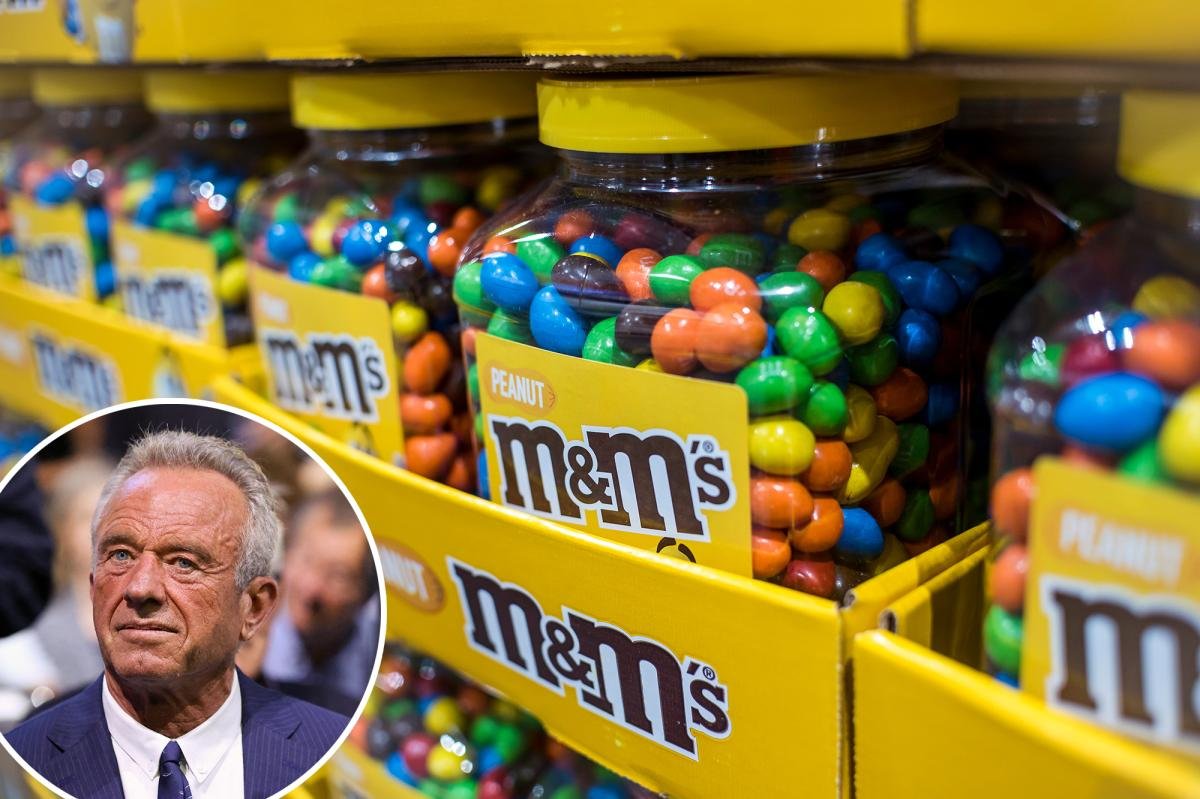
M&M’s are entering their Make America Healthy Again era.
But as a result, two historic colors may end up in the can.
As the iconic candy marks its 85th year this summer and in a broader effort to remove artificial dyes, M&M’s will debut a natural-ingredient version.
And while the brand can figure out how to make red, orange, and yellow M&M’s without artificial dyes, blue and brown are on the chopping block.
As pressure mounts from Health Secretary Robert F. Kennedy Jr.’s MAHA movement to ditch synthetic food colorings, candy giant Mars is spending millions of dollars to reinvent one of America’s most recognizable treats.
But replacing the bright blue shell that has been part of M&M’s rainbow since 1995 has turned into a surprisingly sticky problem.
The culprit is spirulina, the high-protein ingredient often touted as a superfood, which is apparently gumming up the machines at the Mars facility that produces 600 million M&M’s every day.
According to a Wall Street Journal report, Mars selected spirulina as the best natural substitute for the artificial dye Blue 1.
But the algae-based ingredient requires roughly seven times as much pigment to achieve that M&M “cerulean” hue and ends up creating a thick, foamy mixture that leaves an unwanted plaque, much like what you try to avoid after eating candy.
The coated remnants are said to cause a buildup in pipes and, eventually, mold, which poses a food-safety hazard.
“It’s the hardest thing I’ve had to do in my career,” Claire Hewitt, the Mars executive overseeing the multimillion-dollar initiative and self-described “chief color officer,” told the Journal.
The blue problem has become so complicated that Mars will debut naturally colored M&M’s in August without two of its classic shades, because brown relies heavily on blue coloring to achieve the look.
The company experimented with other options, including purple and pink candies, but executives ultimately decided neither looked right. Mars even considered releasing a three-color mix before settling on a four-color lineup.
More than 100 employees have worked on the project across Mars facilities, experimenting with just how to crack the coloring code. But the task would come with an expensive overhaul.
To combat the gunk, Mars must upgrade more than 300 machines across its M&M’s plants to handle spirulina, which would include installing new mixing tanks, paddles, and motors, Hewitt told the Journal.
And cleaning the new cleaning equipment would require hotter water, more force, and more time.
The costly makeover comes as the MAHA movement pushes food manufacturers to phase out synthetic dyes, which Kennedy has linked to various health concerns, particularly in children.
Food companies have largely defended the additives as safe and approved by regulators, but growing pressure and restrictions have caused many brands to explore natural alternatives.
While Mars actually pledged in 2016 to remove artificial colors from its food products, it then walked back those plans for candy, saying at the time, shoppers weren’t particularly concerned about the dyes in occasional treats.
Now the company appears committed to offering consumers another option. Naturally colored M&M’s will initially be sold exclusively through Amazon, while the traditional artificially colored version isn’t going anywhere for now.
The ultimate goal is to recreate all six classic M&M colors using natural ingredients by 2028.
Read the full article here