






Published on
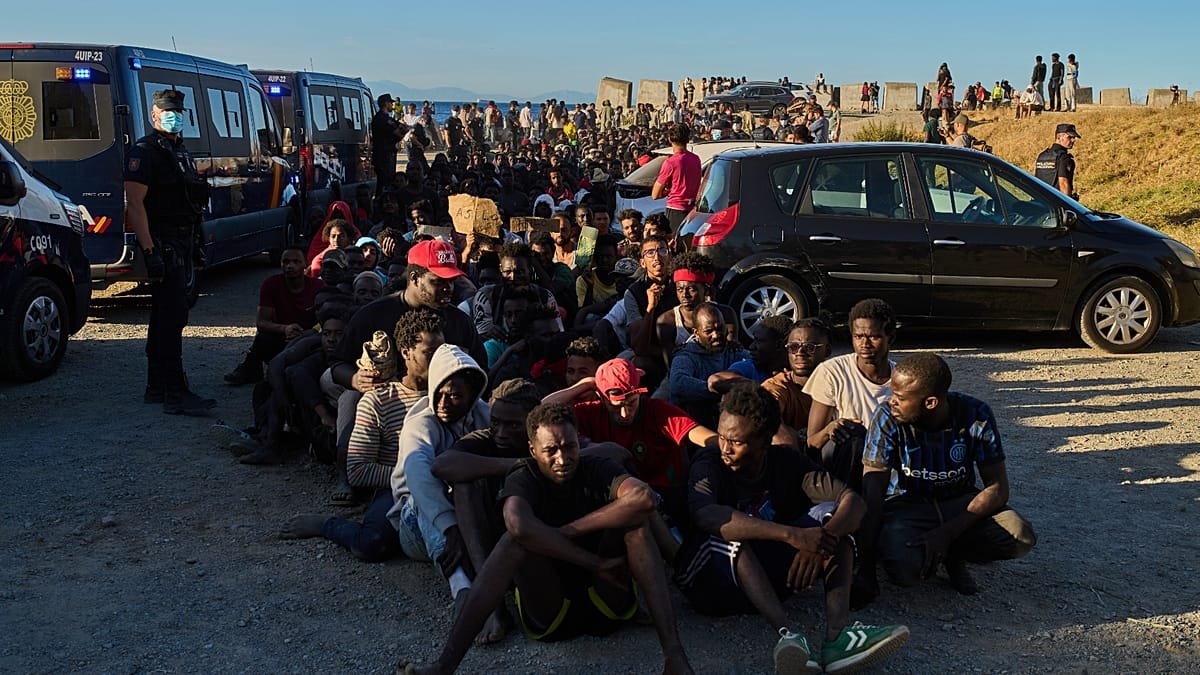
Morocco’s National Human Rights Council (CNDH) has once again pointed the finger at Spain. In a preliminary report released on 8 August, the council accuses the Spanish security forces of having assaulted and ill-treated some of the migrants who entered Ceuta on 30 and 31 July, when around 80,000 people crossed the border in just 48 hours.
According to the document, the Council’s monitoring team gathered testimonies from migrants who had already been returned to Morocco and who all reported assaults by Spanish officers, “especially in places beyond the reach of cameras”, in their own words.
The report also refers to minors who are said to have suffered insults and beatings at the hands of “extremist groups” as they passed through the city, and criticises the authorities in Ceuta for failing to provide adequate care, particularly for children and young people.
The CNDH goes further and blames the “local authorities” for the closure of restaurants and shops in the city, even though that decision in fact came from business owners themselves, following a recommendation from the local employers’ association.
The council has also traced the role of social media in triggering the influx: it says it had already identified misleading content on migration on 8 July on pages with more than 90,000 followers, and that it has analysed 23 Facebook groups with more than a million members between them.
Morocco already accused Spain in 2022
This is not the first time that the same Council has targeted Spain. In 2022, after the storming of the Melilla border fence that left at least 23 people dead, it pinned responsibility on the Spanish authorities for keeping the gates closed.
Although Morocco’s public prosecutor eventually closed the case citing “absence of evidence of a crime”, the ruling was controversial precisely because reports suggested it had been Moroccan officers who relaxed controls at the border, allowing sub-Saharan migrants to cross.
Morocco claims Ceuta and Melilla
The report also comes alongside a diplomatic front that Morocco has chosen to reopen. Justice Minister Abdellatif Ouahbi told pan-Arab channel ‘Asharq News’ that Rabat is keeping its historic claim to Ceuta and Melilla alive, and that the issue “remains on the table” whenever representatives of the two countries meet.
He spoke of a “long-term” strategy to reclaim what he considers Moroccan territory through dialogue, and took the opportunity to press another demand: the repatriation of unaccompanied Moroccan minors who remain in centres in Spain, whose responsibility, he says, also lies with the Spanish authorities.
It is worth recalling that neither Ceuta nor Melilla has ever been Moroccan territory, despite being in Africa. Ceuta came under Spanish sovereignty in 1580 during the Iberian Union, while Melilla has been Spanish since 1497, when it was seized by the Crown of Castile.
Read the full article here