





Many people would see any changes to property tax in this year’s budget as “broken promises”. Governments are elected to act in the best interests of the country, make sound decisions and ensure that, on the whole, people are able to lead safe and healthy lives. Allowing anyone to own two, three or more investment properties (supported by tax breaks) while others struggle to pay rent or and will never own their own home, is not good governance. It has contributed to the situation we now have of homes being seen as investments, rather than places to live. Previous governments have been too timid to make changes, so I would applaud this one for being braver. Lyn Fletcher, Eastwood
Treasurer Jim Chalmers claims there is a housing supply shortage. I beg to differ. I have family visiting from overseas later this year and they have asked to check short-term rental sites to find accommodation for them during their stay. I was astounded at how many properties suited to all budgets are available in my suburb alone. Something needs to be done to curb this trend and pass these properties back to the mainstream rental market. We need residential housing more than holiday rentals for tourists. Susan Wilson, Freshwater
Yes, tough decisions need to be taken to address obvious social inequalities and disadvantaged first home buyers, but why does it take so long for governments to act on known issues? Rorting of the NDIS, Veterans Affairs etc has been going on for years, yet it’s taken a full election cycle plus half of the current one to get any real action. While new governments are full of plans to implement their political priorities, they ignore what are called hygiene factors by failing to address major community concerns and obvious rip-offs. Imagine the savings and opportunities to spend money on positive policies if these issues were dealt with immediately. It’s time governments ran the economy like a business and stopped only chasing idealistic goals. Unfortunately, most politicians haven’t had any business experience at all, yet we expect them to run a $2 trillion economy. Unless we demand real-life experience and business acumen from our pollies, nothing will change and waste will go on forever. Ian Ferrier, Long Jetty
As an ageing Baby Boomer, I’ll congratulate the Albanese government for breaking an election promise they should never have made in the first place. I know plenty of other Boomers who’d prefer to see some action to help their children and grandchildren, who for so long have been locked out of Australia’s grossly overpriced housing market. No surprises that the squeals of protest from the property investor mob began long before Jim Chalmers’ budget. The changes announced by the Treasurer (I assume the leaks were on the money) will be nowhere near enough to close intergenerational inequality, but they’re a long-overdue start. Maybe this is the beginning of a revival of that once proud notion that a key Australian value is the fair go. Nick Franklin, Katoomba
Boomer bashing
Alison Stewart takes a swipe at George Brandis’ disrespectful comments (Letters, May 12). The same should apply to the Baby Boomer bashing in the Herald in recent weeks. It’s disrespectful and unjustified. With regard to property ownership, ABS (2021) showed that only a minority of Baby Boomers, 19.4 per cent, owned homes outright; 46.4 per cent still had a mortgage and 30 per cent were renting. Nor are the majority of Baby Boomers’ otherwise wealthy. An analysis by superannuation funds in 2023 found that the balance of people aged 60 to 75 who have superannuation (many do not) was $180,000. The media has failed to acknowledge where power now really lies. The fact is, Generation X is overwhelmingly in charge of government. They hold the most property wealth and are at the peak of their careers, earning the most money. Wealth has effectively been passed from Baby Boomers to the next generation; it is up to them now to ensure some equity for all. Francis McMahon, Mosman


As landlords have been held responsible for Australia’s housing crisis, it seems appropriate to many that they are deemed the ones to solve this national issue. The blame for our housing crisis has not been pointed at the successive governments that stopped funding social housing, or the developers who manage to minimise the amount of affordable or social housing included in their projects in order to maximise their profits. Yes, some landlords have exploited the system, but many are just trying to fund their modest retirement. Nor have those seeking to buy a home been advised to trim their expectation that they are entitled to own a home like the one it took their parents 50 years to pay off. Like many older citizens, I am tired of being told by a twenty-something that I am lucky to have a home and it’s not fair that they don’t. No one gave it to me. I earned it. Maureen Lysaght, Terrey Hills
Rein in developers
The provision of essential housing should not come at the expense of a beautifully planned heritage suburb (“Tower plan for bushland ‘paradise’ pits for need for housing against heritage value”, May 12). Willoughby Council has already well exceeded the number of new dwellings required by the state government and in addition, approval was issued to replace the existing supermarket at Castlecrag with an excessive five-storey commercial/residential building. Willoughby ratepayers have developed a Local Environment Plan (LEP), as required by previous state governments, which sets the rules for developments. Despite this, the new developer at Castlecrag has applied for an additional eight stories on this site. It sits at the gateway to a heritage-listed area, having only one road for the escape of residents of this bushland suburb in the event of a bushfire or any other emergency. If this new proposal is given the “green light”, our costly planning scheme would count for nothing, leaving the community and our heritage in the hands of developers who will move on and leave all the problems, damage and dangers they created to existing and future residents. Brian McDonald, Willoughby
Mining country
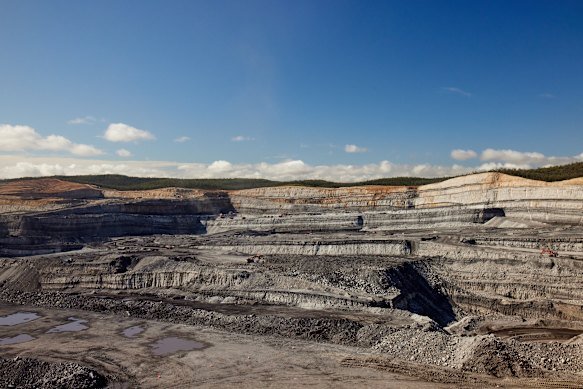
Oh, the irony. David Farley of One Nation, a party heavily supported by Gina Rinehart, read Dorothea Mackellar’s My Country at a church service. The magnificent landscape she describes, plus her historic family homestead Kurrumbede near Gunnnedah, is now owned by Whitehaven Coal, and her land of sweeping plains and ragged mountain ranges are now piles of open-cut mines. To know Dorothea’s beloved landscape no longer exists makes the poem not the rousing call that Farley intended, but instead a tragic example of how we destroy so much of Australia’s natural beauty for profit. Margaret Nolan, Darlinghurst
Your correspondent (Letters, May 12) rationalises the entrance of One Nation into the mainstream of politics by juxtaposing well-to-do politicians “sitting on the green and red benches in Canberra” with less fortunate voters who, by comparison, are “insecure” and lack the “credentials to change” the status quo. Did he not see Pauline leaving the post-election shindig in Albury on the private plane gifted to her by Australia’s richest woman? Kerrie Wehbe, Blacktown
The rise of Nigel Farage in Britain has a bit in common with Pauline Hanson’s growing popularity (“Gloom hanging over ‘horrible’ town shows why angry voters are lurching to the right,’ May 12). They have both been tapping into community discontent for decades. Both politicians have the backing of mega-rich investors while they claim to be representing ordinary citizens. Both have a debt to their financial backers, but what do these financiers expect in return for their outlay? Strong and transparent limits must be placed on the funding contributions made by vested interests to Australia’s political process. Glenn Johnson, Leura
So Pauline Hanson has a similar message to Donald Trump’s for making Australia great again (“Australia’s flame-haired answer to Farage: The orange shockwave felt across the world,” May 12 .) Great for whom? Certainly not for minority groups, low-income families, Indigenous people, environmental advocates, Muslims, asylum seekers or those seeking healthcare or transgender protections, if the US is any example. Look who generously finances the flame-haired populist and provides her with a $2 million aircraft – not a Piper but we still know who, when the time comes, will call the tune. Bernard Moylan, Bronte
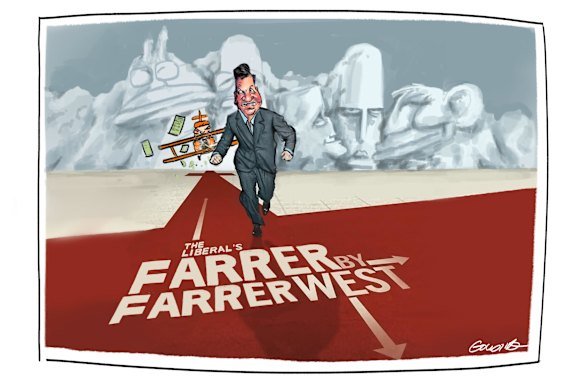
For all the hype and celebration at winning Farrer, far more significant than the One Nation victory was the Coalition’s capitulation (“One Nation says it’s coming for more seats”, May 12). There is every chance that One Nation will continue to strip seats away from the Coalition if it stays on its present trajectory. Angus Taylor in particular, is clearly not the answer. Matt Canavan presents flashes of being capable of a National Party resurgence but only if a real Liberal Party existed. This leaves the centre ground of Australian politics, where our elections are won, to Labor, the Greens and the independents. With no effective Coalition to worry about, One Nation will be the only option for conservative voters, but will forever be a fringe party. Welcome to the new world of Australian politics. Warren Marks, Long Beach
Why does the Liberal Party talk about a possible coalition with One Nation but has never talked about a possible coalition with the teals? Why does the party oppose renewable energy more than it opposes racism? Especially as most Australians support renewable energy and oppose racism. Victor Bivell, Abbotsford
Alice in Woodsideland
The logic is impeccable. That’s if you were with Alice in Wonderland. Woodside says that, because West Australia will miss its 2050 net-zero targets anyway, the gas giant should be allowed to proceed with its emissions-intensive environment-wrecking Browse project (“WA to miss net zero targets by up to a decade,” May 12). Senior campaigner from the WA Conservation Council Greta Carroll counters this magic thinking with the cold hard truth. Browse gas would be “expensive, unreliable and polluting, disastrous for both the economy and the environment”. So true is this that one wonders whether Woodside is engaging in a diversionary skirmish when its real target is the government’s proposed domestic gas reservation scheme. Either way, we know it’s in everyone’s interest to accelerate Australia’s investment in clean energy and healthy air. Woodside’s self-interest is out of joint with what’s best for us all. Tom Knowles, Parkville (Vic)
Josephines hit back
Your correspondent Rosemary O’Brien dares to invoke “Josephine voters” as a possible source of support for Pauline Hanson (Letters, May 12). I must object in the strongest terms on behalf of all other Josephines completely appalled by such an accusation. Leave us out of it, please. Josephine McSkimming, Coogee
This is one ordinary Josephine voter, Rosemary, who would never vote for Pauline. My hope is that the divisiveness within our society may be overcome by focusing on what a great country we live in, as we read about the wars, poverty and inhumane behaviour in other parts of the world. Everyone who lives here deserves a fair go. Josephine Piper, Miranda
Wenty wonderland
Wentworthville journalist Brianna Parkins doesn’t mention some of the other good things about the suburb I have lived in all my life (“My suburb’s no place for pretenders”, May 12). Yes, there is a range of food outlets (mostly but not all from the sub-continent). There are also such things as a range of grocery outlets, different schooling options, closeness to arterial roads, good train service, even a few green places for the community and a friendly smile from those you meet. Jill King of Lane Cove (Letters, May 11) would love the place. Jennifer Blackman, Wentworthville


As a Wenty resident of 40 years my thanks to Brianna Parkins for her celebration of all things Wenty. Great to see respect for our top spot, right down to the ocean sounds of the motorways and the gift of neighbours and residents. Cathy-Anne Grew, Wentworthville
I was surprised to read about the experience of Jill King, who finds that people out walking in her suburb seldom greet one another. I walk nearly every day in the bush around the Sutherland Shire. People there neither walk dogs nor have mobile phones in their hands. My own random survey is that nine out of 10 people say hello, including those on bicycles. On one occasion I met a Chinese family and said good afternoon in Chinese. It invoked a big smile – and the elderly gentleman even gave me a hug. John Dodson, Burraneer
Decentralise data
Australia’s expansion of large-scale data centres in metropolitan areas raises serious planning and resource concerns (“Project Mars has landed in Sydney. It’s set off a war of words”, May 12). At a time when cities are grappling with housing shortages, it is difficult to justify allocating scarce urban land to infrastructure that also consumes significant public resources. These facilities place more pressure on already stretched power grids and water supplies, assets funded and shared by the broader community. A more balanced approach would see governments steer major data centre developments to regional and rural areas where land is more abundant and new economic opportunities are needed. This would ease pressure on capital cities and support regional growth. Planning frameworks should also require developers to take greater responsibility for their resource use. This includes investing in dedicated renewable energy generation for their facility and adopting closed-loop water cooling systems to minimise environmental impact. Australia needs to rethink where and how this infrastructure is built. Graham Hansen, Denistone
Lesson for unis
As the number of Australian universities under scrutiny for poor management grows, so does the mockery of the courses they offer on business management. After all, in this corporatised world if they can’t demonstrate their ability in this subject, they certainly shouldn’t be teaching it (“University board implodes after multiple resignations”, April,12). Iris Freeman, Woronora
- To submit a letter to the Sydney Morning Herald, email letters@smh.com.au. Click here for tips on how to submit letters.
- The Opinion newsletter is a weekly wrap of views that will challenge, champion and inform. Sign up here.
Read the full article here