






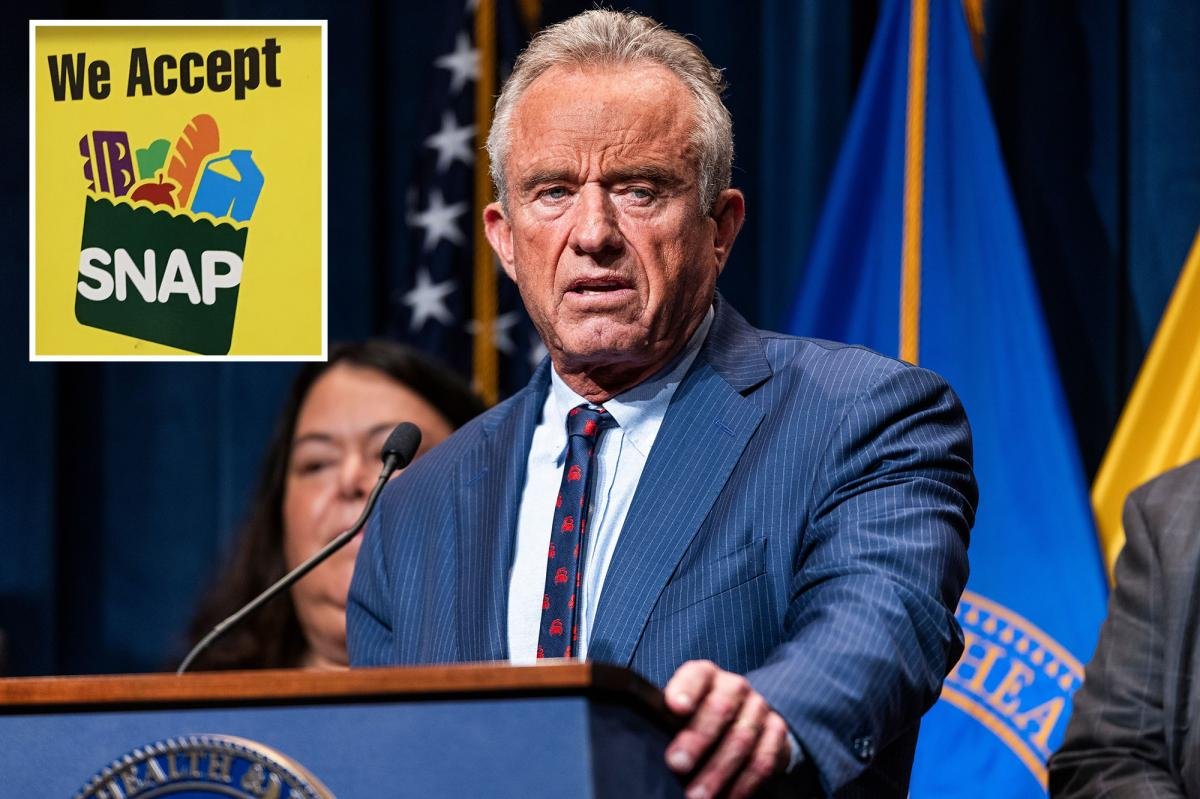
WASHINGTON — Millions of parents refusing to pay child support may have their Supplemental Nutrition Assistance Program (SNAP) eligibility revoked after the US Department of Agriculture rescinded a Biden administration rule earlier this month, The Post has learned.
The move, which revives a policy implemented during the first Trump administration, could save taxpayers more than $8 billion per year in money that’s formerly gone to delinquent child support payees.
“This is not about kicking people, who truly can’t afford to make payments, off SNAP,” said Alex Adams, assistant secretary for family support at the Department of Health and Human Services’ Administration for Children and Families. “It’s about getting people to have a plan in place so that they can fulfill both their legal and their moral responsibility to their children.”
Under former President Joe Biden, the USDA’s Food and Nutrition Administration had, in Adams’ words, “shut the door and basically discouraged states from using” child support delinquency to disqualify would-be SNAP recipients, pursuant to a June 6, 2024, memo.
Only Arkansas, Kentucky, and Mississippi had implemented any restrictions as of the following year, per a 2025 State Options Report published by the USDA.
The Biden-era guidance was rescinded in a July 20 memo that allows states to strip SNAP benefits from parents without primary custody who are supposed to pay child support — and are failing to do so.
“The child support program serves over 12 million children each year, bringing families closer to escaping poverty and decreasing the reliance on public assistance programs,” the memo stated.
“Currently, too few single-parent families enrolled in the Supplemental Nutrition Assistance Program (SNAP) receive child support at all, with even fewer receiving the full amount they deserve.”
SNAP benefits, commonly known as food stamps, serve a total of 42 million Americans. Of those, roughly 3.8 million are parents — both custodial and non-custodial — with formal child support orders, per the most recent HHS figures.
With the feds paying out $190.29 in average monthly benefits per person, that amounts to more than $723 million per month being spent nationwide on child support-owing parents — and nearly $8.7 billion every year.
“The previous administration undertook a number of actions to get away from enforcement,” Adams explained. “They even renamed the office at HHS from Child Support Enforcement to Child Support Services, so they were trying to take an approach that arguably was derelict towards legal and moral responsibility that non-custodial parents have towards their children.”
“We hope to have conversations with states about adding this tool to their tool belt,” he added.
The initial May 1, 2019, rule from the first Trump administration stated: “If the State Child Support Agency determines that the non-custodial parent is not cooperating in good faith, the State agency will determine whether non-cooperation constitutes a refusal or unwillingness to cooperate as opposed to an inability to cooperate.”
“Noncustodial parents determined to have refused to cooperate are ineligible and State agencies do not have the ability to establish good cause,” the memo added.
HHS has also been moving to revoke passports for parents deemed delinquent, with more than 10,170 yanked since Trump took office in January 2025.
“HHS partnered with the Department of State and announced that we’d be revoking passports for non-custodial parents who were in arrears by a certain dollar amount,” Adams said.
“We’ve collected $2.2 million from parents —or non-custodial parents who suddenly made a payment — to avoid having their passport revoked.”
Last year, the USDA had sought to restrict candy and sugary drinks from being purchased with food stamps, but a federal judge last month ruled against redefining which food could purchased with the SNAP benefits.
Read the full article here