





Published on
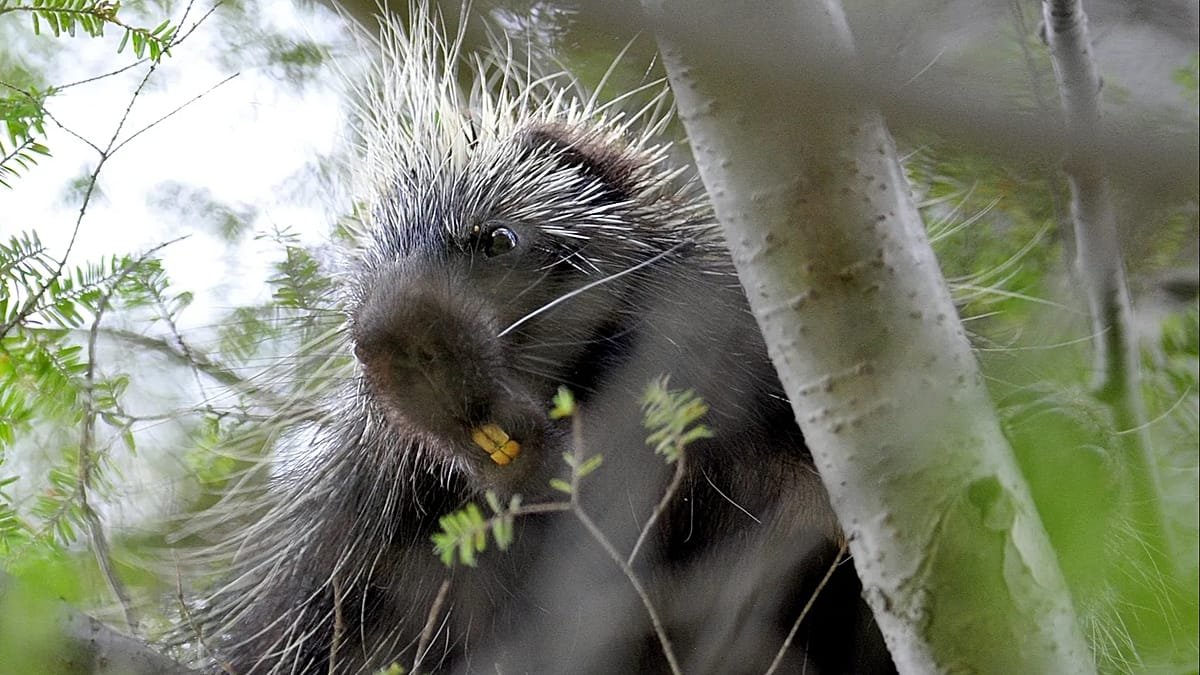
The Leoncin commune, east-central Poland on 14 August reported an unusual visitor in the garden of one of the houses.
According to the account, the property owners alerted the authorities to a porcupine that first “sampled the garden plants”, and as the owner was reporting its presence, “managed to get into the house”.
The latest incident follows that of 11 August in Łomianki, where the first porcupine was caught and another was found in the Mazovian region. Both animals were placed under the care of a vet, who confirmed that they are healthy.
Search continues for the Bemowo porcupine
The “Kopytka z nadzieją” foundation, which cares for wild and farm animals, told local TV, TVP3 Warszawa that a total of three animals are at large. They most likely all escaped from the same owner.
According to various reports, in recent days porcupines have also been seen in Warsaw, the Polish capital itself. As the foundation reported on 15 August, searches are under way for the animal most recently spotted in Warsaw’s Bemowo district, 2–3 km from Fort Bema. So far there has been no information that it has been found.
The foundation is urging people to check “residential courtyards, green areas and places where the animal might try to find shelter”.
Porcupines are large rodents, best known for their distinctive long quills. They are found mainly in Africa and Asia, where they use them to defend themselves against predators. They do not occur naturally in the wild in Poland, although some are kept by people.
The porcupines that have appeared around Warsaw most probably escaped from a private breeder, experts say.
Do not try to catch the porcupine
Some have been seen in the vicinity of the Kampinos Forest. The Kampinos National Park reported the appearance of such an animal last year as well. At the same time Vietnamese pigs also appeared in the area.
Both the “Kopytka z nadzieją” foundation and the Kampinos National Park are calling on people not to attempt to catch a porcupine encountered in the wild on their own. When it feels threatened the animal may defend itself, and its quills can pose a serious danger to both humans and dogs.
If we see a porcupine, we should, from a safe distance, watch which direction it is moving in, take a photo and send the foundation the exact location or a map pin according to a statement from the foundation which also announced its phone number: 883 720 000.
More and more wild animals at large
The presence of exotic animals on Polish territory is most often linked to private breeding. Experts point out that animals frequently escape from such facilities because of unsuitable conditions or because they are not adapted to life in captivity.
There are also cases where they are released by former owners who no longer want to or cannot look after them.
Experts also highlight the growing demand in Europe for exotic animals kept by private owners, often in conditions that do not support their welfare. At the same time environmental groups are calling for tighter regulations and better protection of wild species.
Read the full article here