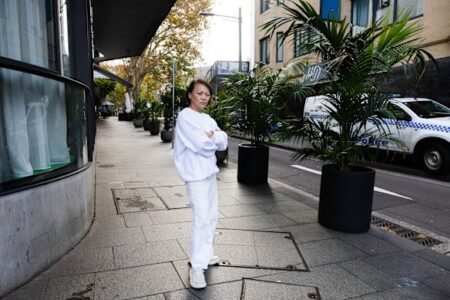




Young Queensland developer Kenneth Wagner wants to build a desperately needed hotel in Brisbane ahead of the 2032 Olympics, and he has the unique business model to make it work.
But the KPAT Hotels director says he can’t compete with Brisbane’s residential developers for prime land in the heart of the city to get a shovel in the ground as the region grapples with a critical shortage of hotel rooms.
“It is no secret that the residential developers in Brisbane … can afford to pay more for land than what hotel developers can afford,” Wagner said.
“If you put us against them, they’ll outbid us every day of the week. We just can’t compete.”
This week, Wagner opened the 180-room Avani Mooloolaba Beach Hotel on the Sunshine Coast – the first full-service internationally branded hotel in the region in more than 40 years.
Avani is only the second new hotel to open in the Brisbane, Gold Coast and Sunshine Coast region in the past year, after the 208-room Mondrian opened in Burleigh Heads in June.
Wagner, whose father Dennis is a Toowoomba property magnate and part of one of Australia’s richest families, said the Avani was only made possible because the Sunshine Coast Council made the land available exclusively to hotel developers.
“It meant that when [the council] put it up for sale, we weren’t competing with the residential apartment developers, or the management rights developers, in the market,” Wagner said.
“That is the only reason we’re sitting on a hotel here today and not a traditional beach apartment strata title building.
“We’re not ashamed of actually telling people that. We didn’t get subsidised. We didn’t get a discount. What we did do is we paid the most money on the day for what the council wanted delivered on the site.”
Queensland faces a shortfall of 14,700 hotel rooms needed by 2032 unless drastic action is taken to get more projects off the ground, according to a new report released on Wednesday by the Property Council of Australia.
Supply is already so constrained that events, including the NRL Magic Round and the Brisbane Truck Show, trigger a surge in room rates, with one night’s stay in Brisbane costing visitors as much as $900 last weekend.
Wagner, whose family built Toowoomba’s Wellcamp Airport and operates Oaks Hotels in regional Queensland, has urged all levels of government to make land in Brisbane’s CBD, South Bank and South Brisbane available to hotel developers, leaving sites in areas like Spring Hill and Woolloongabba for residential development.
“If it was the right land, we would love an asset in Brisbane pre-Olympics,” he said.
“It’s not necessarily a riverfront site, it’s something certainly with river views … but you need to be dead centre in the city.”
The Avani hotel was built in under two years, making it possible, Wagner said, to meet the accommodation shortfall before the Olympics.
“We need fast approvals. We need very little red tape, and the core thing is, we need the land made available to us,” he said.
The state’s hotel shortage is now a long‑term problem, not a short‑term dip, Property Council Queensland executive director Jess Caire said.
“The demand is here, the global spotlight is coming, but the rooms are not,” she said.
“Queensland’s hotel markets are doing exactly what we would hope – attracting visitors, lifting occupancy and driving strong returns, yet the supply response has stalled completely.”
On current trends, the planned pipeline will deliver only 9 per cent of the government’s own long‑term 40,000‑room Destination 2045 goal.
Construction costs for mid‑ to high‑end hotels have risen close to 40 per cent since 2019, with a further 18 per cent increase expected across 2026 and 2027, according to commercial real estate agency CBRE.
“The gap between what a hotel costs to build and what it can earn is widening every month,” CBRE head of hotels research Ally Gibson said.
“Projects that didn’t stack up last year stack up even less today. The market is performing – the economics of building are broken.”
However, Wagner has found a viable alternative.
“Our model is a little bit different in that we have a fully vertically integrated delivery model,” he said.
“We’re the developer, we’re the builder, we’re the owner, and we’re the operator. That’s probably the core thing that allows us to compete where others may not be able to.”
Wagner said temporary accommodation options would be necessary for the Olympics, pointing to Sydney’s use of cruise ships for the 2000 Games.
“That being said, temporary accommodation on cruise ships docked at Hamilton can’t be our primary source of tourist accommodation,” he said.
Room‑night demand in past Olympic host cities has usually been higher in the second and third years after the Games than during the event itself, according to the Property Council’s report.
Start the day with a summary of the day’s most important and interesting stories, analysis and insights. Sign up for our Morning Edition newsletter.
From our partners
Read the full article here