





The full-scale Russian invasion of Ukraine has been going on for 1557 days. Kyiv is still recovering from Russia’s most recent “revenge attack” last weekend, when Russia launched nearly 600 drones and 90 missiles, most of them directed at the capital.
Over the four years, thousands of Ukrainian civilians have been killed and cities and towns decimated. There is no sign of the conflict ending, with Russia ramping up its rhetoric and attacks all while the world’s gaze is on Trump, his war against Iran and the Hormuz Strait.
Strong international support for Ukraine, including from Australia, has long been seen in the Kremlin as a major obstacle to its war aims: it is under pressure. And this pressure must continue.
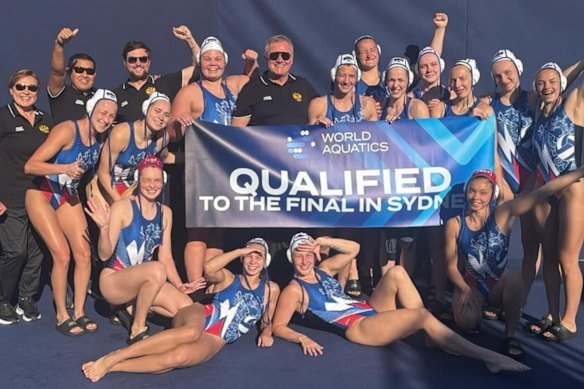
However, a controversial decision to allow Russia’s water polo team to compete in Sydney has put the federal government in a difficult position, posing legal and diplomatic dilemmas due to its sanctions laws. These Russian athletes reportedly have links to sanctioned organisations and oligarchs who either fund the teams they play in back home or are involved in linked sporting organisations.
The Russian women’s national water polo team is due to compete under its flag, anthem and national colours at the World Cup at Sydney Olympic Park Aquatic Centre in July, after World Aquatics overturned a ban on Moscow in April. The decision marks one of the most significant returns of Russian national representation to international sport since the Kremlin’s full-scale invasion of Ukraine, and has already triggered a boycott by several European countries of hosting events.
The Australian Federation of Ukrainian Organisations is calling for the investigation of visa and security details for all Russian athletes, officials and support personnel travelling to Sydney, and whether they are connected to entities already targeted under sanctions.
AFUO chair Kateryna Argyrou said Russia’s participation could not be separated from its war against Ukraine, nor the documented use of elite sport by Putin’s regime as a “tool of propaganda, prestige and international legitimisation”.
She said it also risked undermining the principled support Australia has shown for Ukraine. The federal government has sanctioned more than 1300 individuals and hundreds of entities connected to Russia, and has repeatedly framed support for Ukraine as a defence of international law.
Australia has committed over $1.7 billion in total assistance to Ukraine since the conflict began, which includes more than $1.5 billion in military support, making us the largest non‑NATO contributor of military assistance.
Our countries have also been working for several months on a bilateral security treaty that could deepen collaboration between the two nations.
The Department of Foreign Affairs and Trade would not comment on any potential sanctions compliance action, but said it opposed the sporting decision.
The Albanese government’s next step must be swift. It must investigate the circumstances surrounding the Russian athletes and entourage involved directly and indirectly with this event to ensure there are no breaches of imposed sanctions.
Russia’s return to the Sydney tournament is viewed by some as a sign that athletes could be fully reintegrated into future Olympic competition in Los Angeles in 2028 and potentially the 2032 Brisbane games.
The International Olympic Committee recently recommended lifting restrictions on Belarusian athletes, while continuing to maintain sanctions against Russia linked to anti-doping concerns. But it has said that “athletes’ participation in international competition should not be limited by the actions of their governments, including involvement in a war or conflict”.
As long as Russia is targeting Ukraine, its people, land and sovereignty, there must be no softening of the world’s approach to Putin: sanctions, condemnation, scrutiny and no provision of legitimacy, even through sporting events. It is a thin edge of a Putin-backed wedge. A “blood oil” incursion that funds the Ukraine war. We must be ever watchful.
Jordan Baker sends an exclusive newsletter to subscribers each week. Sign up to receive her Note from the Editor.


From our partners
Read the full article here