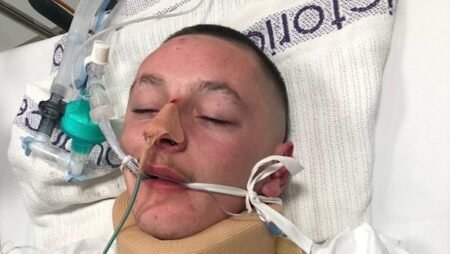






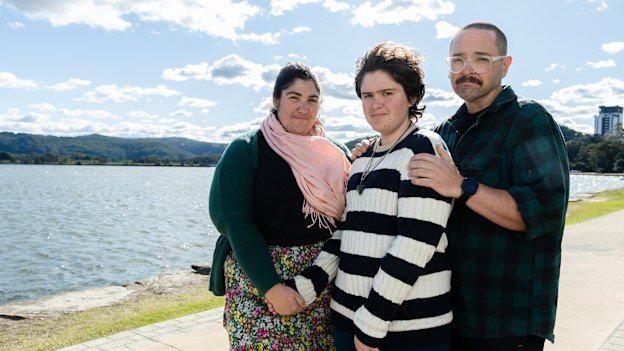
The memory of her child begging to die still makes Julia Holmwood feel physically sick.
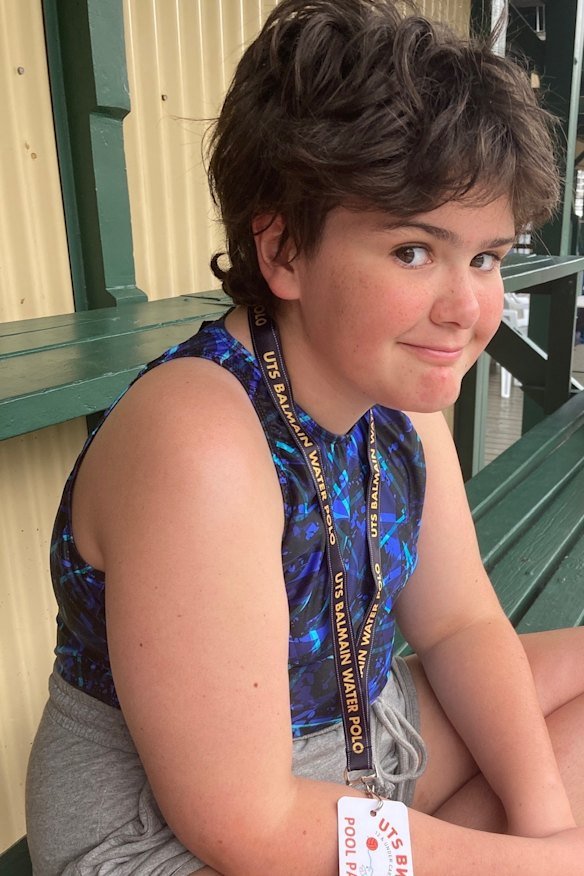
Her 12-year-old daughter, Penny, was tough. A few weeks earlier, she was dragging herself out of the pool during a water polo tournament, covered in bruises, but never complaining.
Now, Julia said she was slumped in a wheelchair at the local emergency department – unable to walk, struggling to hold her head upright, screaming in pain and passing out.
She said the ED doctor examined Penny’s initial results and declared this was ordinary period pain.
Julia recalls the doctor telling them: “My wife gets her period, she just takes naproxen and gets on with it.”
Penny’s torturous symptoms were not caused by her period. She had a rare bacterial infection of the sacroiliac joint, a life-threatening medical emergency that needed urgent diagnosis and antibiotics to prevent permanent bone damage, or worse.
Her parents believe she could have died if not for the intervention of another doctor later that day.
The case is just one of more than 400 accounts submitted to this masthead’s medical misogyny investigation in which women and girls reportedly had their pain dismissed, minimised, declared imaginary, or written off as a mental health problem.
The impact was often profound. One woman died of cancer after her pain was repeatedly dismissed as menopausal. Others were left permanently disabled, in chronic pain or with post-traumatic stress disorder.
Many were denied necessary scans to investigate their symptoms or were “treated like a drug seeker when requesting pain relief”.
Women were told that excruciating periods or pelvic pain that caused fainting and vomiting were normal. Others recounted seeing surgeons for a physical injury, only to be told they were depressed or hypersensitive.
Experts say that the vast majority of healthcare workers don’t intend to discriminate against women, but the bias facing women in pain was real, harmful and stemmed from persistent society-wide attitudes that cast women as “dramatic” and “hysterical”.
“I think people assume that sexism no longer exists, but it certainly exists in healthcare,” said Professor Louise Sharpe, a clinical psychologist and researcher at the University of Sydney.
Gender equity and pain experts, and a landmark government inquiry, have called for urgent training for doctors, nurses and medical students in unconscious gender biases, and a recognition that concluding a woman’s pain is all in her head can overlook a more likely scenario: the cause of her pain is unknown because it is chronically under-researched.
“This is just a pain that you get as a woman.”
The more than 2000 women who responded to this masthead’s medical misogyny investigation ranged in age from children into their 90s. They reported systemic, conscious, or unconscious gender bias that negatively affected diagnosis and treatment.
Penny Holmwood said she was struck by feeling her problems were being blamed simply on her being female. In 2023, she was twice ferried to her local emergency department, on NSW’s Central Coast, and told her pain was nothing extraordinary.
Her periods had not long begun, but she knew such extreme suffering should be taken seriously.
“I remember being told something like, ‘This is just a pain that you get as a woman’,” said Penny, now 15.
“I’ve woken up in the morning almost about to vomit from period pains, but this was different.”
According to the Holmwoods’ subsequent complaint, the first time Penny was taken to her local ED, she was discharged unable to walk, with a diagnosis of ovulation pain.
By the next morning, Penny was repeatedly asking to die. Her teeth were chattering. Asked where it hurt, she would point shakily to her right hip.

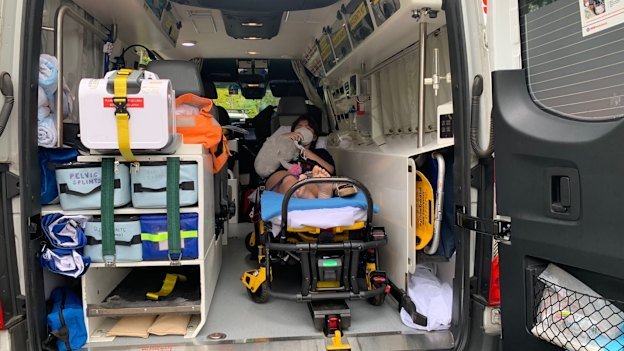
Julia Holmwood said a female paramedic who helped take them to hospital that day left her with some firm advice: “Even if the doctors believe it’s ‘just’ endometriosis (she emphasised the ‘just’ in air quotes), don’t leave the hospital until they work this out. Penny can’t keep going home in this level of pain.“
However, the Holmwoods said the fixation on menstruation seemed to continue until Julia snapped at the doctor, telling him: “If she had a penis her pain would be considered more interesting.“
When Penny was admitted to the ward that afternoon, they encountered a new doctor who prescribed antibiotics, Julia said.
“If this doctor hadn’t intervened, we feel Penny could have ended up critically ill or, in the worst-case scenario, died,” Julia said.
“I would love to know that doctor’s name and thank her.”
‘We are furious at how Penny’s pain was minimised and dismissed in [the] ED. It was dismissed as a women’s health problem. Even if it was period pain, and she was at 10/10 pain, why was that not treated?’
Lindsay Holmwood’s letter to the NSW Health Care Complaints Commission
The Central Coast Local Health District has since admitted that it failed Penny on multiple fronts.
After the Holmwoods lodged an official complaint with the Health Care Complaints Commission, the health district’s chief executive, Scott McLachlan, said Penny’s pain hadn’t been adequately managed during both her ED visits.
He acknowledged that had Penny’s pain scores been properly documented during her first visit, the hospital may not have discharged her.
“This is below the expected standard of care,” McLachlan wrote.
Although the Holmwoods received an apology, they said a key element of their complaint – a call for doctors at the hospital to undergo regular training on women’s health and unconscious bias – was ignored.
“They offered things like tours of the hospital with female only staff, or asking Penny to make artwork they’d use in education. But it all felt like work for us and not for them. And then we never heard anything after that,” Julia said. “We have zero confidence to go back until we know something has changed.”

This week, the health district repeated its apology to Penny and her family.
Acting chief executive Jude Constable said the “learnings” from Penny’s care were shared with the hospital’s relevant teams.
“We are committed to listening and learning from the experiences of our patients to strengthen safe and compassionate care regardless of a patient’s gender, background, or culture.”
Stereotypes of ‘brave men’, ‘emotional women’
Global research into women’s pain treatment highlights the need for change.
Echoing Penny’s experience, a 2024 study of almost 22,000 patient hospital discharge notes from the United States and Israel found female emergency department patients were significantly less likely to receive pain relief than men with the same problems.
Lead author, social psychologist Mika Guzikevits, said she initially hoped the research would support an interesting solution to this bias: have female doctors treat female patients.
“I wanted to believe that female physicians would not prescribe less painkillers to women,” said Guzikevits, a doctoral candidate at the Hebrew University of Jerusalem.
The researchers were disappointed to discover that female doctors were just as likely as male colleagues to give fewer painkillers to female patients, while nurses, who were mostly female, also perceived female pain in a biased way.
“We are all affected by similar stereotypes,” Guzikevits said.
A 2018 literature review called “Brave Men” and “Emotional Women” examining the results of 77 academic studies found that men were presented as stoic; tolerating pain and avoiding seeking help. In comparison, women in pain were perceived as hysterical, emotional, complaining, not wanting to get better, malingerers and “fabricating the pain, as if it is all in her head”.
Sydney psychologist Naomi Iliffe knows what it’s like to have pain doubted.
In 2021, she underwent emergency surgery for fistulising Crohn’s disease – a painful condition in which severe inflammation causes abnormal tunnelling between the bowel and other organs.
When the surgeon missed a fistula, causing infected fluid to pool in her body, it took days for hospital staff to recognise the problem, despite her screams of pain, Iliffe said.
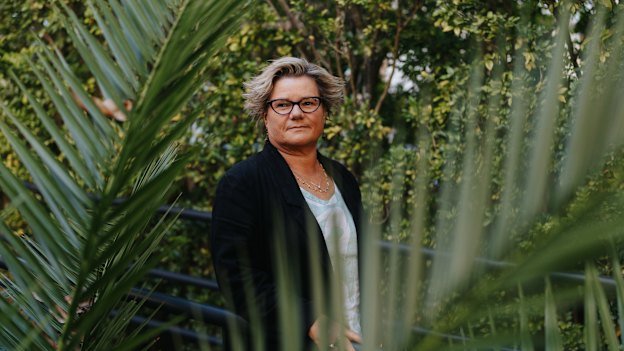
As she lay on her bed in the fetal position sobbing, Iliffe overheard a doctor outside her room advise a nurse to “just let her cry it out and see if she settles down”.
“It felt really alone, and it felt very scary actually, because I knew there was something wrong with me,” she said.
Iliffe was left traumatised after enduring days of excruciating, unmanaged pain that felt like “razor blades slicing through her skin” when she used the bathroom.
It took her buttock becoming visibly red and swollen for staff to order an MRI, which identified the ongoing infection.
Looking back, Iliffe has sympathy for hospital workers, who were battling a COVID-19 wave further limiting their time with patients.
Yet, she can’t imagine a man in pain would be told to “cry it out”.
After a second surgery to fix the missed fistula, a ward nurse casually said: “At least you know now, you weren’t making it up.”
“I remember thinking, ‘what is that about?’,” Iliffe said. “What’s been said about me?”
The long road to diagnosis
Failure to take women’s pain seriously can cause long diagnostic delays for patients. More than half of the 13,000 people who responded to the recent Victorian government women’s pain inquiry had accessed six or more different services to manage their pain, while close to a quarter of respondents visited more than 10 healthcare services before getting answers.
There can be other severe consequences. Research has found women can develop chronic pain, start misusing prescription pain medication, feel forced to spend money on expensive therapies that may or may not work and disconnect from the medical system because they feel constantly invalidated.
Anne* has spent about $10,000 in medical bills since she first experienced a chronic thrush-like pain almost a decade ago.
“My partner and I joke that I have Melbourne’s most expensive vagina,” the psychology student, 30, said.
When every swab returned a negative result for yeast and other infections, Anne said she was prescribed antidepressants and antianxiety medication for her mood.
“I kept being told to reduce my anxiety because fixing my mood would help fix my vagina. Did they stop to think that I was stressed because my vagina feels like it’s on fire?”
Anne was diagnosed with vulvodynia: a catch-all for chronic, unexplained, burning discomfort in the vulva.
The cause of vulvodynia is a mystery, and there is no diagnostic test. A 2025 comprehensive review found major gaps in research of this “poorly understood” condition, which affects an estimated 6 to 16 per cent of women at some point in their lives. Treatment options were supported by “low-quality studies” that lack “rigorous study design”.
“The equivalent would be if everyone who goes to the dentist with tooth pain gets put in a tooth pain bucket,” Anne said. “Imagine how efficacious the treatment would be.”
Anne waited five months for a consultation with a urogynaecologist, who glanced at Anne’s vulva, concluded that she could not see any abnormality, and prescribed a low-dose antidepressant called amitriptyline (a first-line vulvodynia treatment that alters pain signals to the brain).
“I couldn’t understand what just happened,” Anne said. “I can point to the bright red spots that look and feel different to the rest of my skin.”
Anne’s partner, Matt*, was shocked that the specialist did not perform a thorough physical examination.
“Whenever I’ve gone to a [medical] professional, they’ve looked at everything to the nth degree,” he said.
“It’s hard to come to terms with the fact that this is probably going to be with me forever,” Anne said through tears. “I’ll have to manage pain on my wedding night, and with my OBGYN when I come to have kids. I have to manage this every day, and it’s bulls–t.”
Gender bias experts said the risk of female patients being dismissed was also heightened when a person had a condition that was rare, complicated or had no conclusive diagnostic test.
“When [clinicians] can’t find something wrong, there seems to be this enormously easy thing to jump to the fact that many people present with psychosomatic complaints, and in my experience that simply isn’t the case,” Sharpe said.
The University of Sydney pro vice-chancellor said she once had a female client who was thought to be having so-called “pseudo seizures”. When a misspelling of her name meant her file couldn’t be found, a fresh assessment was done in emergency, and she was diagnosed with a rare neurological disorder.
Sharpe said such “incredible stories” of misdiagnosis were common, but she was hard-pressed to think of an affected male patient.
The trap of “normal” test results
Much existing research underpinning diagnoses and treatments either under-represents or excludes female participants. The federal government’s End Gender Bias literature review confirmed that medical research that influences practice too often failed to consider how sex and gender influence how diseases manifest. Conditions that disproportionately affect women, such as chronic pain syndromes, have received less funding and attention.
As a consequence, women are prescribed treatments that are mainly tested in men, despite women being disproportionately affected by chronic conditions. A common justification for this is that female participants would confound the data due to their fluctuating hormones.
Dr Lea Merone, a doctor and medical philosophy researcher, says the good intentions to ensure medicine is based on evidence have led to women in pain being “told there must be nothing wrong with you” because they have returned “normal” test results.
“We think we know everything about anatomy and physiology. We don’t know anywhere near everything yet, and that’s the key thing,” Merone said.
“Excellent things have come from our evidence; I can’t stress that enough. It’s given us excellent chemotherapy treatments. Cancers are being survived now when previously they were death sentences. But it is not perfect, and it is not complete.”
Emerging research suggests women suffer more significant toxicity from chemotherapy and immunotherapy and have worse pain, likely because participants in clinical trials for cancer treatments are overwhelmingly male.
Australia is one of many countries that do not mandate the inclusion of females in medical research. But in a major step forward, from this year, the Australian government’s Medical Research Future Fund will support only those projects that consider sex and gender at every stage.
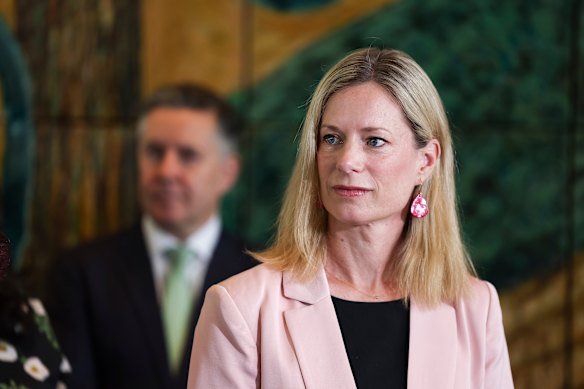
“Women aren’t just small men, and for a very long time that’s how they’ve been treated by medical research,” said Assistant Health Minister Rebecca White.

Pru Torrance, the medical research council’s general manager, noted women were not the only group to benefit from this change.
“We will also learn a lot about men’s health,” Torrance said. “How men’s experience of disease and health is different, and we may even identify evidence gaps and under-researched areas to support men’s health.”
Prescribing a fix
More than 70 per cent of the 13,000 women and girls who responded to Victoria’s inquiry reported healthcare professionals ignoring, dismissing or minimising their pain.
The landmark inquiry resulted in 27 recommendations, including a call to boost funding to support GPs to spend more time with women and patients with complex conditions.
This initiative was backed by this masthead, after its investigation found a federal election increase to Medicare payments could disadvantage women, by providing a larger funding increase for shorter appointments.
Defending the reforms, the office of Health Minister Mark Butler said there had been an almost 20 per cent increase in GP appointments lasting over 20 minutes for female patients.
MEDICAL MISOGYNY: A CALL TO ACTION
The Age and The Sydney Morning Herald have launched an investigation into medical misogyny: ingrained, systemic sexism across Australia’s healthcare system, medical research and practice.
More than 1800 women shared their experiences as part of our crowdsourced investigative series, which prompted a national outpouring of grief and frustration as women described feeling gaslit, dismissed or being told their pain was “all in their head”.
We are calling on the federal government to boost Medicare funding for GP appointments that last more than 20 minutes to improve care for women and others with complex health conditions.
The Albanese government and the Coalition have promised to pour $8.5 billion into Medicare to make GP visits more affordable and improve bulk-billing rates, but longer 20-minute appointments will receive a smaller proportional funding increase.
Doctors have warned that the plan could further disadvantage women by continuing to incentivise shorter consultations, which don’t give GPs enough time to address menopause, pelvic pain, and other women’s health issues.
The Victorian government confirmed work had begun with peak medical bodies such as the Royal Australian College of General Practitioners to “scope” sector-wide pain training requirements.
NSW Health Minister Ryan Park said the government was reviewing the NSW Women’s Health Framework and healthcare workers were trained to assess patients individually and recognise unconscious bias.
“Discrimination is not tolerated in the NSW health system.”
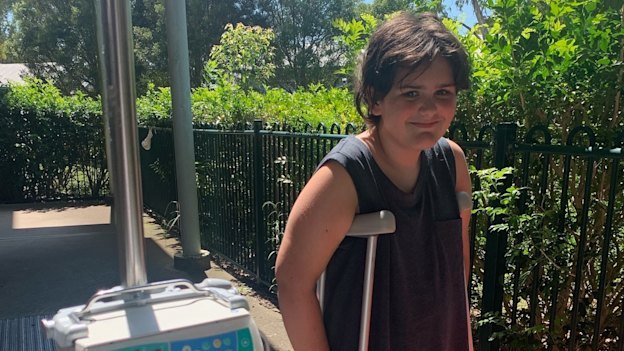
Penny Holmwood recently joined a group project about “issues within hospitals” with six other teenage girls.
In a sobering reminder of the ongoing need for reform, four had already experienced having their pain neglected or dismissed, Penny said. It didn’t matter what symptoms the girls described, even knee pain. The focus was the same: Could it be anxiety? Do you have a boyfriend? Are you pregnant?
Penny said that doctors need to move away from the idea “that inside a woman’s body is just a uterus and a brain with anxiety in it”.
Start the day with a summary of the day’s most important and interesting stories, analysis and insights. Sign up for our Morning Edition newsletter.
Read the full article here