




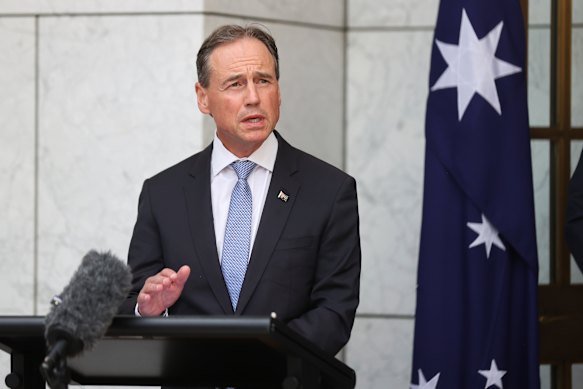
Weeks before the 2022 federal election, a deal made inside then-health minister Greg Hunt’s office locked 14 million privately insured Australians into paying some of the highest prices in the world for surgical hardware.
Federal bureaucrats later told Hunt’s successor, Mark Butler, that the deal went against their advice because it “predominantly benefited industry rather than providing a negotiated balance of benefits to industry and the Australian community”.
Instead of dismantling the agreement, though, Butler endorsed it – and instructed his department to enforce its terms.
Four years later, it remains the foundation of Australia’s medical devices market. Last year, a review told the government that, although the system had improved in some ways, consumers still paid “significantly higher” prices than other countries.
The agreement underpinned a little-known price-setting schedule called the Prescribed List.
The Prescribed List dictates what private health funds must pay hospitals for more than 10,000 items – from pacemakers and artificial joints to surgical staples, sponges and glues.
These prices are often far higher than rates paid in Australia’s public hospitals, and mean privately insured Australians pay up to three times more for surgical hardware than overseas patients. In turn, critics say, the prices push up premiums.
“We have a system where the government mandates a price floor for private patients that is far higher than what public hospitals pay for the exact same products,” said Stephen Duckett, a health economist and former head of the federal health department.
The current system isolates medical device manufacturers from normal commercial competition, forcing policyholders to subsidise corporate profits, Duckett said.
“It is a legalised transfer of wealth from Australians paying private health insurance premiums straight to multinational device companies. And neither party has shown the political will to fix it,” he said.
Hunt stands by the deal he made and said Labor, before the 2022 election, also supported the agreement and that its guiding principle had been to put downward pressure on insurance premiums. He also defended the consultation undertaken before his decision.
A federal government review of the agreement last year found that that while it was correct that prices for medical devices had fallen after Hunt’s deal, total outlays stayed high, partly because hospitals used more devices per procedure.
Official evaluation data reveals severe price gaps between Australia and health systems in New Zealand, Britain and France across many medical devices, including defibrillators, artificial joints and pacemakers.
Departmental briefs from 2022 to 2024 obtained under freedom of information (FOI) reveal the scale of local price hikes for a variety of devices.
For the most popular implanted cardiac defibrillator, the private Prescribed List benefit insurance companies had to pay in 2023 was $36,500. Public hospitals paid $14,500 for an identical device.
When setting prices for prescription medicines on the Pharmaceutical Benefits Scheme, Commonwealth bureaucrats negotiate directly with pharmaceutical firms to secure the lowest cost for taxpayers. But for medical devices, the list dictates prices through an advisory committee that reviews the figures three times a year.
In 2022, when medical technology firms were worried about a potential shake-up of the Prescribed List, Hunt built in a mandatory price floor for devices on the list, at 7 per cent above what public hospitals pay.
A Department of Health spokesman confirmed that the margin of 7 per cent above what public hospitals pay for devices remains in place.
Internal Department of Health documents show public servants formally refused to endorse Hunt’s agreement in 2022.
In March 2022, days before Hunt signed the agreement with the lobby group representing the device industry, the Medical Technology Association of Australia, a senior bureaucrat advised Hunt’s office that the department recommended the minister not sign the deal. The official warned of unmitigated financial risks and uncosted concessions.

Once Labor took office, the same bureaucrats told the new government that the deal Hunt’s office agreed to “was not drafted or negotiated by the department” and “predominantly benefited industry rather than providing a negotiated balance of benefits”.
Private Healthcare Australia chief executive Dr Rachel David said the Prescribed List locked in prices for medical devices in the private system that were consistently 7 to 20 per cent higher than public prices.
In some cases, the difference was far greater. David’s association provided this masthead with six examples of devices that were up to 358 per cent higher than prices paid in New Zealand for an identical product.
David said the Prescribed List agreement transferred hundreds of millions of dollars directly from health insurance policyholders to bolster the profit of private hospitals and device manufacturers.
“Prices have been too high for too long and international medical device companies have profited at the expense of Australian consumers,” she said.
The latest figures from the Australian Prudential Regulation Authority show private health funds paid $2.52 billion for medical devices in the year to March 2026, a 3.2 per cent increase on the previous year. Over the same period, private hospital admissions grew at just 1.8 per cent.
Responding to the warnings disclosed in the FOI documents, Hunt last week defended his record, and said that he and his office conducted extensive consultations with stakeholders and held numerous meetings with departmental officials throughout the reform process.
Hunt said a dedicated departmental taskforce led discussions with industry, hospitals and insurers to ensure patient access to breakthrough technology was maintained while still securing structural savings.
He also noted that Labor supported the deal after taking office.
A spokeswoman for Butler said the government had reduced device costs while working to maintain private health affordability and consumer access to new medical technology. She said the Labor government had inherited a Prescribed List agreement from the former government that was riddled with stakeholder disagreement.
The government commissioned Nous Group to review Hunt’s changes. The report, released in September 2025, agreed that administrative benchmark changes had reduced the prices of medical devices by up to $1.17 billion. In particular, the report noted an 80 per cent drop in the price of prostheses between the public and private systems.
But it also concluded that despite that progress, the Prescribed List set prices were “significantly higher than prices in comparable markets”.
The report’s top recommendation was that the Australian government urgently “review the potential role of international benchmarking in benefit setting”, in an acknowledgement Australian device prices were artificially high compared to overseas.

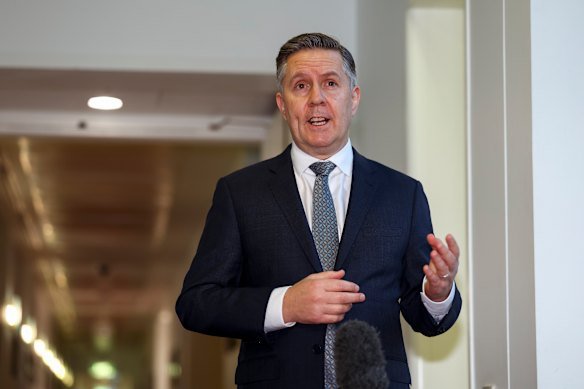
The medical devices industry argues that the premiums charged by private health insurers are too high – and that when device companies drop their prices, insurers simply pocket the difference rather than dropping insurance premiums.
Medical Technology Association of Australia chief executive Ian Burgess also rejected direct price comparisons with overseas markets.
He said comparing prices for medical devices in Australia to New Zealand was flawed due to different funding models. “You cannot compare Australia’s private health system – where supplying medtech occurs in a highly complex environment with unique regulatory, reimbursement and service requirements and costs – to New Zealand’s centralised public procurement system,” he said.
Burgess said the savings generated by the 2022 memorandum of understanding between his association and the Australian government had been real.
“Those savings were more than offset by increases in insurer management expenses and profits rather than being returned to policyholders,” he said.
Statistics from Australia’s prudential regulator confirm private health insurers generated $2.1 billion in net profit after tax in the most recent financial year figures are available for, while management expenses climbed to $3.4 billion.
The Examine newsletter explains and analyses science with a rigorous focus on the evidence. Sign up to get it each week.
Read the full article here