





Dude, where’s my Kia?
The Kia and Hyundai theft wave might have crested several years ago, but the threat is far from over. Researchers warn that owners of a Hyundai Sonata, Kia Optima and 18 other common car models could be stolen for another 25 years due to a lack of safeguards — and because on TikTok, “hacks” for stealing the cars abound.
“We live in one of the safest times ever recorded, yet crime is still incredibly common,” said study lead Jeffrey Brantingham, a UCLA anthropologist.
For the study, published in the International Journal of Forecasting, Brantingham and three other research scientists examined Hyundai and Kia car thefts from 2020 to 2023.
Because cars lingered on the street for longer periods of time during the pandemic — and because school and work closures gave young people more free time and less supervision — aspiring car thieves had more time to play Grand Theft Auto and then commit actual car theft on the streets.
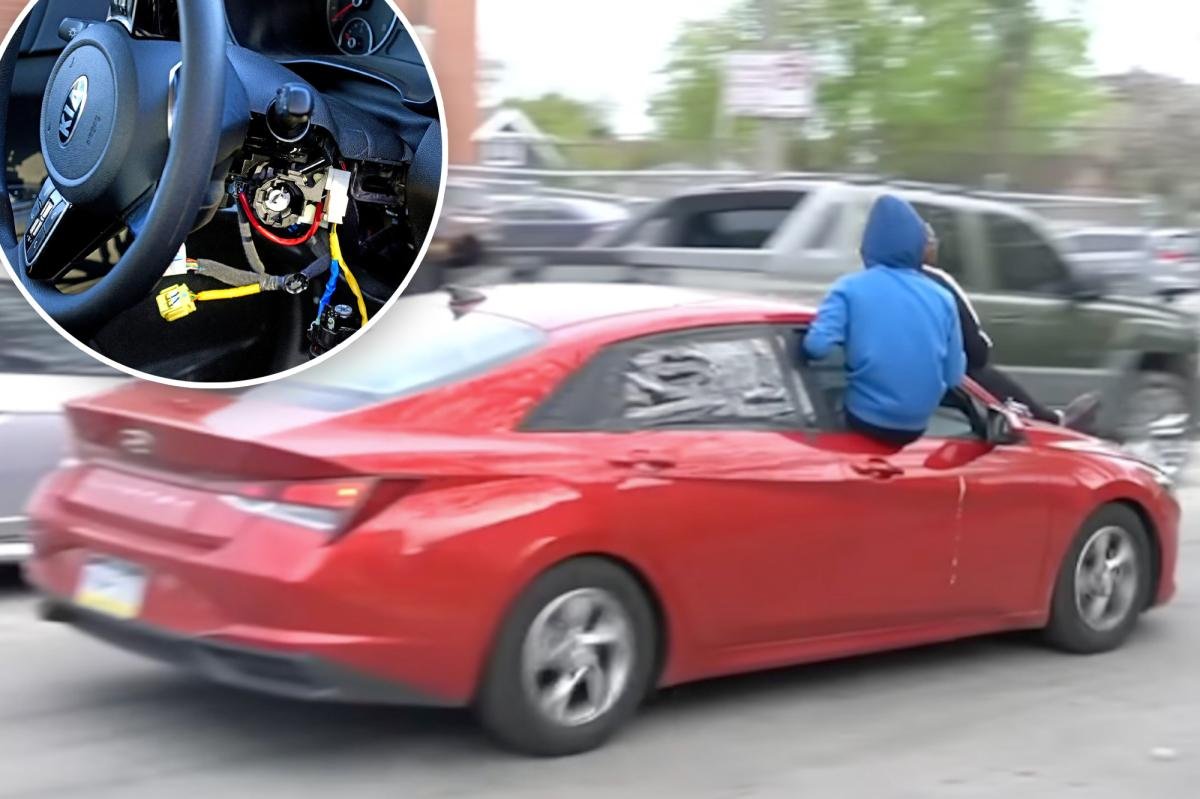
Their understanding was fast-tracked by crime-happy tutorials on TikTok, where self-proclaimed “Kia Boys” taught and encouraged teens to commandeer the cars in question. And thanks to these online tutorials, these wannabe racers learned to access car starters via the steering wheel casing and activate the ignition with nothing more than a USB cable.
Hyundai and Kia models were particularly vulnerable because from 2011 to 2022, the manufacturers neglected to equip 20 car models with engine immobilizers — standard (and cheap) anti-theft devices that could have easily shut down the steals.
“Viral social media videos from last year demonstrated how quickly and easily certain Kia and Hyundai models can be stolen,” said New York City Police Commissioner Keechant Sewell in 2023. (The researchers also blamed media outlets for helping fuel the thefts of Hyundais and Kias, which accounted for a staggering 35% of auto-theft claims in 2023 despite soaring sales for both auto firms that year.)
In New York City alone, car thefts jumped from 10,412 in 2021 to 13,745 last year, a 32% increase that’s been blamed on the Kia and Hyundai-jacking trend.
To make matters worse, the researchers predict that this trend could persist in Los Angeles through at least 2042, even through 2050, based on data from the Los Angeles Police Department.
Part of the problem is that while newer models update their anti-theft features, the versions that don’t have them enter the used-car market, making less affluent areas the new hot-wire hotbeds.
“For people living in those less affluent areas, the crime hotspot comes to them,” said Brantingham. “Said another way, this is not about criminal offenders moving from one area to another — it is about the ripe criminal targets moving.”
To deter thieves, the anthropologist urged buyers to make sure that their vehicle comes equipped with an electronic engine immobilizer. In the event that it doesn’t, buying a steering wheel lock is paramount, he said, adding that car owners should take advantage of security updates as well.
“If your car manufacturer has a recall to improve anti-theft technology, make sure to take advantage of it,” said Brantingham.
Kia and Hyundai were hit with a class-action lawsuit from 36 states, leading to a 2025 settlement where both companies agreed to outfit their whips with “industry-standard, engine immobilizer anti-theft technology, as well as provide ignition cylinder protectors,” per the UCLA release.
They already settled for $145 million, although they could face a further $1 billion in lawsuits from insurers following a ruling by the U.S. 9th Circuit Court of Appeals, the Los Angeles Times reported.
However, Brantingham said the best way to deter thefts is by studying human behavior.
“Documenting how people behave in complex online and offline environments is core to a better understanding of the human condition,” he said.
Read the full article here