






Economic uncertainty is weighing heavily on Canadians, as fuel costs and the high cost of living are affecting everything from summer travel plans to grocery bills. For many Canadians, the answer to summer spending may lie in thrifting.
While a significant chunk (35 per cent) of Canadians plan to spend less this summer and more than four in 10 (44 per cent) say higher fuel costs have affected their travel decisions, a new TD Bank survey shows, many are also looking to find creative ways to continue shopping while saving.
Nearly half (44 per cent) of all respondents to the TD Bank survey said they planned to redeem loyalty points this summer, while more than a third (36 per cent) said they would choose lower-cost alternatives, such as buying second-hand items.
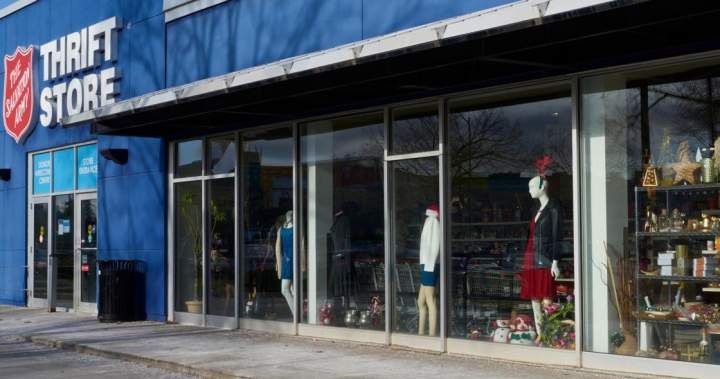
The survey results are part of what appears to be a growing trend of Canadians turning to thrift stores amid the economic instability caused by the U.S. trade war and the war in Iran.
In April, a survey by Habitat For Humanity Canada found that more than 80 per cent of Canadians agree that thrifting “simply makes sense” given the cost-of-living pressures and three in five planned to buy pre-owned items.
Thrifting has become a major trend in Canadian retail, particularly after the affordability challenges posed by the pandemic, retail analyst Bruce Winder said.


Get weekly money news
Get expert insights, Q&A on markets, housing, inflation, and personal finance information delivered to you every Saturday.
“Consumers have had to find new ways to stretch their dollar,” Winder said.
The trend is also apparent in the earnings of major Canadian thrift retailer Value Village, which saw net sales increase 8.9 per cent to $403 million in the first quarter of this year.
In the earnings call earlier this month, Savers Value Village CEO Mark Walsh pointed to “upward pressure” on the price of new clothes and apparel.
Aside from the cost, Winder said there’s another reason younger Canadians have been veering towards thrifting: many find it fun.
“It’s like a treasure hunt, and you can also get very unique things,” he said.
“Instead of buying something off the rack at the mall, you can find some really neat vintage items.”
Value Village is also betting big on its loyalty program, working with Microsoft to embed artificial intelligence models into the program.
“Our loyalty program is a strategically important part of our business as it represents roughly 73 per cent of our sales and is a key focus as we continue to grow our store fleet,” Walsh said.
Loyalty programs have also been a key strategy for other big Canadian retailers, such as Loblaw with its PC Optimum program, Winder said.
“You can stay within their ecosystem and get some serious rewards. That’s what customers are doing. They’re looking for reward programs that can cover their lifestyle and how they consume across their lifestyle,” he added.
It’s not just lower-income Canadians; even more affluent customers are flocking to Value Village, Walsh said.
“We continue to see the strongest growth in our younger and more affluent consumer cohorts,” he said.
The cost-of-living crisis is starting to make its way up the economic ladder, Winder said.
“We’re at a point now where the affordability crisis has not only hurt the folks at the bottom end of our economic ladder, but it’s starting to really pick at the people in the middle as well,” he said.
Read the full article here