



Momentum for a deal to end the Iran war appeared to grow Saturday as key mediator Pakistan said an agreement was closer than “ever before” and U.S. President Donald Trump was expected to discuss demining the Strait of Hormuz during next week’s Group of Seven summit.
Separately, Iran’s state-run television said funeral ceremonies for former Supreme Leader Ayatollah Ali Khamenei, killed in the war’s opening attack, will take place in July.
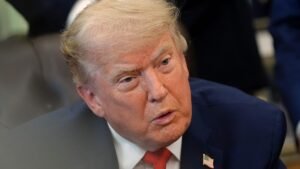
A senior U.S. official, who briefed journalists on condition of anonymity under rules set by the White House, said Trump planned to meet on the sidelines of the G7 summit that starts Monday with the leaders of Egypt, Qatar and United Arab Emirates to discuss efforts to wind down the war.
Britain and France, both G7 members, have expressed interest in assisting with demining the waterway once the conflict is paused. The official said both have military vessels at sea that could participate.
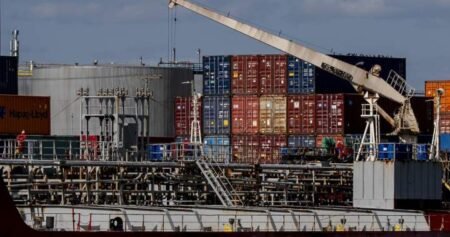
It was not immediately clear how many mines are in the strait that Iran has effectively controlled since shortly after the war began, virtually shutting down oil and natural gas shipments from the Persian Gulf. The U.S. has blockaded Iranian ports in response. A tenuous ceasefire has been in place since April 7.
Pakistan says a deal to end the war is imminent
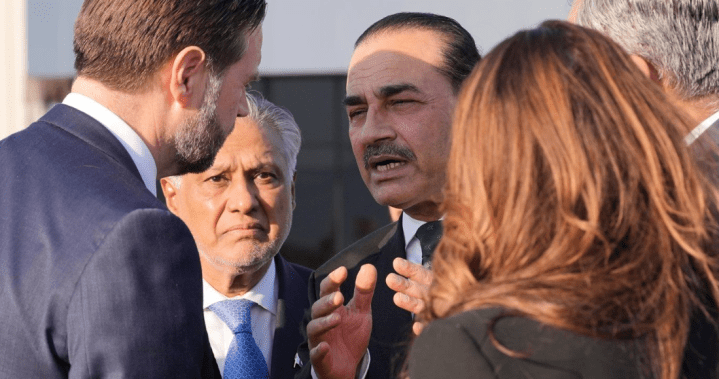
Pakistani Prime Minister Shehbaz Sharif said a deal aimed at ending the war was expected to be finalized within 24 hours. Pakistan was preparing for the electronic signing of the agreement, to be followed by technical-level talks next week.


Get breaking National news
Get breaking Canada news delivered to your inbox as it happens so you won’t miss a trending story.
Sharif also told his Qatari counterpart “a peace deal was ready for signatures by the relevant parties very shortly,” a separate statement said.
The senior U.S. official noted Sharif’s upbeat comments. The U.S. believes what’s on the table for Iran is a “very strong deal,” the official said, but declined to speculate on when it could be signed.
Iran signaled optimism but indicated more time was needed.
“Although it will not happen tomorrow, the possibility that it could take place in the coming days cannot be ruled out,” foreign ministry spokesperson Esmail Baghaei said in a statement carried by state TV. He later said “the likelihood of finalizing the memorandum of understanding in the coming days is high.”
Baghaei added that the Islamabad memorandum under discussion was focused on ending the war and “at this stage, it has been decided that there will be no discussion of the nuclear issue.”
Iran’s nuclear program and highly enriched uranium have long been at the center of tensions with the U.S. and Israel and an international source of concern.
Three regional officials said Friday, on condition of anonymity because of the sensitivity of the negotiations, they expected a signing ceremony in the coming days after officials in Washington and Tehran approve the agreement.
The apparent breakthrough came after Iran exchanged fire with the U.S. and Israel earlier in the week, threatening to rupture the ceasefire and push the Middle East back into full-scale war.
Iranian Foreign Minister Abbas Araghchi posted on X on Friday that an agreement “has never been closer.” Trump, who has asserted multiple times in recent weeks the countries were on the cusp of a deal, shared Araghchi’s post on social media.
Trump on Thursday claimed significant progress in negotiations, hours after he threatened to seize Iran’s oil industry.
Khamenei to be buried at the holiest of Shiite shrines
The funeral, burial and farewell events for Khamenei will take place between July 4 and 9 during Muharram, a traditional period of mourning in the Shiite Muslim calendar.
Khamenei is succeeded by his son, Mojtaba, who is considered less compromising and has not been seen publicly since the war began.
The funeral ceremonies are expected to begin in Tehran. The procession will move to Qom, a stronghold of many senior Shiite clerics, and then to Mashhad, Khamenei’s birthplace. He’ll be buried there at the Imam Reza Shrine, considered the holiest place among Shiite devotees.
Khamenei remolded the Islamic Republic after taking the reins following the death of Ayatollah Ruhollah Khomeini in 1989. Khomeini was the fiery, charismatic ideologue who led the overthrow of the shah and installed rule by Shiite Muslim clerics.
Khamenei ruled far longer than Khomeini. He greatly expanded the Shiite clerical class and built the paramilitary Revolutionary Guard into the most important body underpinning his rule. The Guard became a military and business behemoth, the country’s most elite force and head of its ballistic missile arsenal.
Read the full article here