






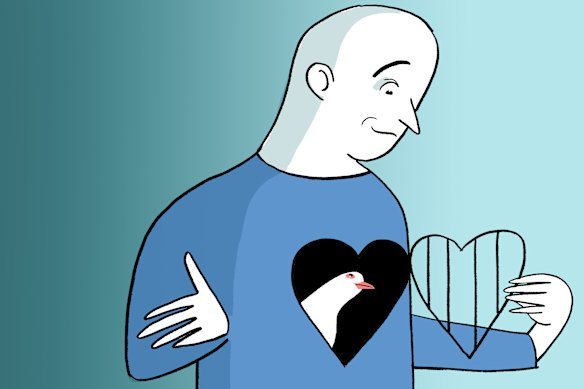
Each week, Good Weekend’s how-to column shares expert advice on how to navigate some of modern life’s big – and small – challenges. This week: How to forgive.
The first question might be, “Should I forgive?“, suggests Luke Russell, professor of philosophy at Sydney University and author of Real Forgiveness. Resentment, he explains, lies at the heart of every grudge, but it can be protective. “It prompts the person who’s been wronged to stand up for themselves and face their wrongdoer, who might say, ‘I’ve hurt you: I feel guilty and want to apologise.’ ” It can keep you safe from further harm and pave the way for moral reform.
He reminds me that Taylor Swift, queen of the grudge banger, is famously cautious when it comes to forgiving her “haters”. “You don’t have to forgive and forget to move on,” she told CBS. “If something’s toxic, and it’s only ever been that, what are you gonna do?” Forgive an unrepentant transgressor, she’s saying, and you risk becoming a doormat.
It’s an alternative view in a modern society shaped by Christianity, self-help gurus and media tsar Oprah Winfrey, who generally espouse a model of unconditional forgiveness (the victim forgives her offender, regardless of whether they’re repentant).
“Importantly, Oprah justifies forgiveness, not by pointing to the benefits that flow to the person who’s been forgiven, but to the benefits that are gained by the victim herself,” says Russell. Science is certainly on her side: recent reports reveal that hard-baked anger is a significant physiological burden, flooding our nervous system with cortisol and raising our blood pressure.
But let’s assume the wrongdoer is no longer a threat; maybe they’re even dead. How do we go about releasing the negative emotion around an unacknowledged hurt?
One: try to understand the perspective of the person who’s hurt you, says Russell: “Maybe you’ll start to feel some sympathy for them.”
Two: ask yourself, “What am I getting from this continued resentment?” “If the answer’s, ‘Nothing useful’, you might conclude that it’s just something to get rid of” – an excellent pathway, he adds, if your offender’s no longer alive.
Three: go high and simply bask in the warm benevolence of committing a good deed. “You might think, ‘I need to be the better person here’, ” says Russell; also, perhaps, “I’m sick of being in this hate rut.”
Four: consider whether you’ve ever harmed someone in the same way. “Just maybe,” he suggests, “it’d be hypocritical for you to maintain the rage.” Ask yourself what you’d want from your victim: their unending rancour or their mercy?
Unlike an apology, he says, forgiveness doesn’t need to be “received” by the wrongdoer in order to assuage years of pent-up ire and usher in a new era of peace.
Get the best of Good Weekend delivered to your inbox every Saturday morning. Sign up for our newsletter.
More from How to …
From our partners
Read the full article here