





Canadian businesses are bracing for more uncertainty as a new round of U.S. tariffs take effect following the collapse of trade talks between Canada and the United States.
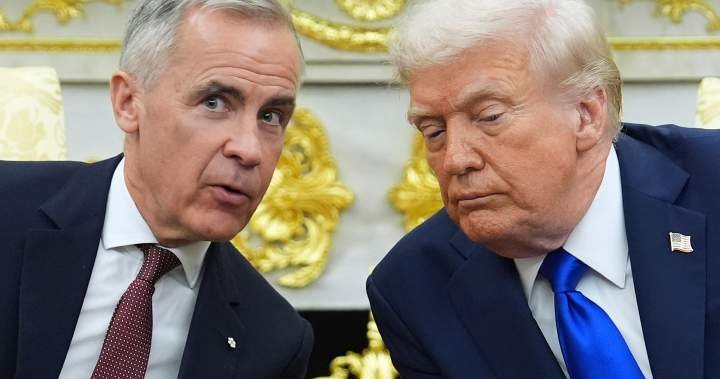
President Donald Trump’s 50 per cent tariffs on billions of dollars’ worth of Canadian goods came into force Saturday after negotiators failed to reach an agreement before the deadline.
Prime Minister Mark Carney said Canada was “walking away from a bad deal,” and vowed to respond with dollar-for-dollar retaliatory tariffs on U.S. goods.
For businesses caught in the middle of the trade war, attention is now turning to what the new tariffs will mean for costs, sales, jobs and what support will be available to help them weather the impact.
For Ela Onisto, who owns Wick’ed Fragrance House in Innisfill, Ont., the pressure is already being felt.
Onisto makes and sells small-batch natural candles, fragrances and decor. She tries to keep her supply chain as Canadian as possible, but says she is already paying more for some supplies while customers are spending less.
“It’s difficult because you need to determine where you’re going to add the cost… you don’t want to scare the customer; so as a small business owner, your margins go down,” Onisto said.
Sourcing ingredients in Canada doesn’t completely shield her business from the trade dispute, as some of her Canadian suppliers rely on the U.S. market.
“It’s a domino effect,” she said.


Get daily National news
Get daily Canada news delivered to your inbox so you’ll never miss the day’s top stories.
Candles are among the Canadian products facing new 50 per cent tariffs.
The Canadian Federation of Independent Business says forty per cent of small exporters sell products included on the tariff list, and one-third of those businesses expect their sales to fall by 50 per cent or more.
Matthew Holmes, executive vice president and chief of public policy with the Canadian Chamber of Commerce, said businesses have already spent months dealing with unpredictable U.S. trade policy.
“In 2025, there were over 52 different changes to the American tariff and tax code. That’s more than one a week,” Holmes told Global News.
Holmes said that uncertainty has caused some businesses to freeze major investment decisions, delay hiring or hold off on launching new products.
While a “no deal” scenario was not what anyone wanted, Holmes said governments are responding appropriately by preparing support for affected businesses and workers.
“They are treating this like a crisis, and that is the appropriate response right now.”
For Geoff Stewart, founder and president of Alberta-based Rig Hand Craft Distillery, uncertainty surrounding U.S. tariffs has already changed how he does business.
Stewart said concerns over tariffs caused the company to close a packaging facility in Texas, which cost it contracts in that state, as well as in Arizona and Alaska.
Rig Hand has since turned more of its attention to the Canadian market and other countries, recently making its first shipments to Japan.
But Stewart says moving away from the U.S. is not an easy solution for Canadian distilleries that rely heavily on exports. His business also sources some materials from the United States, leaving it exposed to the effects of retaliatory tariffs.
However, Stewart says the bigger problem is not knowing what comes next.
“The idea that there’s no tariffs today, and then in three days there are tariffs, and then seven days later, it might come off, then four days later it might come back. We can’t run our businesses with that amount of uncertainty there,” Stewart said. “And so we just need to know what the path forward is.”
Ottawa has promised additional measures to support businesses and workers affected by the trade war, with Carney saying more details will be announced in the coming days.
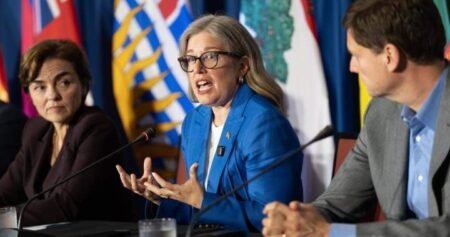
Ontario Premier Doug Ford has backed the federal government’s decision to walk away from the proposed deal, saying it would have been bad for Ontario’s auto, steel and manufacturing sectors.
Other premiers have also rallied behind Carney’s decision while calling for supports for industries and workers expected to feel the impact of the tariffs.
For small businesses like Onisto’s, the focus is on getting through the uncertainty, and appealing to Canadian consumers to continue to shop local.
“Support the small guys… we really depend on customers to support us,” she said.
Read the full article here