





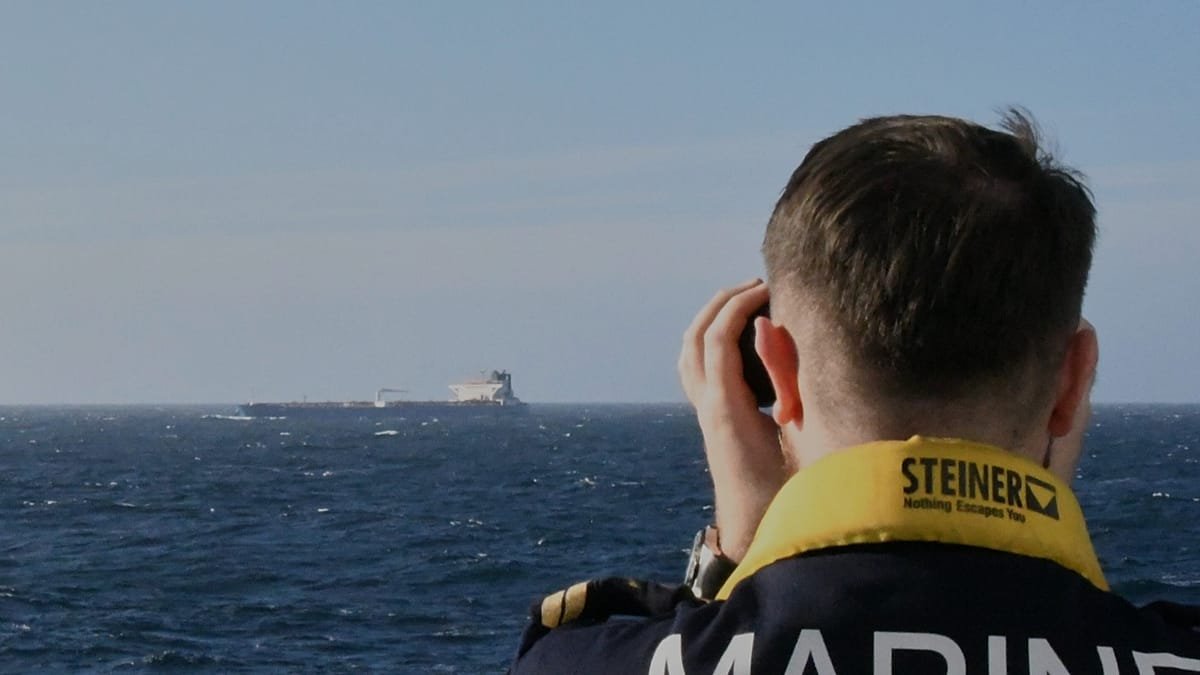
A Russian-flagged bulk carrier that Ukraine says may have been carrying grain from territories occupied by Moscow has docked in Israel and is now en route to Russia.
Tracking data from trade intelligence firm Kpler shows the ship, ABINSK, arrived in the Port of Haifa, Israel’s largest international seaport, on 12 April and departed on 15 April.
It shows the vessel’s condition after it left Haifa was “in ballast”, suggesting it may have unloaded its cargo in Haifa before departing. It then passed through the Turkish port of Çanakkale for several hours, with its next destination then listed as Istanbul.
Ukraine’s foreign ministry said it had warned Israeli authorities in advance about the vessel and what it described as the “possible origin of the cargo from the temporarily occupied territories of Ukraine.”
It added that the vessel unloaded its cargo at the port between 12 and 14 April, and requested that the cargo be seized based on a decision made by a Ukrainian court.
According to reporting by Axios, Israeli Foreign Minister Gideon Sa’ar told Ukrainian authorities it was too late to detain the ship after it had already left port.
Why was the ship allowed to dock?
There is no global ban on Russian grain exports. Whilst Ukraine considers the export of grain from occupied territories without its authorisation to be illegal under its domestic law, a lack of binding international restrictions means shipments like this can still move through global ports.
Russian grain is not under a full EU sanctions ban, with food products generally exempt from the sweeping sanctions the EU has imposed on Russia since its full-scale invasion of Ukraine in February 2022.
Imports from Russian-occupied Crimea, unless they are authorised by Ukraine, are, however, prohibited.
In practice, EU ports have been closed to most vessels linked to Russia’s merchant fleet, with exceptions for ships carrying food and agricultural products. Members of Russia’s so-called “shadow fleet” and ships suspected of transporting grain from Ukraine’s occupied territories are banned.
Countries such as Israel and Turkey are not bound by EU sanctions, meaning that stopping the ship would depend on their domestic legal frameworks.
Under international law, looting and pillaging, or the exploitation of resources by an occupying power for its own benefit, are prohibited and can be considered a war crime.
What is known about the cargo?
Investigators from the SeaKrime project, which tracks illegal shipping activity and is run by the Kyiv-based website and NGO Myrotvorets, say that the vessel carried at least 7,500 tonnes of wheat from Ukraine’s occupied territories.
According to their findings, the stolen grain was transferred between vessels before being exported from the Port of Kavkaz, and was declared to be of Russian origin.
Reporter Kateryna Yaresko said the origin of the ship’s cargo is from Kerch, located in Crimea, which Russia annexed in 2014. Her research shows that the ship departed on 17 March with grain cargo before being accepted for unloading in Israel on 12 April.
Publicly available ship tracking data does not show the vessel’s departure from Russia or Crimea. It does show that between 2018 and 2025, the ship traded primarily in the eastern Mediterranean and made multiple port calls in Russia.
SeaKrime’s findings, which are based on open-source tracking and shipping data, have not been independently verified, but a statement from Ukraine’s Foreign Ministry said that it suspects the ship’s cargo originated from Russian-occupied areas of Ukraine.
The ministry describes ABINSK as part of Russia’s “shadow fleet” — a clandestine network of aged vessels that are used to bypass Western sanctions.
These ships are often owned through a complex web of shell companies and engage in tactics such as turning off tracking systems to avoid detection.
Online data suggests that ABINSK is 20 years old, having been built in Japan in 2006 — the average age of trading vessels worldwide is just over 20. It has changed ownership multiple times. It previously sailed under the Liberian flag, with the name Lago di Nemi.
Ukraine’s Foreign Intelligence Service reported that more than 2 million tonnes of grain crops grown in temporarily occupied areas of Ukraine were exported in 2025, with 53.6% of shipments going to Egypt and Bangladesh.
Read the full article here