






Facing a wall of men’s underwear, struggling to visualise your 20-something son’s behind, is as faintly ridiculous as it is nostalgically tender.
You’ve traversed the tiny baby socks, toddler pyjamas, primary school sport shorts and teenager T-shirts in the familiar terrain of the outlet store, where his and his siblings’ childhood phases are mapped in stretchy cotton.
Here you are, in maternal midlife, still buying him his boxers.
A small but sure sign of unbroken closeness to an adored adult child who has lived out of home, but is back with me and his sister while finishing a degree? Or a tiny indication you may still be doing too much? I choose to believe the former.
“What’s he like?” asks a helpful shop assistant. “Oh, the most honest person you could meet, authentic, passionate about the environment, respectful, a beautiful person,” I answer, without needing a second to think.
“No, I mean his size!”
They don’t warn you about that crazy spin cycle of careening through life with one foot on a banana peel and the other on the accelerator during much of life for us, the diligent mothers and fathers convinced by intensive parenting that too much is just enough.
Nor do they tell you how sweet it is when your kids hit their twenties and reveal themselves as such fascinating human beings. This delicious blessing unfurls even as your housework, cooking, shopping (and spending) stays approximately the same.
Mother of two and girls’ wellbeing educator, Dannielle Miller, is among those contemporary parents rejecting the idea that adult kids remaining at, or returning to, parents’ homes equals “failure to launch”.
“It’s said that if you’re older and still living at home you’ve ‘failed to fly the nest’ or ‘failed to launch’. I don’t think that’s true any more,” says Miller, whose 23-year-old, Kye, lives with her and whose 25-year-old, Teyah, works with her two days a week.
“There’s a loneliness epidemic [hitting Generation Z the hardest] and many young people who have moved out are incredibly lonely; this doesn’t make a lot of sense to me. The more we can stay connected, as long as it’s working for both parties, that can be a beautiful thing.”
She is referring to University of Sydney research which found that more than two in five young Australians (43 per cent), aged 15 to 25, report being lonely and one in seven experience persistent loneliness lasting two years.
And Miller is touching on a second phenomenon; the mental health of their young person is a more widespread preoccupation for our generation than those prior.
We are far more voracious consumers of psychological and developmental information, and aware that many young people are struggling. In August, a pioneering study by the University of Sydney found the prevalence of severe mental disorders among young Australians has increased by nearly two-thirds over 15 years. Suicidal thoughts have more than doubled.


That parenting can “still be quite hands-on well into a child’s twenties” is confirmed by both anecdotal evidence and research, says Dr Alan Ralph, head of training at the Australian-developed, globally recognised Triple P positive parenting program.
“Parents and carers are providing emotional, practical and financial support for longer than previous generations,” Ralph says. The transition from actively helping shape a child’s world to walking beside them is often unfolding over a much longer period, and “parents and carers may feel the job now has a much longer tail than it did for many Gen X families.”
Though this is widespread, it can come with some judgement. When asked, “Why are you still doing that for your kid?”, Nicola Palfrey, head of clinical leadership at Headspace National and a clinical psychologist, replies, “because I can, and it feels helpful, and I love them – if it’s not helpful, I hope they will tell me.”
“Young people are inheriting a world that’s much less certain in many aspects, we had a level of certainty that if you work you can get on the housing ladder, start a family and have some job security,” she said.
Recent Headspace data showed that half of young people are worried about stressors including cost of living, job insecurity, study pressure, employment opportunities and housing affordability. The resulting psychological distress increases with age – peaking at 20 to 25. In this climate, why wouldn’t you stay close to your young person for as long as they feel it’s beneficial?
Melbourne mother of four and psych nurse Jenna Swinn “absolutely loves it” that her kids, aged 25 and under, still live with her and her husband, but says Gen Z kids are so bright, engaged and switched on, it does up the parenting ante.
“Our children are so psychologically minded, so aware of the world around them, so politically and socially engaged … and they’re not afraid to challenge us,” she says. “It’s wonderful and that’s how we raised them – to question things and understand themselves, but the flipside is there’s enormous expectation on us to always get it right.”
As is the case for many of her Gen X peers, much has changed between the parenting styles of the previous generation and hers.
“I had very loving parents, but they definitely were the parents and knew best, and you didn’t question it; now we’re expected to know and understand the psychology behind behaviour and have the emotional tools for the situation – when the reality is we’re parenting in real time and don’t always know what to do,” Swinn says.
Adult children are definitely more prone to being open with parents about what is going on in their lives, relationships and thoughts, says Nick Tebbey, national executive officer with Relationships Australia, and this is to be celebrated.
But as milestones dissolve in changed economic times, the extended presence of young adults can raise challenges for their midlife parents. Couples who may have expected some time alone may not get it, parents who have moved up a gear at work hoping to consolidate after the heft of the school years is over may find the financial impact of extended support taxing.
“You shift into more of a friendship relationship, and like any relationship it can have tensions,” Tebbey says. These can arise due to a generational clash in attitudes, values, political or gender beliefs, as shown in regular research commissioned by the group on the stressors in relationships.
“We’re also seeing more and more people caring for both ageing parents and now adult children, I think that brings a huge pressure in terms of responsibilities around midlife – it feels like you are being pulled in both directions … people are losing sight of self in that.”
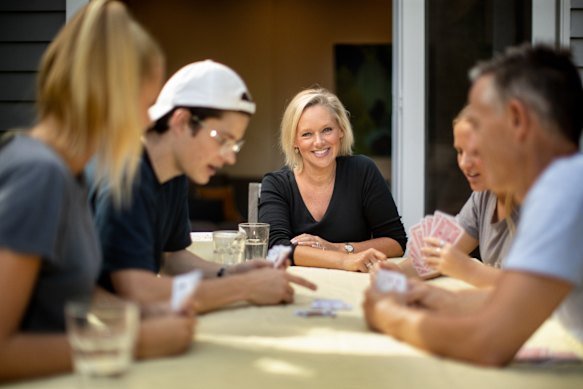
Research by the Australian Institute of Family Studies in August showed two in three young people (63 per cent) aged 19 to 24 are living with their parents. Many of their older peers are too, as reflected in 2024 data from the Household, Income and Labour Dynamics in Australia which showed just over half of young men (54 per cent) and 47 per cent of young women aged 18 to 29 are living with parents.
Among 23 to 24-year-olds, 48 per cent live with their parents either rent-free (28 per cent) or paying rent (20 per cent), and more than half (54 per cent) need to rely “completely” on their parents to meet their financial needs.
More parents are even entering the “club sandwich” generation, where their adult children return to live with them bringing partners and their own children, says Divna Haslam, a University of Queensland Associate Professor and clinical psychologist who researches child welfare.
“Kids have come home to try and save some money, so they are grand-parenting, parenting and [supporting their own parents] navigating aged care, it puts a lot of pressure on parents still in the workplace,” she said.
What matters is that they are healthy, they are loved and can have genuine relationships with other people; if you’ve done those things well then you’re winning.
Associate Professor Divna Haslam, research consultant and clinical psychologist at UQ
She cautions that mounting pressure on parents – particularly the idea they must keep supporting children to succeed – is unhelpful. “Historically, if you had a child that finished Year 10 and went and became a hairdresser and had some kids, you’d think that was a success,” Haslam said.
“What matters is that they are healthy, they are loved and they can have genuine real relationships with other people; if you’ve done those things well, then you’re winning.”
The need for more young adults to remain with parents is not surprising to Melbourne psychologist and podcaster Sabina Read, who has daughters aged 23 and 25, the elder of whom is at home and the younger overseas. While “our parents saw young adulthood as a very linear pathway”, Read says it now has “a much longer, and messier runway”.
Another generational shift is that parents are often in closer touch with their adult kids than in previous generations thanks to technology, and while this is “beautiful from an intimacy and connection perspective”, it has also changed what was once a time of natural separation and individuation for young adults.
“That leads some parents to over-orchestrating problem-solving and other support – it could be chasing up a landlord or helping with a job application – and that’s going to inadvertently stall young people’s development of self-efficacy,” she says.
This can amount to a disservice, albeit well-meaning: “As parents, if we’re robbing our young adults of learning, and falling over and failing and experiencing these things in their 20s … it can rob them of skills they’re going to need for the rest of their lives.”
Podcaster, journalist and mother of four girls aged 25 and under, Madeleine Grummet, agrees, saying it is still fundamental for young adults to leave home, and she thinks age 24 is the right time.
The ease with which our generation moved out and got jobs doesn’t exist for our kids, she concedes – “that sequence has virtually collapsed” – but they should have the experience even if it’s different.

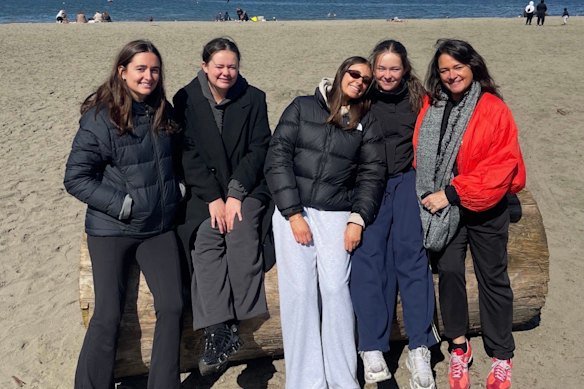
Even so, parents still play an important role: “Parenting kids in their 20s, your job specs change from manager to consultant – you lose that positional authority … but be there for them, to consult with them around decisions, but not to weigh in too heavily,” says Grummet.
It is sage advice that applies whether or not you and your adult children are currently sharing a roof. Should my adult son struggle again next year to think of birthday gifts, no doubt I will be back at the DFO – and if he and his siblings want to bounce in and out of my home, that is also more than fine.
In the words of joyous adult-child home-sharer Dannielle Miller, in the end for all of us, whether or not to keep the door wide open comes down to “a love decision”.
Be the first to know when major news happens. Sign up for breaking news alerts on email or turn on notifications in the app.
Read the full article here


