






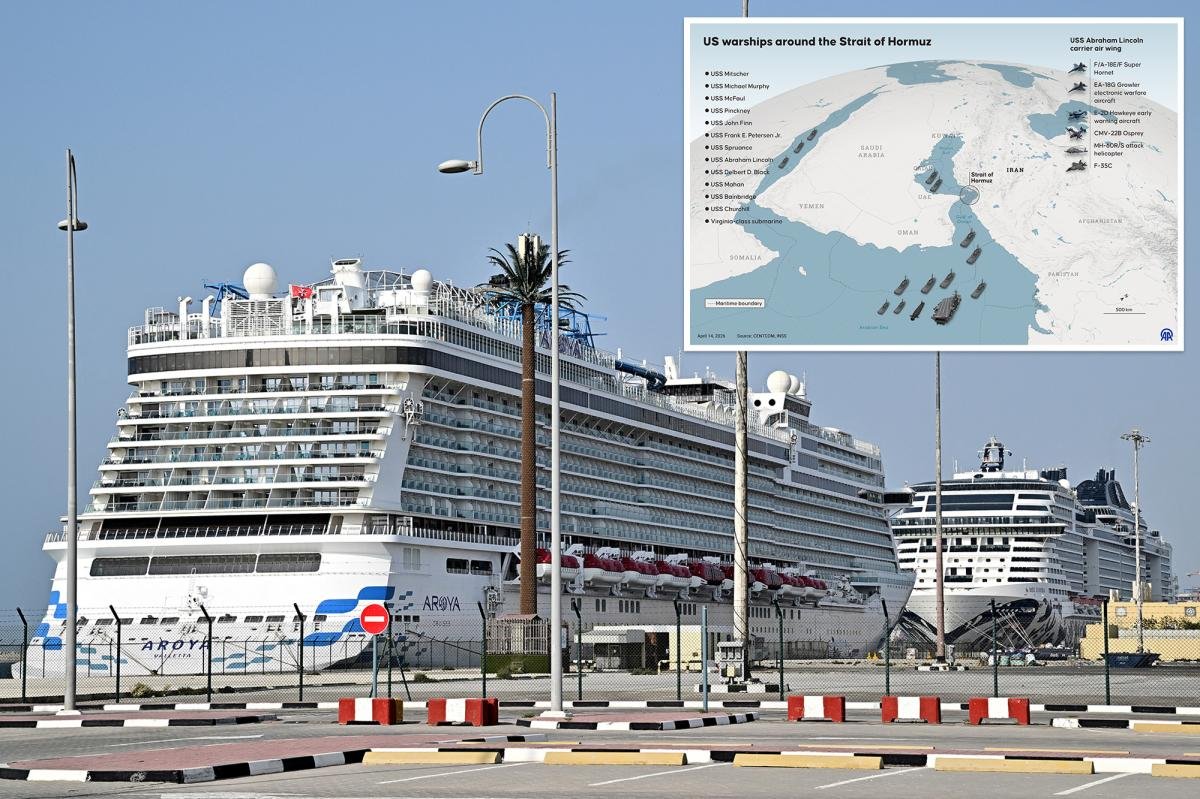
Global crisis = altered cruises.
The war in Iran continues to rage, amplified this week by the US blockade on the Strait of Hormuz, a sea corridor through which 20 million barrels of oil and a fifth of the world’s natural gas supplies traverse each day.
The conflict has spiked crude oil prices, affected travel costs, and drastically altered or ended cruise ship itineraries.
Several vessels operating itineraries in the Middle East are berthed after abandoning their winter programming.
“All my bookings for Dubai have been canceled for 2026 and 2027 already,” Tom Baker, president of Cruise Center, told Conde Nast Traveler. “I don’t see this market coming back anytime soon.”
Baker notes that, ahead of Europe’s busy summer cruise season, several cruise lines will divert from their traditional routes to reach the Mediterranean.
“To be frank, it’s a mess. Many ships on current world cruises will head across the Indian Ocean and up the west coast of Africa to meet their 2026 Med cruise programs,” he said.
“No luxury vessels are traversing the Suez Canal or the Red Sea due to Houthi attacks.”
Indeed, this week, MSC Cruises announced it was scrapping its Arabian Gulf winter season, pulling the plug on sailings aboard its mega-ship MSC World Europa — and sending it thousands of miles in the opposite direction.
The vessel, which can carry nearly 7,000 passengers, was originally scheduled to cruise from Dubai, Abu Dhabi, and Doha from November 2026 through April 2027.
It’s now set for the French Antilles — including departures from Martinique, Guadeloupe, and Barbados
Still, experts maintain that cancellations and rerouted itineraries are par for the course for cruise ships.
“Cruises planned for the region have been canceled or rerouted to the Mediterranean, Europe, and even the Caribbean,” Cruiseguru reporter Diane Tierney told Condé Nast Traveler.
“That’s one of the advantages of cruise travel—lines can shift fleet deployment relatively quickly and notify passengers whether to continue or cancel.”
The ongoing conflict in the Middle East is also hampering the nascent yet fast-growing Persian Gulf cruise ship market, where many ships operate on a seasonal loop, spending the winter serving ports like Dubai, Abu Dhabi, and Doha before transitioning to European locales for the summer.
Each spring, these ships reposition to ports in Spain and Greece, anchoring Mediterranean itineraries that attract nearly 9 million passengers annually.
However, this year, business as usual has been thwarted with spring sailings canceled, repositioning trips delayed, and schedules crammed into a narrower early-season window.
Moreover, the already taxed Mediterranean ports may now be responsible for absorbing even more passengers.
While certain vessels, including tankers, bear the risks and high insurance costs of transiting the Strait of Hormuz, cruise operators are less likely to court peril.
Experts note that cruise passengers en masse are uninterested in taking risks or sailing into uncertain waters, a hesitation that is reflected in operators amending or canceling their routes.
“If something isn’t right, the ship doesn’t have to go there. It can switch ports, stay at sea, or reroute entirely,” said former cruise director and industry consultant Paul Becque.
For travelers who are feeling trepidations, experts recommend preparation over panic; signing up for alerts and having a plan in place should things change unexpectedly.
Meanwhile, cruise ship veterans emphasize that resilience in the face of shifting winds, both literal and metaphorical, is part of the ethos of cruise travel.
“If something changes, you just treat it as another day at sea,” said Becque. “The ship itself is still the destination. You’ve got everything you need on board, whether it be food, accommodation, or entertainment, so you’re in a much more controlled environment than you would be elsewhere.”
From shifting itineraries to geopolitical jitters — including cartel-related violence concerns in Mexico and oil price swings tied to tensions with Iran — cruise lines are navigating choppy waters during their critical booking season.
In the face of fear, Royal Caribbean is going garish — debuting the largest cruise ship ever, complete with a treehouse suite that costs six figures a week.
Read the full article here