




Updated ,first published
Labor will modify its NDIS laws and invite eight weeks of extra scrutiny over plans to cut $38 billion from the scheme, in exchange for the Greens pushing the federal budget’s tax package through parliament this week.
The government secured a deal with the crossbench party on Tuesday after weeks of horse-trading over the two centrepieces of last month’s budget – the tax package and an overhaul of the $56 billion National Disability Insurance Scheme – spurred by furious debate in parts of the community.
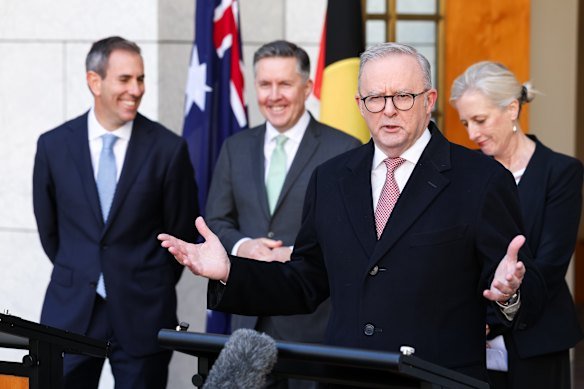
Prime Minister Anthony Albanese said there would be a small cost to the NDIS delays, estimated to be hundreds of million of dollars, but that the government would seek the Coalition’s support in pushing through with the scheme overhaul in August.
“We have a Senate that we have to deal with, and that is precisely what we’re doing,” Albanese said.
“These reforms are important. They’re a result of an ambitious budget that was handed down in the interests of the Australian people.”
The government has gambled its political capital by seeking to make historic cuts to the NDIS and introduce a tax package that includes a $250 income tax offset and $1000 instant deduction for workers, as well as curbs on negative gearing and a new method for calculating capital gains tax concessions.
It has copped backlash from the Coalition and small businesses over the surprise tax changes, and voters have also marked the government down for broken promises in opinion polls. The Greens, disability community and the Australian Human Rights Commission, meanwhile, have raised fears about a rushed NDIS overhaul.
The government responded to widespread outcry over the tax changes last week, making exemptions for small businesses with a turnover of up to $10 million, and proposing an “innovative business tax concession” for start-ups.
Opposition leader Angus Taylor said the government was making an assault on aspiration by hiking taxes on investors, housing and small businesses. But with the laws due to pass parliament by June 30, as the government had hoped, Labor will seek to ride out what remains of the political storm.
Albanese told the Labor caucus on Tuesday that tax reform was always hard, but there had been much stronger resistance to previous attempts at change, such as former Labor prime minister Paul Keating’s, than what the government was facing now.
In exchange for their support, the Greens secured a last-minute amendment to tighten a loophole around how investment properties are purchased through self-managed super funds, affecting about 1 per cent of home loans. An interim report into the financial services sector in 2014, by former CBA boss David Murray, had previously recommended ending the loophole but was never acted upon.
They also persuaded Labor to remove from the law broad ministerial powers for the treasurer of the day.
But the thrust of Treasurer Jim Chalmers’ tax package will otherwise be maintained. Labor is seeking to tax income from asset sales more similarly to income earned through wages, by scrapping the 50 per cent CGT discount and taxing “real gains” made on investments at a minimum of 30 per cent.
Controversy over the NDIS changes, however, will be drawn out for another eight weeks. The laws will enable the government to cut future NDIS spending by $38 billion in the next four years, and remove more than 240,000 people from the scheme.
Tweaks to NDIS laws made amid inquiry
Health and NDIS Minister Mark Butler on Tuesday said he had already agreed to make some modifications to his NDIS bill. He clarified that sweeping ministerial powers to cut spending on the scheme would be restricted to budgets for social activities and therapy hours.
“Budgets that deliver core supports to people, their accommodation needs, their activities of daily living, help with feeding and showering, their employment arrangements, their travel to medical appointments – all of that is entirely quarantined from this reform process,” he said.
The proposed NDIS access criteria will require people to exhaust all other treatment options before they are considered permanently impaired and able to enter the scheme. Butler also specified that the “appropriate treatment” cannot include practices such as physical or chemical restraints and must be available through the public health system.
Butler had wanted the NDIS laws passed by June 30 to implement some changes immediately, although the first round of cuts to social budgets is not scheduled until October.
But the minister said it had become clear that passing laws this fortnight would not be possible.
“If this bill is able to be dealt with in August, we’re very confident we’re on track to deliver the savings that the treasurer announced in budget week,” he said.
“More importantly, we’re on track to deliver the changes that this scheme needs and we’re not going to sit on our hands while this eight-week extension of the inquiry happens.”
Greens leader Larissa Waters said the party had pushed back the start date of NDIS changes and would use the two-month delay to campaign to scrap the overhaul altogether.
“The Greens will not support the NDIS bill. We will vote against it, and we will do everything we can to delay it and stop it entirely,” Waters said.
The Senate inquiry was supposed to deliver its report on NDIS changes last week after just three days of hearings. Instead, the inquiry’s report will be delivered on August 14, and the laws will not be debated in parliament until then.
Taylor said the opposition had signalled from the beginning that it was willing to work with the government to ensure the sustainability of the $56 billion NDIS. “What we support is sustainable NDIS for those who deserve to get the support of the NDIS,” he said.
“We’ll look at the tweaks that are coming forward, but we want to work with the government to get sensible reforms to the NDIS through … And we do want to see an outcome on this as quickly as possible.”
Cut through the noise of federal politics with news, views and expert analysis. Subscribers can sign up to our weekly Inside Politics newsletter.


From our partners
Read the full article here