





As half a dozen different psychedelic drugs close in on regulatory approval in the United States we are on the cusp of a new kind of one-stop-shop mental healthcare clinic – a psychedelic clinic where patients drop in, are dosed with a variety of different psychoactive drugs, and then sent on their way.
When Australia’s drug regulator unexpectedly rescheduled psilocybin and MDMA in 2023, giving authorised psychiatrists the ability to prescribe these substances as medicines, the race to start the psychedelic clinic business kicked off. Suddenly “magic mushrooms” and “ecstasy” moved from dance floors and communes to the doctor’s practice, presented as treatments for depression and PTSD.
Initially, the big clinic model was thought to be the best way forward. But three years into this country’s unique experiment there is a growing sentiment among researchers and clinicians questioning this paradigm.
In May 2023, a few months after the Therapeutic Goods Administration’s rescheduling announcement, cannabis pharmaceutical company Incannex revealed it was launching Australia’s first dedicated, purpose-built psychedelic clinic.
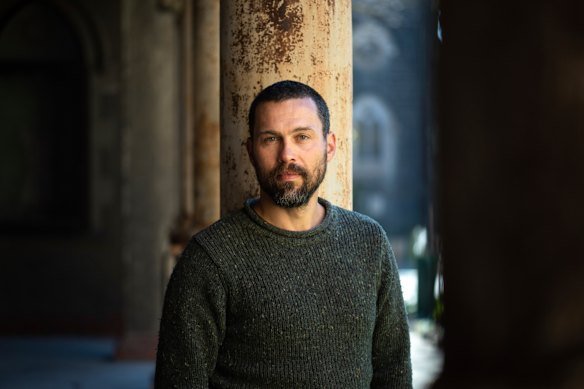
Set on the banks of Melbourne’s Yarra River in the leafy inner suburb of Abbotsford, the space was named Clarion Clinics. Designed as a commercial-scale prototype, the clinic promised to treat up to 600 patients a year. Co-founding the whole enterprise was a team from the Clinical Psychedelic Lab at Monash University: Paul Liknaitzky, Suresh Sundram and Sean O’Carroll.
By February 2024 the clinic was open for business. Liknaitzky and his team created a bespoke treatment model that placed patients into a nine-month program. It was a grand attempt to set up the ideal psychedelic clinic. And within a year Clarion Clinics had closed its doors after treating fewer than a dozen patients.
The failure of Clarion Clinics can’t be attributed to just one thing but it was mostly too soon, too big and too ambitious an idea for the moment. Patients had to shell out up to $30,000 for their treatment course and devote many months of their lives to it. Another organisation has since taken over the same premises, relaunching the psychedelic clinic with lower prices and shorter protocols than the Clarion plan.
Liknaitzky has taken his lessons from the big clinic experiment into one of his next research projects. A new study dubbed FIFO-PAT (Fly-in-Fly-out psilocybin-assisted therapy) came from an attempt to, as Liknaitzky puts it, “solve … a number of perennial issues that just return again and again through trials and conversations in our clinics”.
As the name suggests, the FIFO trial is exploring the feasibility of integrating psychedelic medicine into a patient’s pre-existing mental healthcare team. Instead of helicoptering a patient into a psychedelic clinic for a few months of expensive temporary therapy with unfamiliar therapists, the FIFO model switches things around.
Here, a psychedelic therapy practitioner drops into a psychiatric practice to work for a few weeks with a patient and their ongoing psychologist or psychiatrist. The temporary team administers a drug dose to the patient before the psychedelic practitioner drops out of the process, returning continuity of care to the primary clinician.
As well as being substantially cheaper than enrolling a patient into an expensive multi-month psychedelic clinic, Liknaitzky sees the FIFO idea as a more modular way of thinking about psychedelic medicine.
“Some people need different amounts of space between their dosing sessions,” Liknaitzky explains. “Different ratios of talk therapy sessions to their drug sessions. Maybe they need to change the dose of their drug over time. Maybe they need to change the drug. We might, in one case, have two dosing modules four weeks apart and, in somebody else’s case, maybe two years apart. And in each case they’re kind of deciding on that dose module one at a time, and they’re paying for it one at a time.”
Liknaitzky’s realisations in these first couple of years of Australia’s grand legal psychedelic experiment have not been unique. In January 2024 clinical psychologist Monica Schweickle, alongside authorised psychiatrist Ted Cassidy, administered Australia’s first-ever legal psychedelic medicine session outside of a clinical trial in 50 years. It was an MDMA dose, delivered to a patient with PTSD.
Spending most of 2024 developing psychedelic therapy programs for the Monarch Mental Health Group, Schweickle soon saw limitations in the big clinic model. “I noticed how limiting the clinic model of two-to-three preparation sessions and two-to-three integration sessions was,” Schweickle tells me. “And how embedding the psychedelic dosing sessions within an existing therapy team provided more informed patient selection and better aftercare within an ongoing therapeutic relationship.”

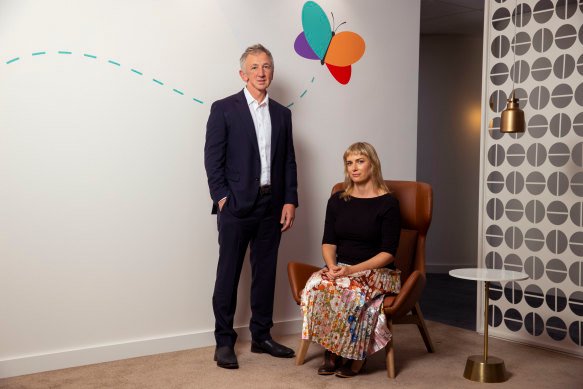
So Schweickle started a business in early 2025 called The Psychedelic Consultancy. Her goal was to help psychiatrists navigate the complicated process of becoming an authorised prescriber (AP) for psychedelics. Instead of focusing on building a network of standalone psychedelic clinics, Schweickle saw greater value in getting more psychiatrists into the AP scheme.
Schweickle also launched her own psychedelic therapy practice called the Peridot Clinic. Here, she works in a way similar to Liknaitzky’s FIFO trial ideal, embedding herself as an experienced practitioner alongside new authorised psychiatrists to help co-lead the therapy.
Both Liknaitzky and Schweickle suggest a key gap in the psychedelic clinic model is the way practitioners encounter new patients with a couple of isolated appointments to try and determine suitability for psychedelic medicine. Alongside that hurdle is the fact that sometimes the impact of a psychedelic experience, either positive or negative, doesn’t really land until weeks or even months after the drug dose day.
Marg Ross, a clinical psychologist who led Australia’s very first psychedelic medicine trial in 2020 for patients suffering anxiety from terminal illness, tells me several patients in her cohort of 35 were technically labelled non-responders due to the short follow-up period of the study. However, months or even years later those “non-responders” reconnected with her to cite eventual positive realisations.
A recent editorial in the LA Times from Laura Zam strikingly highlighted how some negative effects of psychedelic medicine can emerge months after the initial treatment. Zam and her husband volunteered for a clinical trial in 2023, testing MDMA therapy in couples where one member was dealing with advanced cancer. The treatment protocol was standard: two MDMA dose days spaced a few weeks apart, with six psychotherapy sessions before and six after dosing.
To say the acute effect of the treatment was successful would be an understatement. For several months the pair were ebullient. Zam’s husband, Kurt Nemes, even penned a glowing editorial in HuffPost describing feeling happy “in a way I have not been in years”.


However, three years later Zam tells a different story; a story where Nemes’ mental health took a dramatic turn months after the MDMA therapy. “I didn’t notice it at first, given eight weeks of expansive joy, but my husband’s brain worked differently after taking MDMA, and he began spiralling,” Zam writes.
Over the next 12 months Nemes was institutionalised several times; he was given electroconvulsive therapy and a handful of different antidepressants. Now, in 2026, she says her husband is finally emerging from a prolonged nervous breakdown she attributes to the MDMA therapy.
Zam’s story is not an isolated case. Researchers are beginning to quantify longer-term difficulties that can emerge from psychedelic medicines. Monica Schweickle tells me one of the benefits of bringing psychedelic medicine into a patient’s ongoing treatment network is that ability for clinicians to catch patients who are either unprepared for the therapy, or experience longer-term problems that only emerge months later.
While Australian clinicians may be working to integrate psychedelics into our existing treatment systems, the business model overseas is running in the opposite direction, homing in on the standalone clinic paradigm and attempting to remove as much accompanying psychotherapy as possible.
Leading the pack for a formal FDA approval in the United States later this year is Compass Pathways, a pharma company developing psilocybin for treatment-resistant depression. Over the course of its multi-year clinical trial process Compass has progressively minimised the therapy component delivered alongside its psilocybin doses.

It now pitches its psilocybin treatment as similar to the only current legal psychedelic medicine: a multibillion-dollar blockbuster depression treatment based on the ketamine molecule, called Spravato. When prescribed Spravato, patients attend a clinic for a short two-hour stay where they are supervised by medical staff. No accompanying psychotherapy or psychiatric oversight is provided. The drug is the thing.
Psychedelic drug developers are increasingly looking to this “drug-only” model as they push forward with broader approvals. Several companies are framing their investigational psychedelics as drug-only treatments, citing Spravato as the aspirational model.
“Perhaps the biggest concern of this inflection point now in the field is that we’re trending towards a drug-only model of care,” Liknaitzky tells me. He sees a short-term future where removing these drugs from a therapeutic container will inevitably lead to some people being harmed.
The psychedelic field is now at a crossroads. One path offers standalone psychedelic clinics where we drop in for a few visits, pay some money, have a dose and, if we’re lucky, see a therapist a few times. The other path gestures towards a more integrated model of psychedelic medicine where psychiatrists and psychologists have these drugs as one tool among many to help treat patients.
Liknaitzky is optimistic; his research experience suggests psychedelics can be wonderful catalysts for helping patients become more self-aware, and that feature means the drugs can motivate transformations when integrated into psychotherapy.
“I feel like a lot of people come for the drugs and stay for the therapy, like psychedelics are a gateway drug to psychotherapy,” Liknaitzky suggests. “And that is, I think, one of the most hopeful features of these drugs.”
Investigative journalist Richard Haridy is the author of Trip Reports: Stories from an Australian psychedelic renaissance, published on September 1.
Read the full article here