





Published on •Updated
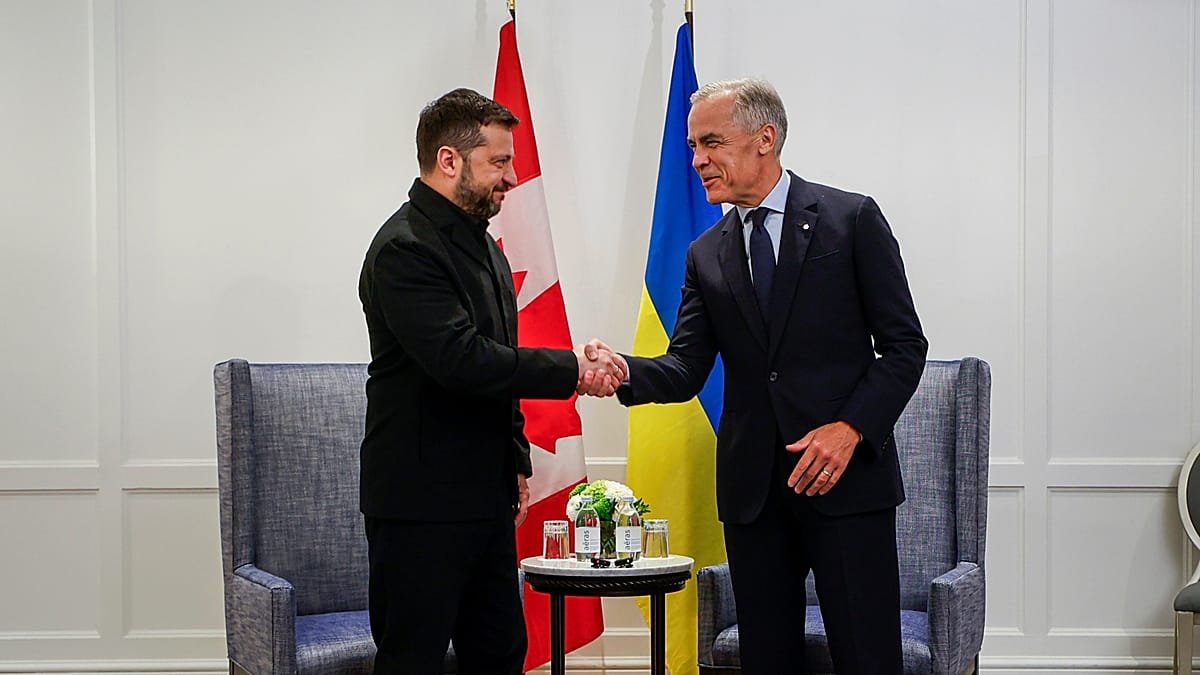
Canada is seeking to join the European Union’s €90 billion support loan for Ukraine, the European Commission said on Friday.
“I can confirm that Canada has expressed an interest in joining the €90 billion Ukraine support loan,” a Commission spokesperson told journalists. “We are working hard with Canada, and the respective technical talks are very much ongoing.”
EU leaders set up the loan to meet two-thirds of Ukraine’s financial and military needs for 2026 and 2027, with the other third covered by other Western allies.
So far, Brussels has disbursed nearly €15 billion, with more instalments expected soon.
The €90 billion is raised through joint borrowing and generates about €3 billion in annual interest payments, which will be paid proportionally by 24 member states. (Hungary, Slovakia and the Czech Republic secured an opt-out from the scheme.)
Canada’s inclusion, if successful, will allow Ukraine to procure weapons and ammunition from Canadian defence companies and bypass the “Made in Europe” requirements that govern the credit line. In turn, Ottawa will have to pay a share of the €3 billion in interest rates, depending on how much its firms benefit.
The specifics of the Canadian contribution are still under negotiation.
“The more countries involved, the better. That can ensure that Ukraine can get the best and most suitable equipment for its defence needs,” the Commission spokesperson said.
The United Kingdom, a major donor to Ukraine, became the first non-EU country to join the support programme in July.
The news comes as Kyiv looks to allies to plug a growing budget deficit, which is being worsened by Russia’s escalation and blockade in the Black Sea.
Brussels is trying to pin down the exact scope of Ukraine’s additional needs and has asked other partners to step up. Norway recently announced $9 billion for 2027.
“It’s important indeed that our like-minded partners also follow suit, including Canada and the UK,” the Commission spokesperson said.
“That is a subject that we usually tend to take up with them regularly.”
Canada’s move to join the scheme is seen as part of a fast-moving impetus to expand and deepen ties between Ottawa and Brussels. This week, Commission President Ursula von der Leyen invited Canada to become the bloc’s first “associate member”.
Read the full article here