






Finns do it in the sauna. Turks and Azerbaijanis are partial to their hammam (or steam bath); Japanese to their onsen (thermal springs) and sento (public bathhouses). Russians love their piping hot banyas (accompanied by a light flogging with birch twigs); Koreans go to jjimjilbangs (hot, warm, and cold plunge pools) while people in Budapest soak in cathedral-like UNESCO-protected bathhouses.
Across much of the world, the practices of surrendering the body to (often extreme) heat has evolved in multiple forms – among them, immersion in near-unbearably hot bubbling water, exposure to bursts of steam (which the Finns call löyly, created by tipping water on hot rocks) or the current fad for infrared saunas (a form of which is known as Waon therapy, invented in Japan in the late 1980s) that apparently cause your body to generate heat from within. Then there is the (arguably masochist) allure of the cold plunge, yin to heat’s yang, with its own supposed benefits.
Heat-seeking is having a moment, with upticks in backyard sauna installations, swish bathhouses, and people packing into the steam rooms and saunas at community pools, dovetailing with an Instagram-powered “wellness” boom. All are widely assumed to offer benefits for health, although some claims are more scientifically solid than others (more on which shortly). Certainly, they can all be relaxing, which is its own draw.
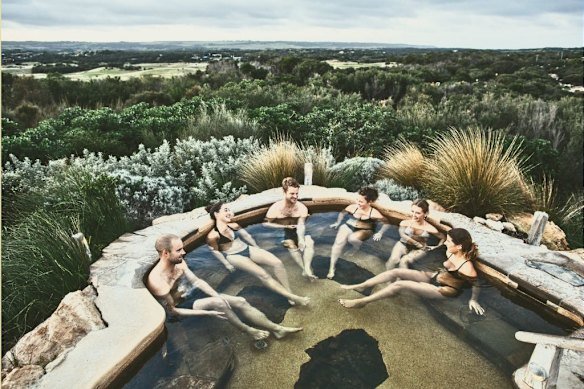
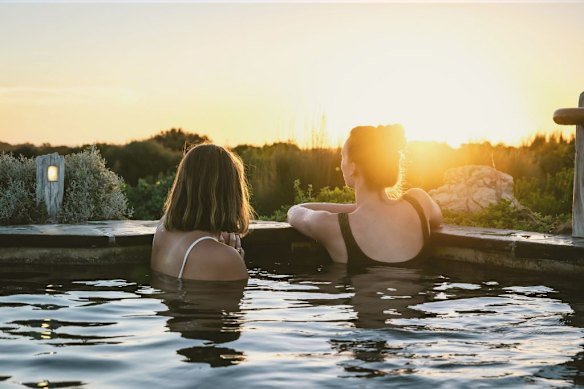
To wit. On a clear winter’s day at Peninsula Hot Springs in Fingal, a shade over an hour from Melbourne, bathers in fluffy white robes wend their way from one hot pool to the next, the sun glinting through the tea tree. There’s no jostling or yelling, minimal phone activity; families laze, friends are deep in hushed chat. “As teachers and mothers, we never put ourselves first,” two kinder teachers confide to us at a hilltop pool, “and we wanted to make time for ourselves.”
Down the hill in a sheoak barrel bath, another pair of friends tells us they spent five hours submerged that morning. “Did your fingers crinkle?” we asked. “Yes,” one said, “but they went back to normal when we had lunch so now we can go all wrinkly again.”
Why is sinking into a hot bath or sweltering in a sauna so relaxing? Is all of this hot stuff good for us? And what of cold plunges – embrace or avoid?
How has bathing culture ebbed and flowed?
“I have used saunas since my childhood,” says Jari Laukkanen, a world-renowned Finnish sauna researcher whose role in groundbreaking studies has helped to popularise the health benefits of heat therapies. In Finland, there is nearly one sauna for every two people; Laukkanen has one at home and uses it most days. “In my life, sauna bathing, an easily available heat therapy, was never a luxury, nor exclusive to certain individuals,” he tells us. “I was born in the heart of Finland, surrounded by breathtaking, beautiful nature and warm wellbeing, and people’s natural connections. For me, sauna [Finns use the singular] is both part of Finnish culture and an opportunity for recovery and relaxation.”
In Australia, as in the similarly straitlaced US and Britain, we’ve historically been more tepid about spa therapies. In Victorian times and into the early 20th century it was fashionable to “take the waters” at a mineral spring such as Hepburn Springs in Victoria, which opened its first bathhouse in 1895, with the focus not so much on relaxation but on the belief that minerals in the water could help cure ailments such as skin and respiratory diseases, gout, even alcoholism.

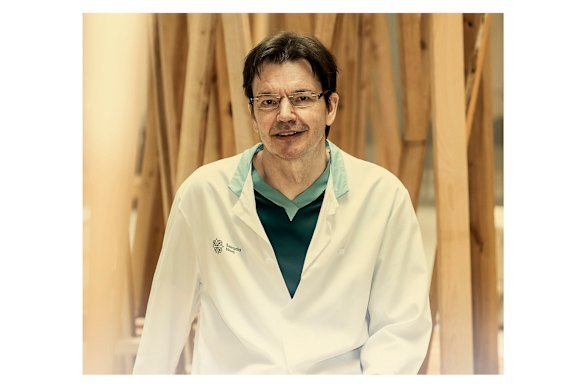
“The kind of holistic healthcare that people would go to springs for was more effective than a lot of biomedicine of the time, which was pretty experimental and often quite dangerous,” says Timothy Jones, a professor of history at La Trobe University. “There weren’t effective cures for things like tuberculosis or asthma. The extra regimens that people described going to these places – you know, drinking water rather than alcohol, having a lot of rest, doing a lot of exercise, warm surroundings, healthy diet, exercise – were actually profoundly helpful.”
In the US, Hot Springs in Arkansas hosted a string of luxurious proto-spa sanctuaries on “Bathhouse Row”, which promised, among other things, a cure for syphilis. Britain’s thermal springs at Bath were first developed by the Romans, who loved their laconica (dry heat rooms) and sudatoria (wet steam rooms); they were popularised again in the 1700s when Queen Anne sought the waters for her dropsy (excess fluid in her tissues). Queen Victoria, another early influencer, favoured a Regency-era bathhouse at Royal Leamington Spa with a marvellously exotic Turkish-style hammam. Across the pond, in New York City between 1863 and the late 1920s more than 50 Turkish-style steam baths opened; none have survived. Even Hepburn Springs was (temporarily) washed up by the 1950s. “People got more benefit from seeing the GP,” says Jones.

Today, Bath is crowned with a spectacular rooftop hot pool while its Roman baths are reported to be the most-visited tourist spot outside London besides Stonehenge. In Istanbul, a top attraction is Roxelana’s Bathhouse, a hammam named for the wife of Sultan Suleyman the Magnificent. First opened in 1557, it was being used as a carpet showroom before it was restored to its marble grandeur and reopened in 2011. In the US, a drawcard in (the now heritage-preserved) Bathhouse Row is the Buckstaff, a 1912 spa complex revamped in revival fashion, recreating the oddities of Edwardian bathing, which include being enclosed in a “vapor cabinet”, a kind of steam-powered coffin that leaves only your head exposed while you hope the attendant hasn’t forgotten all about you.
At the Lightning Ridge Bore Baths in NSW, locals have dipped in a warm circular pool since 1962.
Saunas have also taken off as home comforts, some a legacy of the pandemic, when the Beckhams posted images of their Estonian sauna “pod” (and plunge pool). In Australia, home builder Metricon is planning a “wellness” show home in Byron Bay with a resortlike bathroom, sauna and possibly a plunge pool. “Potentially, we can bring some of those things into our main business,” says interior design team leader Brooke Boman. “This one will be a kind of test to see how it goes.”
Hepburn Springs’ bathhouse was refurbished in 2008, a leader in a trend that is now proliferating, from smart city spas (more on which in a moment) to get-down-with-nature hot springs in the middle of nowhere, such as those at Queensland’s Talaroo, a four-hour drive west of Cairns, owned and operated by the traditional owners of the land, the Ewamian people. As with many hot springs, these are fed by rainwater that fell many thousands of years ago, in this case on the Newcastle Range, and trickled through rock underground.
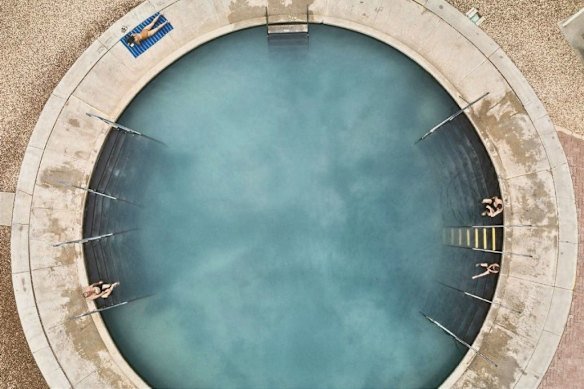
Other hot springs are eruptions from the Great Artesian Basin, a freshwater “reservoir” under a fifth of the continent, like those at the Lightning Ridge Bore Baths in NSW, where locals have dipped in a warm circular pool since 1962; or at Coward Springs, a rustic “spa” offers balm for weary caravanners on South Australia’s Oodnadatta Track, and so on. Where the Selwyn fault line cuts across the Mornington Peninsula, the waters of the Peninsula Hot Springs well up at 54 degrees from a 637-metre-deep bore, then cool to between 36 and 42 degrees as they are pumped the last few metres into pools.
Freya Berwick, who opened the inner-city bathhouse Sense of Self in a former warehouse in Melbourne’s Collingwood in 2020 (and who has a sister ship about to open in Sydney’s Surry Hills) says the appeal for her patrons is, at least in part, a chance to get away from screens (phone use is banned, though Kindles are permitted) and to get back in touch with their bodies.

She was inspired by bathhouses and saunas in Norway, where she once ran a small hotel on a fjord, and across Scandinavia, where she witnessed how integral they were to everyday life: not a once-a-year indulgence but a near-daily routine. “These places with bathing cultures, it’s just part of what they do,” she says.
That said, the design of even public pools in wealthy Norway is “epic”, as she puts it – and hers is nice too, kind of softly brutalist with red travertine tiles and trailing pot plants. When we visit on a bone-numbing winter’s day, it’s not difficult to love sinking into the 38-degree bath (especially when you don’t have a bath at home) and sipping on the peach iced tea that an attendant hands out to bathers.
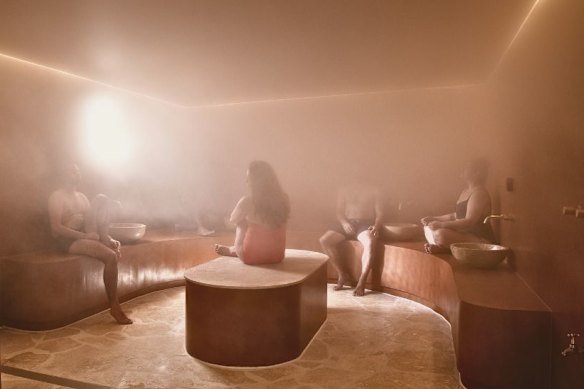
Later, a dunk of a toe in the plunge pool confirms that, yes, it’s cold (8 degrees) while stints in the stone hammam (a steamy 46 degrees) and the Finnish-style cedar sauna (a dry 85 degrees) confirm that, yes, they are hot (even a bit faint-y if you have low blood pressure, which is why we keep it brief, more on which shortly).
What are the health benefits?
While service, design and calm are key at Sense of Self, Freya Berwick doesn’t make health claims about her bathhouse. “I think ultimately, rest, idleness is the main outcome for us, and connection to self,” she says. “It’s not my job to tell people what they need for their wellbeing. That’s a hugely personal thing.”
Elsewhere, though, some bathhouse owners are not shy of spruiking treatments for all kinds of ailments, not so much syphilis any more (antibiotics are better) but reducing “inflammation” and “detoxifying”, the maladies du jour (at the fringes, claims are also being made for cancer and autism by shouty would-be experts online).
The co-owner of a New York infrared sauna told The Atlantic that the treatment is the best way to rid the body of “heavy metals, radiation and environmental pollutants”, making the (oft-repeated but unverifiable) claim that sweat induced from an infrared heat source comprises 20 per cent toxins whereas sweat induced from traditional heating systems comprises 3 per cent toxins. (We spent 10 minutes in an infrared sauna during our research and can attest only to a pleasant sensation of slow-spreading warmth, which prompted a fellow sauna user to observe, “I don’t feel like my face is about to fall off like I do in a normal sauna.”)
Experts say while sweat can contain minute traces of pollutants, it is the job of the liver and kidneys to rid the body of the vast majority of undesirable toxins; sweat is 99 per cent water and its job is to cool us down. Ultimately, noted The Atlantic’s Kelly Conaboy, “If you have dangerously high concentrations of these metals in your body, it is probably best that you visit a hospital rather than an infrared sauna.”
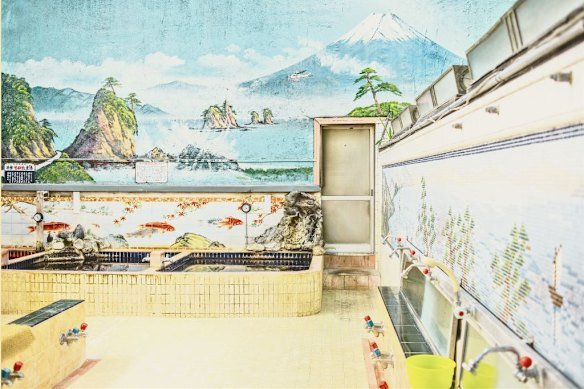
Other claims stack up a little better. A study of regular bathers at Japanese onsens found they had increased levels of healthy gut bacteria. Another study from 2021 into speed skaters who leapt into a hot tub immediately after training noted beneficial effects on recovery. Heat therapy has been fairly well researched for athletes and the findings are generally positive. Heat can improve muscle repair after exercise, “probably by increasing blood volume”, concluded one study into competitive runners using saunas, from 2006.
“With athletes, the goal is obviously recovery, training quality, maybe adaptation to the heat as well,” says Georgia Chaseling, a senior researcher in the Heat and Health Research Centre at the University of Sydney. “With the heat therapy, you have increased blood flow towards the muscle, which allows for faster delivery of nutrients towards the muscle, which helps with that recovery.”
In one experiment with the Western Bulldogs football club, Aaron Petersen, who researches the effects of heat on exercise at Victoria University, concluded that sitting in a hot tub after training sessions improved footballers’ performance when they were subjected to a running test afterwards.
He says the heat can promote the growth of new blood vessels in muscle, “so you get better delivery of oxygen, helping the muscle produce energy.” He describes the process as potentially “exercise-like benefits, but you’re not putting additional strain or load on the body”.
‘I sleep a lot better. My skin’s definitely improved as well. I often feel like I’ve just received a massage.’
Saunagus guide Juliet Mangubat
Certainly, anecdotal reports abound of heat’s soothing effects. Juliet Mangubat got the sauna bug visiting the Danish capital Copenhagen, where she was introduced to a local sauna variant called saunagus, where a guide uses towels to gently waft aromatherapy scents and circulate the heat. “It has a real physical and mental impact for me,” says Mangubat, a public servant who now moonlights for fun as a “gus-guide” at the Melbourne establishment Sauna Goose (a play on the original spelling), which opened in 2025.
“I do find my muscles are a lot looser,” she says of her own experience of regular saunas. “I sleep a lot better. My skin’s definitely improved as well. I often feel like I’ve just received a massage. And then mentally, I feel like it really helps me with my stress, and it makes me calmer as well.” (Experts in the German equivalent, known as “aufguss”, gather annually for an international championship to demonstrate their skills; the next one is at Lake Scharmützelsee in Brandenburg in September.)

More broadly, long-term research by the University of Eastern Finland’s heart disease unit – including a landmark study that tracked some 2300 Finnish male sauna users over 20 years – has concluded that, overall, people who use a sauna more frequently have lower long-term risks of several cardiovascular and other health outcomes, notably hypertension, thromboembolism, Alzheimer’s disease (a form of dementia) and respiratory conditions. It could also have a positive effect on musculoskeletal disorders, mental wellbeing, sleep and (that other modern preoccupation) longevity. “The evidence is so clear that it does reduce the incidence of developing cardiovascular disease,” says Chaseling, “and it can also reduce the severity of cardiovascular diseases if you have them.”
‘The scientific evidence is strongest for traditional Finnish sauna, and we should be cautious about assuming that all forms of heat therapy produce identical health effects.’
Jari Laukkanen, University of Eastern Finland
Possibly most pertinently, the longitudinal study suggested that using saunas four to seven times a week could keep you alive longer, with a 60 per cent lower risk of sudden cardiac death than once-weekly users. (While the authors controlled for such mitigating factors as wealth and fitness, causality is notoriously difficult to prove.)
A 2023 study from the same university suggested that similar beneficial effects were likely from other forms of heat therapies, such as infrared sauna, steam baths and hydrotherapy, though its lead author, head of department Jari Laukkanen, who co-authored that seminal 2015 study, warns us not to read too much into the findings. “Many physiological responses such as increased heart rate, vasodilation [increasing blood flow] and sweating are shared across different heat therapies because body temperature rises,” he tells us. “However, the scientific evidence is strongest for traditional Finnish sauna, and we should be cautious about assuming that all forms of heat therapy produce identical health effects.”
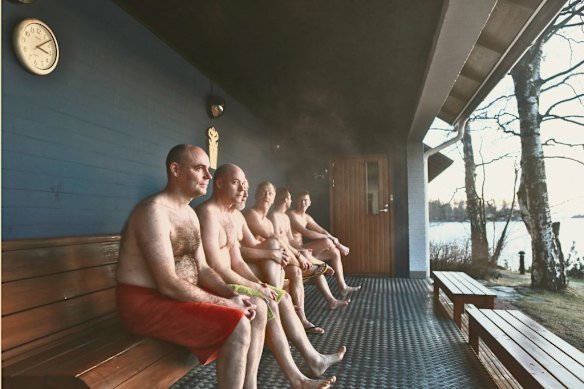
Some therapies, such as a dry sauna, encourage sweating (removing all those radioactive toxins! Maybe!) while wallowing neck-deep in a hot tub naturally inhibits the perspiration from evaporating off your skin. A hot sauna can quickly raise your core temperature 1 or 2 degrees, which might not seem like much but can trigger a “cascade of physiological things that are meant to provide benefits from the heat therapy”, says Georgia Chaseling.
‘There’s no way even the most fit person, even the most acclimated person, can stay in a steam sauna as long as they can a dry sauna …’
Heat researcher Joy Hussain
Perhaps counterintuitively, for some people a very hot dry sauna (between 90 and 100 degrees) can “feel” more bearable than, say, a steam room – it’s all about humidity and how well the air can transmit heat to your skin, and how much you can shed heat through perspiration. “If I go into my Finnish-style sauna, I can do that for hours,” says Joy Hussain, a Queensland GP and active researcher in the field of heat therapy. “A steam sauna, I can’t last more than about 10 minutes. There’s no way even the most fit person, even the most acclimated person, can stay in a steam sauna as long as they can a dry sauna because their sweat cannot serve its function, and if we can’t sweat, that’s where we get into trouble.”
Indeed, while the benefits of saunas and other heat therapies certainly seem to overwhelmingly outweigh potential negatives, both scientifically and in just how they make you feel, experts warn that some people should still take precautions, particularly those who are pregnant, have a heart condition or have issues with low blood pressure (to release the heat, blood moves to your skin and away from your internal organs, which can cause dizziness or fainting). It’s like exercise, says Hussain: “When you’ve had a heart attack, we don’t go out there and say, ‘OK, start running marathons’.” Don’t try to tough it out. There’s no evidence it’s any more beneficial to seriously shock your body with heat (though, of course, in the US there’s a micro-trend where “sauna bros” try to maximise their exposure and brag about it).
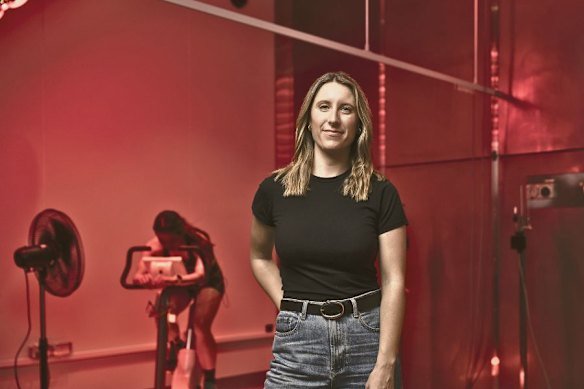
Stay in a hot sauna for too long, say over 30 minutes, says Chaseling, and “your core temperature keeps rising and rising, your heart rate’s going to increase to try and pump so much blood to lose all this heat from the body, and the cardiovascular strain will either lead to a heart attack, or the internal organs start to heat up too much that they start to malfunction. We regulate our body temperature within very narrow limits, typically between 36.5 degrees to 40 degrees, you’re kind of in a safe zone. Anything above 40 degrees, it’s the danger zone.” And don’t drink alcohol before or during: back in 1600s Turkey, the son of Roxelana fell over drunk in a hammam, hit his head and died.
‘The warmth and buoyancy in the water, the atmosphere and nature of the location and finding time with friends or for oneself are key contributors to the positive outcome.’
Charles Davidson, founder of Peninsula Hot Springs
As for the benefits of the minerals so loved by the Victorians – well, the skin can absorb some molecules (think nicotine patches), but if you have a magnesium or other similar deficiency you’re much better off taking a supplement, the experts tell us. Our skin can benefit from topical treatments – mineral baths may help ease the symptoms of surface-level ailments such as, say, eczema (just not too hot and not for too long) – but is generally there to keep things out.
As the founder of Peninsula Hot Springs, Charles Davidson, puts it, “The evidence for improved health and wellness outcomes from visiting hot springs is quite clear, however, the exact reason for it is not. The warmth and buoyancy in the water, the atmosphere and nature of the location and finding time with friends or for oneself are key contributors to the positive outcome. Minerals in the water are important but are only part of the overall experience.”
What about the opposite – cold plunges?
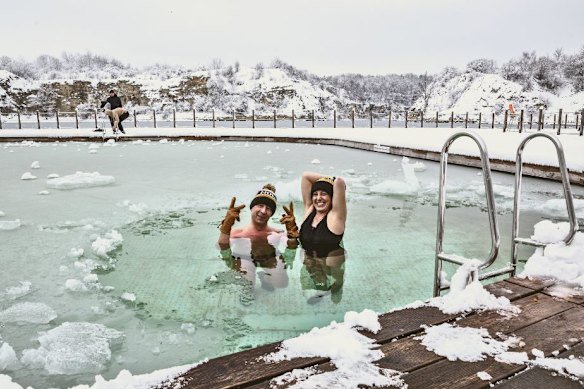
Leaping into freezing water has long been a traditional accompaniment to saunas and banyas in Northern Europe: you heat up, cool down, repeat. In Scandinavia, it’s common for saunas to be built on jetties so you can step out, plunge, then climb back to warmth; in Russia they cut holes in the ice. In Australia, bathhouses routinely offer a plunge pool for “contrast therapy”. Ice plunges for dancers have been used at the Australian Ballet since 2018, its director of artistic health Laura Hillenius tell us, “making the company an early adopter of cold-water immersion as a recovery practice.”
The Dutch fitness influencer and ice swimmer Wim Hof, who popularised cold therapies, particularly during COVID, claims various benefits for them, particularly for inflammation.
There is (largely anecdotal) evidence it helps with depression and overall mood but experiments have delivered “mixed results”, says Aaron Petersen. For athletes wanting to accelerate their recovery in a training regimen, he says, “Probably the balance of evidence would suggest that it is favourable for some sort of short-term improvements.” He says there is the potential for cardiovascular-related benefits such as improved blood pressure: “You can recover a little faster to return to your previous level of performance.”
‘There haven’t been enough studies, or any studies, focusing just on women with cold water, cold baths.’
Aaron Petersen, Victoria University
But he also points out that some experiments have shown no effect at all, or that ice plunges might have a placebo effect, or even a detrimental effect on performance over the longer term. He says there is little evidence about the particular effects on women. “There haven’t been enough studies, or any studies, focusing just on women with cold water, cold baths.” (The popular American exercise physiologist Stacy Sims contends ice plunges can trigger too strong a stress response in women, and just moderate cold is enough for overall health.)

The Mayo Clinic offers that icy water “may” have a positive effect on recovery after exercise and “may” help build resiliency, “restore balance to the nervous system and improve cognitive function and mood.” A 2024 review of eight trials of the “Wim Hof Method”, meanwhile, concluded there were “promising” effects in “inflammatory response” but said “more research of higher quality is needed to substantiate this finding”.
Other small studies that claim improvements in, say, people’s moods, from regular cold-water swimming, meanwhile, can’t account for the placebo effect or the benefits of simply exercising. “There is increasing scientific support that voluntary exposure to cold water may have some beneficial health effects,” concluded a 2022 review of published research in this field. “However, it is also clear that there is a need for new controlled research studies that are specifically focused on the topic … Until we have more concrete scientific evidence, the topic will continue to be a subject of debate.”
Note also that cold plunging comes with the risk of “cold water shock”, which can be deadly in open water. Distinct from hypothermia, where your body slowly cools down and you eventually freeze to death, cold water shock is an immediate involuntary response that can lead to hyperventilation, panic and cardiac arrest or drowning within seconds. In 2022, a British woman unaware she had a heart condition died after a supervised plunge session at a river in Derbyshire where the water was 10.7 degrees.
Where to from here with heat and science?
Laukkanen and colleagues are now moving beyond epidemiology (the study of trends and factors) and into the study of specific mechanisms: “How repeated heat exposure influences immune function, inflammation, metabolomic pathways [tiny particles in our bodies such as sugars and amino acids], cardiovascular function and brain health. I am particularly interested in identifying the biological pathways that may explain why regular sauna bathing is associated with healthier ageing.”
Joy Hussain wants to see more research into the effects of heat therapy on women. “It just hasn’t been studied enough, but I’m hoping to prove in these next 10 years that the sauna may have extra benefits for women over men. Most of the data is on men, and I really think we’re very different thermal regulatory creatures. For women, it just hasn’t been studied enough.”
Then there’s the possible effect of induced heat on neurodegenerative illnesses. This promising field is studying heat shock proteins, which act as chaperones for other proteins, springing into action to protect and repair damaged cells when they’re placed under stress. Rossana Rosa Porto, a lecturer at the University of Western Sydney’s School of Medicine, is examining the role these proteins play in protecting pathways in the brain when induced by heat therapy.
She has seen promising results in mice in areas of the brain affected by degenerative diseases in people. “I saw an improvement in spatial memory, which is dependent on the hippocampus region that is the most affected in Alzheimer’s disease, and I also saw a huge improvement in the motor function in the parts of the brain that are affected by degenerative diseases in humans. The improvement in behaviour is a functional improvement, then I also found a decrease in brain pathology, reducing the levels of amyloid protein aggregation and neuroinflammation in the brain.” The next step is to translate the results to humans.
Also under evaluation, says Georgia Chaseling, is “local heating” therapy for people who can’t endure having their whole bodies in, say, a sauna. “So now researchers are saying, ‘Well, can we just put their legs in the heat and do we get the same benefits in terms of the increase in core temperature and the vascular benefits?’” Ultimately, though, for many people, she says, saunas and their kin provide a warm environment and a “sensation of feeling relaxed and comfortable, then all of a sudden you can get very hot, and you get very uncomfortable”.
Get fascinating insights and explanations on the world’s most perplexing topics. Sign up for our weekly Explainer newsletter.
Read the full article here