





Up to 1500 newly qualified Victorian nurses are struggling to find work almost five months after finishing their degrees, despite Australia being on track to face a shortage of more than 70,000 nurses by 2035.
Many of the recent graduates were lured into the profession by a state government initiative which paid the course fees of more than 10,000 nursing and midwifery students – an initiative aimed at boosting staffing levels at the state’s strained hospitals.
Since graduating, however, some are now searching for jobs interstate or working casually in hospitality, as entry-level nursing jobs are limited.
“It’s absolutely devastating,” said Professor Beth Jacob, the head of the Australian Catholic University’s School of Nursing, Midwifery and Paramedicine.
“They have to get a job doing something, so they are out working in cafes and petrol stations with [nursing] degrees. They just can’t get work where they need it.”
The ACU, which is the nation’s largest nursing school, estimates nearly a third of recent nursing graduates in Victoria failed to secure a graduate position in the state.
It is a similar story at other universities too, according to insiders, who say the majority of students took advantage of the state’s free nursing degrees – which were part of a $270 million initiative unveiled by former Premier Daniel Andrews in 2022 to boost hospital staff – and are struggling to find work in the field.
An insider from the Victorian Health Department said the issue of graduate oversupply was in part due to students flocking to free nursing courses, as well as the cost-of-living crisis, which had led to some nurses delaying their retirement.
Tougher economic conditions have also led to part-time nurses picking up additional shifts, meaning fewer positions have become available.
Jacob said that in previous years, almost all the university’s nursing students had gone on to secure graduate positions. Now, she is concerned that graduate nurses will be forced to change careers, and Victoria will increasingly rely on nurses coming from overseas.
“We’re losing them right at the start [of their careers], instead of getting them through to develop the skills that we need,” she said.
Australian Nursing and Midwifery Federation Victorian branch secretary Maddy Harradence said it was unacceptable that so many graduates remained jobless while existing nurses experienced excessive overtime and double shifts.
“[We] continue to hear from graduate members who have been unable to secure positions,” she said.
“It remains unacceptable … given we know of the nursing and midwifery shortages forecast over the next 10 years.”
She said the union was pushing for the state government to expand its mid-year intake to more graduates.
While the union estimates that around 1000 graduate nurses have been unable to secure graduate positions, the Health Department insider said that figure was closer to 1500.
“It is morally reprehensible,” said the source, who spoke on the condition of anonymity because they were not authorised to speak publicly. “This could have been easily averted, but no one had the courage to do anything.”
But the source said Victoria would experience a shortfall of nurses in the next few years when scores of nurses retire after receiving the largest payment of their enterprise bargaining agreement. This will coincide with increased pressure on hospitals as the population grows.
“We will be in crisis again,” they said.
“We are likely to see nurses pulled from poorer countries that can ill-afford to lose their nurses. We should plan to avoid this.”
The insider said while hospitals currently employ graduates close to full-time, employing them for fewer hours would boost their capacity to take on more graduates. This would mean they could stay in the system until the state needs them the most.
Opposition health spokeswoman Georgie Crozier said the Allan government had conned nurses by promising them something they were never going to deliver.
“Victoria’s health system needs these nurses not only for today, but for the future,” said Crozier, who formerly worked as a nurse.
A state government spokesman said it was working with health services to open up more graduate positions.
“We will always back our nurses – we delivered a massive 28.4 per cent pay rise to the workforce and have strengthened nurse to patient ratios,” he said.
In Victoria, graduate nursing positions are sought by those who have just completed their tertiary education. Aspiring nurses can only apply in the year they graduate. These programs provide the clinical experience to help university graduates transition to competent, registered nurses.
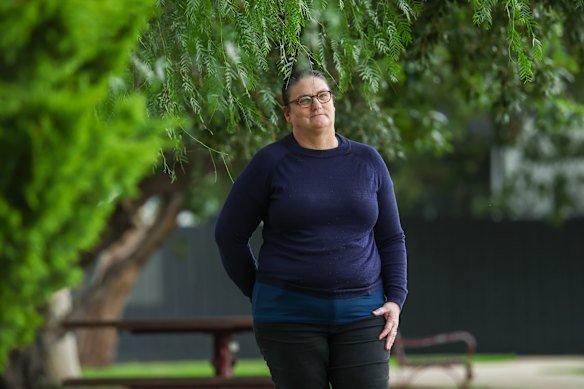
Monash University student Penelope Cowie said she felt humiliated attending her graduation ceremony this week without a job to go to, despite applying for countless nursing positions since she finished her course last year.
“We’re in this horrible Hunger Games situation where we are all competing against each other for this tiny pool of jobs,” the 52-year-old mature-aged student said.
“I’ve spent years busting my heart out into my studies, only to have myself booted in the back. It’s soul-crushing and demoralising.”
During the COVID-19 pandemic, Cowie worked on the frontline as a registered undergraduate student of nursing at Monash Medical Centre.
Her shifts were spent tending to the bodies of those who had succumbed to the virus, helping disinfect the hospital, and caring for aged care patients and their families.
Having dreamt of being a nurse since she was 15, Cowie said many of the nursing jobs require at least 12 months of post-graduate experience.
She is now considering picking up work in a warehouse or volunteering at a food bank to try and somehow get an entry into community health.
She has also started applying for nursing jobs at hospitals in Western Australia and Queensland.
The state’s initiative provided domestic students who enrolled in nursing or midwifery courses in 2023 and 2024 with a $16,500 scholarship to cover their education costs.
They received $9000 while they studied, and a further $7500 if they worked in Victorian public health services for two years.
Start the day with a summary of the day’s most important and interesting stories, analysis and insights. Sign up for our Morning Edition newsletter.


From our partners
Read the full article here