



Do we have free speech in Western Australia?
To some, the question may seem simple – of course we do, just look at the regular protests that take over Forrest Place, including the masses of students who rallied against One Nation just last week.
But others, including the WA Greens, have raised the alarm over encroaching limits on our right to protest, including side-effects of the state’s “post and boast” legislation which, they argue, could be used against people lawfully filming protest action that fell foul of the law.
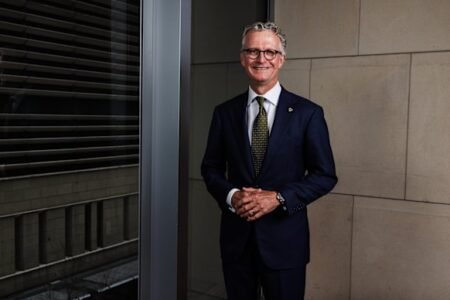
If there were anyone best-placed to take the pulse of our ability to say – and protest – what we like, it’s Professor Jonathan Zimmerman, a US academic and author who specialises in free speech and its history.
Zimmerman, the Berkowitz Professor in Education and Professor of History of Education at the University of Pennsylvania, spoke to this masthead last week after touching town in Perth for a visit as the Forrest Research Foundation’s Thinker in Residence, which includes a public lecture at the University of WA on Tuesday night.
Right away, there is one thing Zimmerman is at pains to point out – historically, “free speech has not been the rule, free speech has been the exception”.
“To take an example from the United States, it wasn’t until our war in Vietnam that our courts upheld the right to criticise the federal government during wartime,” he said.
“Free speech is an extremely recent development, and what that means is that it’s a work in progress, and it is in no way ‘established’, and it can always be compromised or destroyed.
“That’s why you have to be vigilant about protecting it.”
Zimmerman’s visit will focus on how to keep difficult conversations open while sustaining safety and social cohesion, and the risk of Australia importing the worst parts of America’s culture wars without learning from them.
But there are other local matters drawing his attention.
A new statutory tort for privacy risks erecting another barrier for journalists reporting on powerful Australians, while, in WA, “post and boast” laws loom over protests such as the controversial defacing of a Frederick McCubbin painting at the Art Gallery of WA in 2023.
For Zimmerman, the former scenario would “never fly” in the US.
“Because what our courts have said is that if you’re in the public square, you’re a public figure,” he said.
“You chose that line of work, and what you chose then was to be in the public eye, and if you don’t want to be in the public eye, you should do something else, right?
“But since you’re in the public eye, the public and its representatives in the media, have a right to speak about you, to criticise you.
“They don’t have a right to libel you, and obviously that too is a moving target and defined in different ways in different places, but in the United States, in order to show libel, you must show that the person charged with libelling knew that what they were saying was false, and that’s a pretty high burden.”
On the defacing of the McCubbin painting, Zimmerman noted there was a long tradition of civil disobedience in Western democracy – “and many of the people that we admired most in human history engaged in lawbreaking”.
“If somebody is doing a protest or defacing something at a mining company or some other place, if they’re breaking the law, they should have to pay the price for that,” he said.
“But at the same time, I would be very, very distraught at the idea of other people not being able to find out about their lawbreaking.”
Zimmerman cited Nelson Mandela, Mahatma Gandhi, and Martin Luther King Jr as examples of figures breaking laws to make a political point.
“[King] would actually sometimes invite reporters to the places where he was going to get arrested,” he said.
“If you start to restrict the reporting of his arrests, 20th-century American history has a very different narrative.”
But as for a path forward, as societies grapple with conflicting ideas and “open” speech in an online age driven by algorithms, echo chambers and cancel culture, Zimmerman has a simple caution.
“You have to be consistent, and if you’re not, eventually it will boomerang on you,” he said, recalling the recent reprisal of Republican legislatures against censorious voices on the left.
“Republican conservative legislators in the United States have been passing laws saying, ‘you can’t teach anything in school that’s going to make somebody feel badly because of their race’. Read: white people, right?
“But who pioneered the idea that we need to restrict things that make you feel badly? That was people on the left.
“And so once you go down that road, and once you decide that there’s some speech that you need to restrict because it’s so awful, don’t be surprised when somebody decides that what you’re saying is awful, and you must be restricted too.”
Professor Jonathan Zimmerman is giving a speech at UWA’s Woolnough Lecture Theatre at 6pm on Tuesday, August 18.
From our partners
Read the full article here