




La dolce vita no longer.
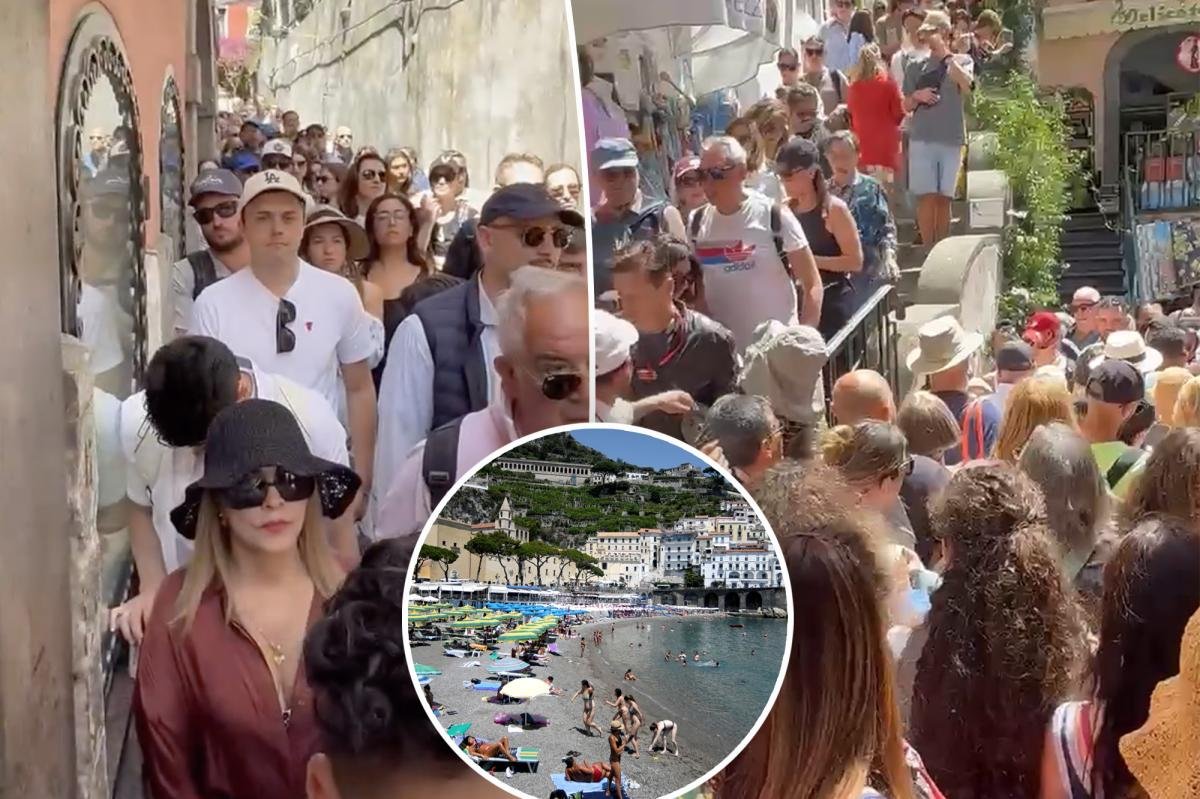
The iconic Amalfi Coast continues to be mobbed by tourists and cruise ship passengers, and their sneakered, camera-toting masses are blocking village streets, forcing outraged locals to barricade themselves in their homes.
Just south of Naples, the postcard towns along Italy’s Amalfi Coast have long been destinations for those seeking a taste of the good life, from Elizabeth Taylor to Kylie Jenner.
But with the onset of influencer travel, these locations have become more of a nightmare stampede than a sweet refuge.
“Positano is all these tight little streets, and everyone is walking together. Half the people are going up, and half are going down. It was complete chaos. Everyone was touching, shoulder to shoulder,” said one disappointed American tourist who traveled to Positano last summer.
Video footage from last weekend confirms the chaos has returned, revealing a narrow passageway choked with tourists.
Residents are understandably revolted, seeing the crowds as a sign of impending doom as the summer season looms.
“For the Mayors and administrators of the Amalfi Coast, they like this mess; otherwise, they would have already issued orders to civilize this mass tourism,” said local resident Antonio Attianese.
“It’s been going on like this for years, and the situation is getting worse every year,” he added.
Former mayor Salvatore Gagliano, who owns the five-star Grand Hotel Tritone in Praiano, noted that the swell of tourists not only blocked pedestrian passageways this past weekend but also the winding roads that hug the region’s coastline.
“These are scenes straight out of the Third World,” he told The Telegraph. “The roads are narrow. When they are blocked, there is total confusion.”
He claims that day-trippers, described by locals as “mordi e fuggi,” or eat-and-run tourists, are destroying the luxurious, aspirational image of the Amalfi Coast.
Moreover, he said guests of his hotel, who spend upwards of $2,200 a night on accommodations, are reluctant to leave the property for a meal or excursion, citing their distaste for crowds.
Locals point to the influx of cruise ship passengers as a reason for the untenable crowds.
“We need a regulation to ban the passengers from leaving the cruise ships rather than coming ashore,” said Gagliano. “We can’t handle so many people. The beauty of the Amalfi Coast is being ruined.”
The sentiment of oversaturation is shared by visitors and locals alike
“This needs to be controlled better. You can’t have these tour groups of 40 people taking up so much space all at once, and let all these people come in and get stuck like this. Very dangerous. Glad we left early today, what a mess! And such a sad story for Positano, and this whole region,” said one commentator
“We have reached our limit,” a resident wrote on Facebook. “As citizens, we have to lock ourselves inside our homes because we still haven’t learned how to fly.”
However, the current Amalfi mayor, Daniele Milano, maintains that local authorities cannot block cruise ships or bar passengers from making landfall.
Still, he recognized that more can and should be done to protect the region from congestion and to guard both locals and visitors from the adverse effects of excessive tourism.
“Citizens and business owners have a right to be angry, and that is why we must strengthen the processes and ask for special regulations to manage these phenomena which affect tourism in the most popular destinations,” he said in a statement.
Given the rising price and disappointing payoff of travel, many tourists are shifting their itineraries.
According to the U.S. Travel Association Travel Price Index, airfares have risen nearly 15% since March of last year, while food and beverage prices are 3.8%, and hotel and motel prices are up about 2.1%.
In kind, pleasure seekers are increasingly trading in big-city trips for visits to smaller towns like Arnaudville, Louisiana, in lieu of New Orleans.
The Cajun country destination was recently featured on an Airbnb list of 20 lesser-known destinations across the US, which also included Haines, Alaska, Alexandria, New Hampshire, and Matador, Texas.
“86% of travelers said they’re very interested in visiting remote or rural destinations,” said Laura Spanjian, Airbnb’s global head of public policy.
It remains to be seen if and when Arnaudville will dethrone Amalifi for influencer influx and tourist dollars.
Read the full article here