




For these three former students doing HSC Dance was a joy, a welcome relief and a great way to shake off a bad day.
It also debunked the myth that students seeking top results for demanding uni degrees should not take creative arts courses as it would “drag down” their ATARs.
For Julia Bickell, Makayla Lawrence and Yuuki Hiwatashi there was no question that the experiential learning in the HSC Dance course would be part of their 10 units required to graduate – and with this much-loved course came ATARs of 93.6, 94.5 and 98.4 respectively.
“There’s a belief that dance will drag your ATAR down. Quite a few of my peers were saying, ‘hmm you could probably get a better ATAR doing, like, Chemistry or Biology’,” said Bickell, a graduate of Canberra Grammar School, who has deferred study in a Bachelor of Economics at Sydney University to next year.
Yuuki Hiwatashi, who attended Newtown High School of the Performing Arts, gained a Dalyell scholarship at Sydney University, where she is in her first year of Science and Applied Studies; she turned down offers to pursue dancing at prestigious institutions in Australia and overseas.
“I was really contemplating my decision right up until the very end – there were lots of tears,” said Hiwatashi.
“I was looking into my future thinking ‘how am I going to be able to support myself?’ because not many people actually make a living out of dancing, so I thought if I go to uni and study it would be better.”
Hiwatashi also completed Japanese Continuers, Maths Advanced, Maths Extension, English Advanced and Chemistry, and said Dance was a welcome relief. “It’s just a different way of learning … a nice contrast to have in my study load,” she said.

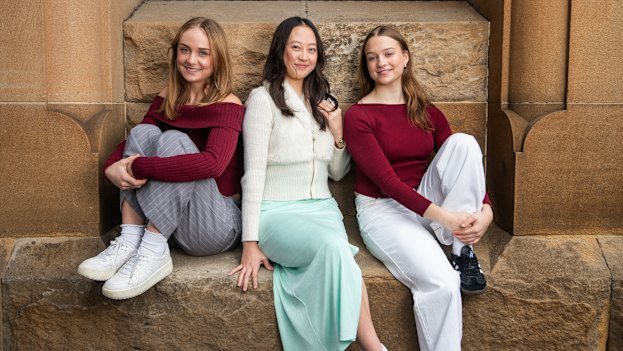
Bickell agreed. “My teachers were actually really supportive because I think they knew how much I loved dancing and how much joy it brought to my life. It was almost like a breath of fresh air when I could walk into the studio and if I was having a bad day, just dance it out.”
Makayla Lawrence is pursuing dance teaching qualifications this year, which will enable part-time work when she starts law at Newcastle University in 2027.

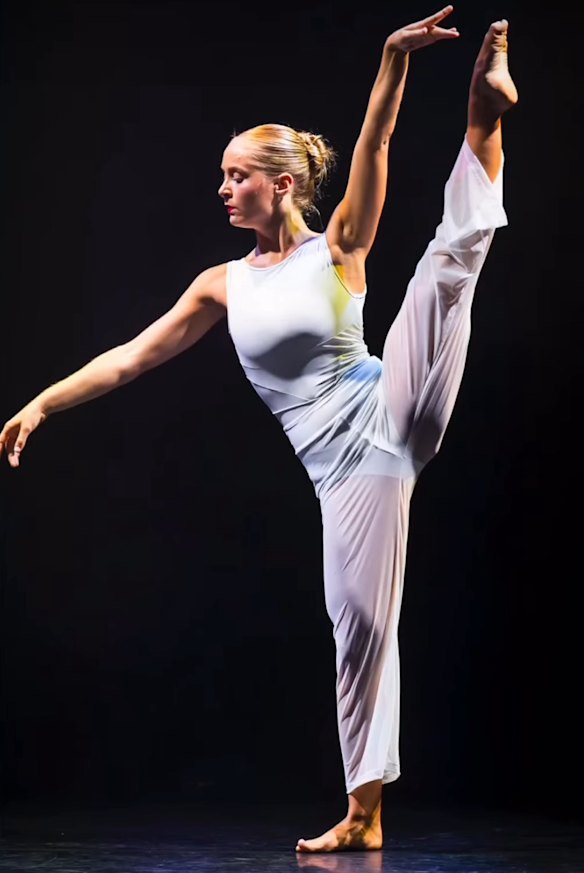
“I’m more of a creative person rather than being able to remember facts and figures, so I really like subjects with major works. The HSC results I ended up getting reflected my passion for the coursework, and Dance was my highest one,” said Lawrence, who attended St Francis Xavier College in Newcastle.
“This idea that STEM is the only way to getting a high ATAR – that’s been proven wrong for me because I didn’t do any STEM subjects.”
Tips for HSC Dance
Use the supports and resources around you: “Your teachers, peers, class videos, and performance opportunities can strengthen your work. These supports enable feedback, spark new ideas, and help you refine your technique and artistry,” Bickell said.
Use the syllabus to guide your preparation for exam conversations: “Ensure you have something to talk about for each syllabus point, so that whether the examiner asks you about safe dance, the construction of your motif, or the intent behind your work, you’re prepared,” Lawrence said.
Be a tough self-critic: “Film yourself performing your works so you can find additional things you can work on, to maximise your technique and performance-quality marks,” Hiwatashi said.
Mankirat set for take-off
A good pilot requires many skills, like technical expertise, clear communication and the ability to remain calm when making decisions under pressure – skills which Mankirat Kaur, who topped the state in HSC English Standard last year, has in abundance.
Inspired by her dad, an aeronautical engineer at Qantas, Kaur will soon start training as a commercial pilot – using the attributes which ensured her success in the HSC exam room.
“I plan to gain my certification then start the process of applying to airlines – and hopefully get to fly for a living,” said Kaur, a graduate of Santa Sophia Catholic College in Gables in Sydney’s north-west.

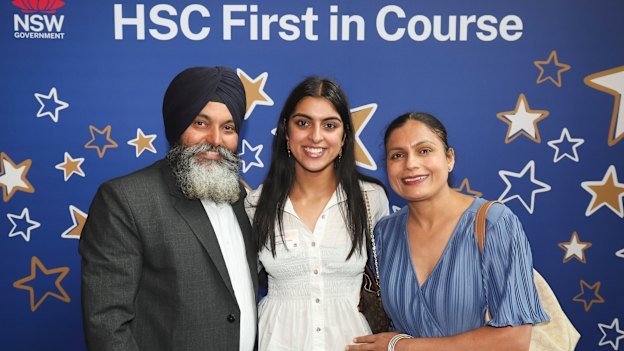

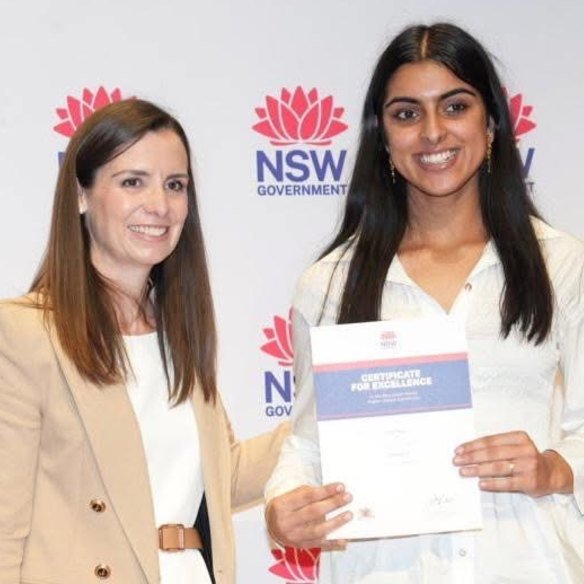
Achieving an ATAR of 95.45, Kaur said being consistent with study – “showing up even on days when I felt unmotivated” – and regular work with practice papers were key to her strong results.
“Doing timed responses under exam conditions is crucial, especially if you struggle with exam anxiety. This will help train you to write and feel more prepared,” said Kaur, who is currently working as an English and maths tutor.
Her advice is to read exam questions carefully and ensure you are responding using the verb contained in the question, such as “discuss” or “evaluate”.
“Spend a few minutes actually planning out your response – the first word you should look at and fully understand is your NESA verb [the instructional keywords used by NESA in HSC exam questions]. Make sure you know all your verbs to ensure you are answering correctly.”
Mankirat’s tips for HSC English Standard
Stick to the question in exams: “When studying, always refer to the marking criteria and understand what the markers will be actually looking for. This is vital to ensuring your responses are relevant to the question being asked.”
Regularly seek teacher feedback: “They are your most valuable source of constructive feedback to help you refine and strengthen your work.”
Have a strong response or argument for your essay: “I found the best way to improve this skill is by looking at a variety of past HSC essay questions and writing a central argument for each one.”

Charlie finds his focus in gap year
A passion for adventure in the great outdoors is what drives Charlie Stowe – and was key to helping him through the loss of his dad during the HSC exams in 2024.
Back home after volunteering on a Sri Lankan permaculture farm, teaching English and backpacking throughout Asia – and a ski season working in Canada – Stowe said his commitment to caring for our world has shaped his ambitions.
“We always did bushwalks and when my father passed away, it was helpful knowing I could escape through the outdoors – it provided me with the self-reflection needed to calm my mind and focus on study,” said Stowe, a graduate of Northern Beaches Secondary College, Balgowlah Boys Campus, who achieved first in course in mathematics standard 2.
Achieving an ATAR of 98.5, Stowe was set on a career in business.
“I initially wanted to do law and commerce. After seeing the impacts of plastic pollution during my adventures, I saw that it wasn’t going to make me happy, and I did a full 180 on my perspective of everything,” he said.
Stowe received the Brother John Taylor Memorial Prize – an award given to students who have overcome major challenges to complete the HSC – which helped fund his “gap year and a half”.
He’s now starting a double degree in environmental science and law at Macquarie University, with ambitions of working for a non-government organisation specialising in waste management.
“You don’t have to go overseas to do it. At school there’s so much going on in your head, you just don’t have the time to think and reflect,” he said. “Those long bus rides, or no reception – it really enables you to sit with your own thoughts.”
Stowe lost his father to younger onset frontotemporal dementia, a rare condition being investigated at Sydney University. This month, Stowe led a 300-kilometre hike from Sydney to Newcastle, hoping to raise $30,000 to support research into the disease.
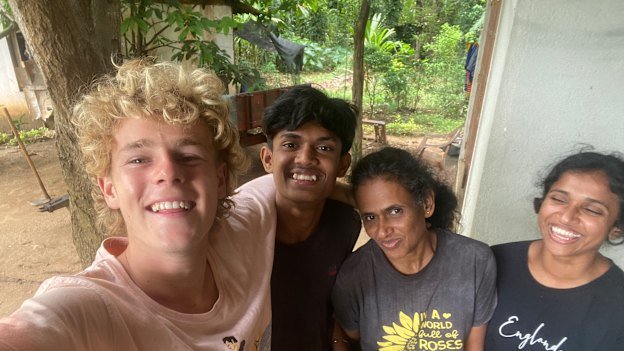
Charlie’s tips for HSC Mathematics Standard 2
Target problem areas: “Use past papers to find topics you struggle with, use specific worksheets and keep doing them until you’re getting good marks. Then complete a different past paper to ensure you’ve grasped the concept.”
Make your to-do list specific: “Break it down – ‘I’ll do this past paper, or read this section’. Give yourself time slots with allocated breaks to go outside and allow your mind to rest. It’s motivating when you can see you’ve got four of your six things done.”
Prepare your study space: “Turn your phone off and put it in another room. Always have a clean space to work in – it’s easy to get distracted if there’s a lot of clutter around.”
Alexis on course for aerospace
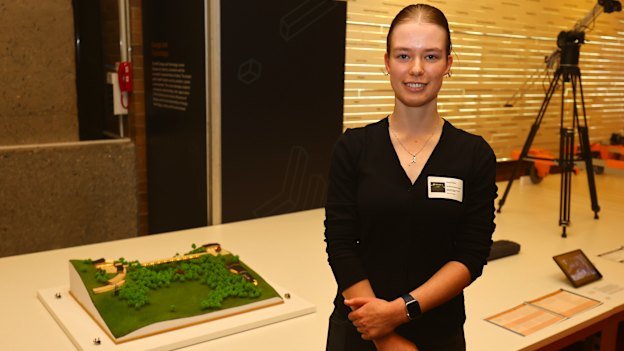
Since very early in high school Alexis Evans has known it was STEM subjects that really captured her – and now she’s hoping they will take her all the way into space.
“I realised a career in space doesn’t have to be a thing you see in movies – there are opportunities,” said Evans, who attended Illawarra Grammar School in Wollongong.
With these ambitions, strong HSC results were needed. Completing Mathematics Advanced, Mathematics Extension 1, English Advanced, Chemistry, Design and Technology, and Physics, Evans achieved an ATAR of 98.25.
“The Physics course reinforced my interest in pursuing engineering to learn more about how to apply physics to complex and highly challenging problems,” she said.
Evans’s busy year 12 included a major work for Design and Technology – an innovative solution tackling the student housing shortage – which was selected for the annual Shape exhibition, which showcases exemplary works from HSC Design and Technology students throughout NSW.
This year, Evans started a Bachelor of Aerospace Engineering at UNSW Sydney and aspires to work for Gilmore Space Technologies in Queensland, the European Space Agency, or NASA in the US.
“It is such a unique and challenging area – I don’t want to just be comfortable and settle into a job,” she said. “Aerospace engineering uses such cutting-edge technologies. I think it’s interesting to see how we can push the limits of what humanity can achieve.”
Alexis’s tips for HSC Physics
Work to fully understand key concepts: “When you’re faced with an unfamiliar problem, you need the fundamental understanding of the physical principles to be able to unpack what the question is asking.”
Find extra sources of information: “Seek out other resources like YouTube videos, or websites. This helped me deepen and ingrain my knowledge of the concepts rather than simply memorising key ideas, which would have left me entirely unprepared to face problems that required higher-level thinking.”
Master time management: “Get serious about genuinely planning out when you need to get things done – set hard checkpoints for yourself.”

Curiosity drives Stacy’s STEM future
Stacy Zhang, who topped not one but two HSC science courses in her final year of school, said she wasn’t a great student before Year 10.
The Roseville College graduate believes she was really lacking motivation. But then genuine curiosity kicked in.
“It doesn’t feel like a chore to study because I’m really interested in what I’m learning,” said Zhang.
The commitment paid off, with Zhang’s efforts leading to the achievement of first in course for both Biology and Chemistry, strong HSC exam results and an ATAR of 99.95. She is now studying a double degree in science and engineering at UNSW Sydney.
“My parents are really hard-working which I’ve always found inspiring, but they didn’t push me,” she said. “I think my motivation mainly came from loving what I was studying and wanting to do my best.”
Consistency played a role too, Zhang said, along with thorough use of the course syllabus.
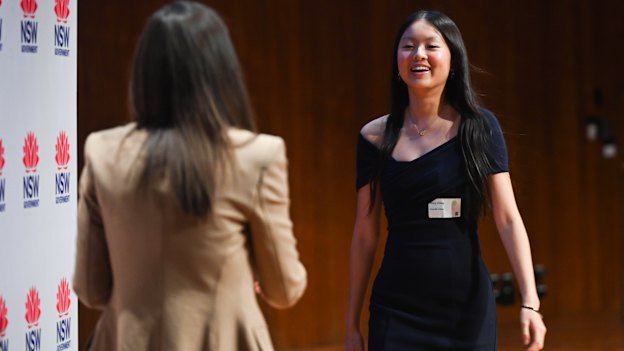
“Go through the syllabus points and make sure you know everything well – and prioritise having a good understanding of concepts, rather than just memorising everything.”
She also recommends daily to-do lists and regular breaks to take a walk or go to the gym.
“If I’d sit down too long I’d become less productive. After a break, I’d go back in more energised,” she said.
Her love of STEM was displayed in her course combinations for the HSC including Biology, Chemistry, Physics, Maths Extension 1 and English Advanced. Zhang also completed Maths Advanced in year 11.
“I’m really passionate about STEM and would love to contribute to advancing knowledge and having a positive impact on the world, especially in disease prevention, treatment and improving human health.”
Stacy’s tips for HSC Biology
Know the NESA verbs: “Make sure you know all verbs, and practise answering questions for each type.”
Use biological terminology: “Using scientific terminology in your responses shows understanding and can elevate your responses.”
Mark past papers yourself: “Checking your responses against the marking criteria and suggested solutions is very helpful – it’s really important to analyse where you went wrong so you know what to work on.”
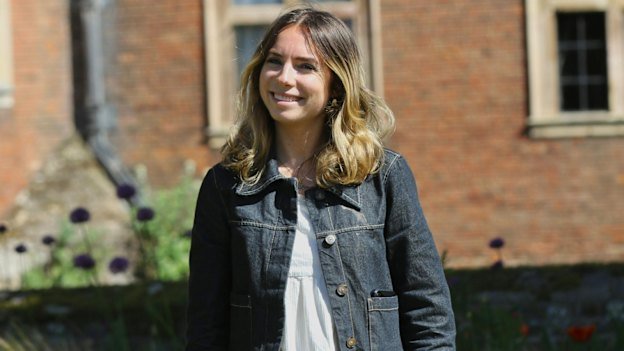
Cambridge graduate says trust what you know
Despite hurdles during the pandemic – like relocating to a relative’s house to remain at Abbotsleigh School in Sydney’s Wahroonga – Lucy Koder achieved outstanding results in her 2021 HSC.
An ATAR of 99.95 and a desire for intellectual challenge led to her being accepted into England’s University of Cambridge to study law at St John’s College.
Koder, who grew up in Kiama on the state’s South Coast, achieved first in course for HSC Economics.
“Economics is a subject that really makes you think,” she said. “It’s not just about memorising content – it’s about comprehension and intuition.”
Economics was also invaluable in connecting students to the real world.
“You can see it everywhere – whether it’s inflation or fuel prices, you can apply what you’ve learnt to what’s happening around you.”
Having completed her degree in June, Koder is set to commence training as a solicitor at a London law firm, with long-term goals of working in commercial law and making genuine social impact.
Her advice to students is to stay grounded and focused on your own “big picture”. “Know what you are working towards. Having a goal makes it much easier to stay motivated and make the right choices.”
Lucy’s tips for HSC Economics
Break it down: “Make brief, clear and concise notes, then focus on the core points, to support the synthesis and application of information.”
Topic on a page: “As you approach exams, try to do one A3 sheet for an entire topic – so with four topics, you’ll have four sheets that summarise the entire course.”
Own your knowledge: “The HSC exam isn’t open book – it tests your ability to recall and apply your knowledge. Trust what you know and practise applying it.”

Ancient tales shape Hugo’s future
Despite top HSC results and an ATAR likely to guarantee entry to any course at an Australian university, it was the powerful modern-day lessons found in Ancient History class that inspired Hugo Sharkey’s post-HSC journey.
After some months exploring the ancient ruins of South America, Sharkey accepted a scholarship to study political science at New York’s Columbia University.

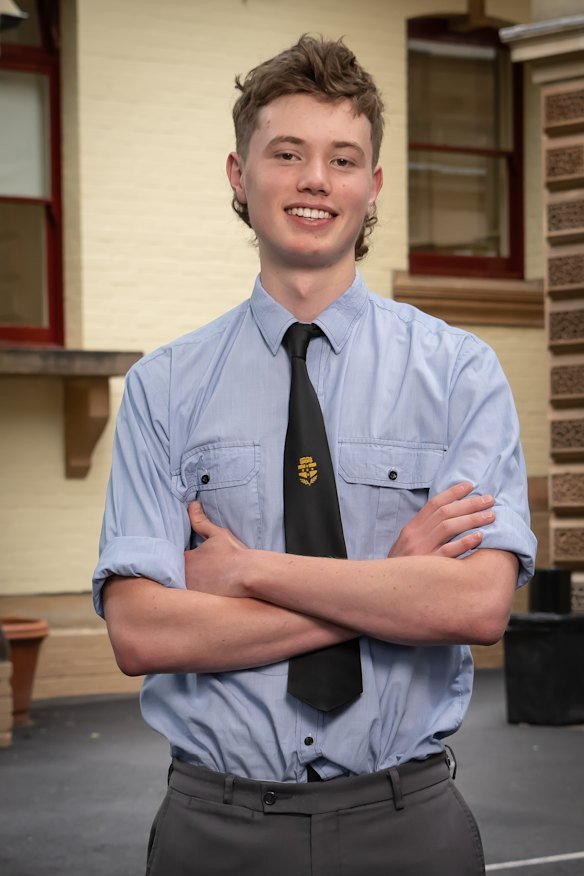
“New York is a perfect example of how history can teach – the whole city is an extension of the classroom – museums, art and people who tell a continuous story of the society’s evolutions,” Sharkey said.
Although he had academic strength in areas like mathematics and science, the Sydney Grammar School dux said he followed a “natural calling” to study ancient history in years 11 and 12. He was first in course in the 2024 HSC.
“It’s food for the soul, a great basis of lessons about human nature and societies that you can carry with you everywhere,” said Sharkey, who plans to also study law following four years at Columbia.
“They’re useful stories – the fall of the Roman Republic, for example – there are a lot of really important lessons about the price of apathy in the face of political aggression, or what happens to a democracy when a dictatorship starts to seep in.”
Hugo’s tips for HSC Ancient History
Build your information: “Spend the semester accumulating evidence, sources, dates and events under the headings provided in the syllabus.”
Read historical narratives: “Historical fiction like Tom Holland’s Rubicon about the fall of the Roman republic or Persian Fire [about Greco-Persian wars in fifth century BC] are great for this course.”
Create detailed timelines: “Make one big timeline that includes all your evidence: sources, dates and events. That way, you’ll see everything in context and in chronological order.”

From the farm to the future
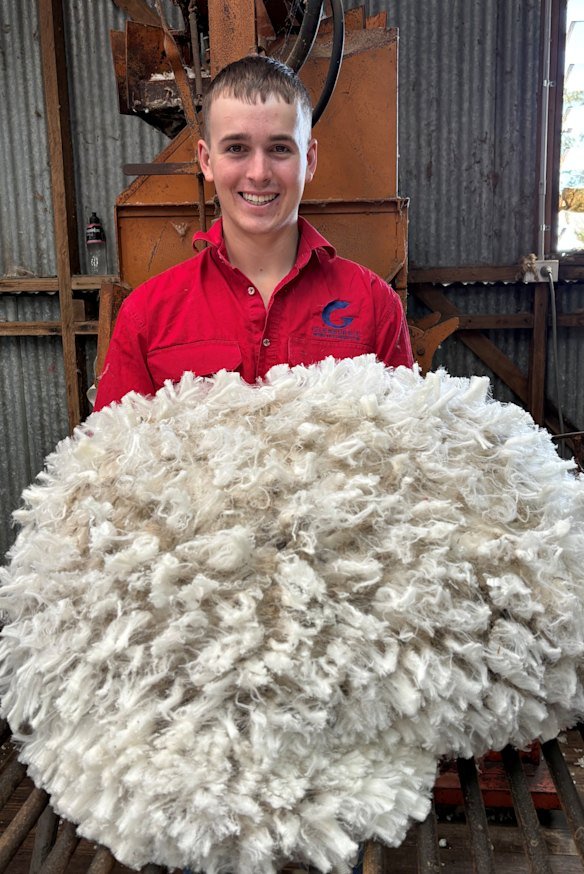
Growing up on a farm near Walcha in the state’s northern tablelands, Bateson Pittman’s love of the land laid the groundwork for his career.
Pittman is working as a station hand and is in his first year of a Bachelor of Rural Science at the University of New England in Armidale.
“I grew up on a farm, living on the land – I have no regrets about that at all. I had the opportunity to work with animals from a young age and that really stuck with me,” Pittman said.
Since graduating from Tamworth’s Farrer Memorial Agricultural High School in 2025, Pittman has been working towards a future in animal production focused on genetics and animal health. This direction was set while he was studying Primary Industries, one of several HSC Vocational Education and Training (VET) courses.
“I picked the course because it’s related to agriculture, but you also get a Certificate II or III, which helps you get employment in the industry,” he said.
“It’s a great stepping stone if university isn’t for you or you want to earn a certificate, and it also gives you more practical skills – learning about industry regulations, sustainability and different production systems.”
Starting high school during the COVID years came with its own challenges. With limited internet access on his property in year 7, Pittman adapted by studying outdoors and making the most of what he had – a resilience that carried through to his HSC years.
For those considering Primary Industries, Agriculture or both courses, he stresses the importance of hands-on experience. “Try to get industry experience outside your course. It grows your knowledge and helps a lot in exams – especially if you’re aiming for top band results.”
Bateson’s tips for HSC Primary Industries
Keep life as normal as possible: “Keep playing sport, doing what you enjoy and don’t overwork yourself just studying – it really helps you through.”
Use the syllabus to guide your study: “Stick to the syllabus and do extra research to deepen your understanding.” [The NESA website supports primary industries students with mind maps to show each focus area in the syllabus.]
Submit past papers to teachers for feedback: “Complete as many HSC papers as you can, under timed conditions. Hand them to your teacher so you know how you’re tracking.”
NEW PATHWAY
The rules changed in 2025 so that more than one VET course with an exam can be included in the Universities Admissions Centre’s calculation of your ATAR.
This means students can now qualify for an ATAR pathway into university if they choose – as well as pursuing a vocational qualification.
Read more about the changes on NESA’s website.
Travis engineers his future
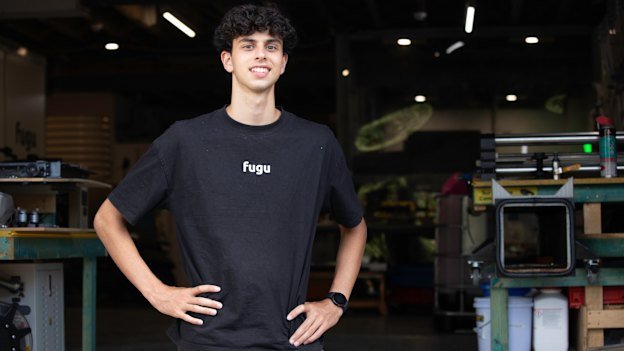
Travis King, 19, was so determined to avoid any distraction while studying for his HSC that he designed a time-controlled lockbox to place his phone in.
The mechanical flower phone lockbox – which unlocks when the set time has elapsed and the flower has fully bloomed – was also his design and technology major work, contributing to King achieving the statewide award of first in course in 2024.

King, a graduate of Sydney Secondary College, Blackwattle Bay, is now in his second year of engineering at UNSW Sydney and working part-time.
“I got a job at an engineering start-up, so I’ve been building a lot of prototypes. I’m getting to see how something goes from an idea to a mass-produceable product,” said King.
The key to good study is consistency – and for King, taking advantage of being an early riser.
“Getting an hour of study in the morning really helped me,” he said. “I wasn’t very distracted early in the mornings and you’re not tired from having done a day of school already.”
King said it’s not too late for students who haven’t established a study routine. “There’s still a lot of time if you delegate your time efficiently. Just make a calendar and achievable goals. Tell yourself, ‘After I’ve done an hour of maths in the morning, I’m going to go out and do something. Then I will do another hour of maths when I come back in.’ ”
He said all HSC students could also benefit from reviewing their habits and regular schedule. “Go through each day in your head and identify what annoys you that you could improve on.”
King’s HSC program of study consisted of “lots of maths and physics” – so a course catering to his creative side was a welcome relief. “It’s very satisfying when you see something go from an idea to something that improves people’s lives.”
Travis’s tips for HSC Design and Technology
Carefully review project ideas: “Be realistic about what you can achieve and don’t waste a lot of time on something that isn’t going to be viable. Be critical of your ideas.”
Be hands-on in class time: “Term 4 and term 1 is only a small window of time and a lot of people spend time worrying about their folio. Learn how to use the equipment and focus on making things in class.”
Review high-achieving folios: “Our teacher showed us folio excerpts from the Shape exhibition. Think about how you’re going to present your work to the markers. Videos? Posters? Put yourself in the shoes of someone who doesn’t know anything about what you’re doing.”
- Find out more on VET courses at this link.
- Check out Campus, our higher education hub, including an interactive course search tool.
Start the day with a summary of the day’s most important and interesting stories, analysis and insights. Sign up for our Morning Edition newsletter.
Read the full article here