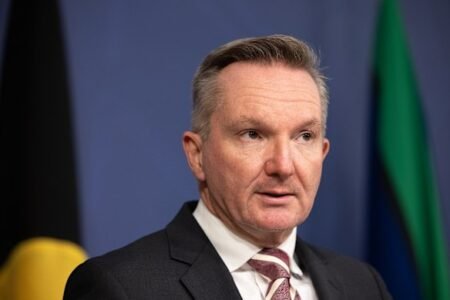






Climate Change and Energy Minister Chris Bowen has signalled bigger fuel reserves and a trucking rule change to reduce Australia’s reliance on diesel and offset oil shocks as the government locks in fuel supply into June.
Prime Minister Anthony Albanese was flying back from his fuel diplomacy trip in Malaysia on Thursday evening after a fire engulfed one of Australia’s last two oil refineries in Geelong. He will visit the refinery on Friday.
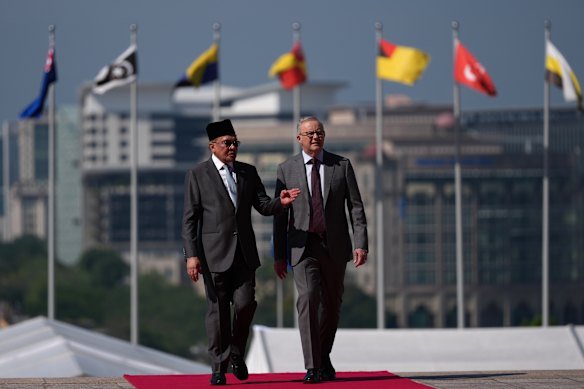
Earlier on Thursday, he announced the government had backed the purchase of 100 million litres of diesel and secured a deal with Malaysian fuel giant Petronas to import any excess fuel after it had supplied its domestic market.
Speaking on the Inside Politics podcast on Thursday, Bowen said imports were guaranteed through May and “starting to get into June”, though he acknowledged firms could cancel contracts should suppliers run so short that they had to hold fuel back for their own countries.
Tankers of fuel that sell for between $50 to $100 million were selling at up to $50 million more, Bowen said, explaining why the government was using its own financial weight to support firms in a fiercely competitive global market.
Bowen, who conceded he had recently toned down his aggressive style to communicate with anxious voters, gave the firmest indication yet that Labor would boost Australia’s paltry fuel stocks in the newly envisioned “resilience” component of the budget in May.
Asked about building more storage to supply oil, Bowen said the government had “opportunities to look at things” before the budget due next month.
“Obviously, when you get through any sort of major shock like this, you look back and say, what could be done better?” he said. He again warned it would cost $20 billion over four years to reach the international standard of 90 days storage, but suggested Australia could explore a smaller, less expensive increase.
Bowen tamped down speculation that Labor would build new refineries. He said Australia’s small population and lack of commercial scale made it unattractive, rather than the arguments he said were propagated in the “culture wars” that the government was hostile to fossil fuels.
Australia is one of the largest per capita users of diesel in the world due to mining and the vast distances goods must travel. This masthead has learned from several sources that Labor was working with the states to turbo-charge the rollout of electric trucks by changing road standards to allow for more new-age vehicles, which are wider and heavier than normal trucks.
“Last time I looked, more than 50 per cent of the trucks sold in China are EV trucks,” Bowen said, as the government banks on electrification to reduce reliance on oil.
“Am I suggesting electric trucks can replace diesel trucks, holus-bolus, in the next 12 months? Of course not. Is it the direction of travel for electric to do more on heavy vehicles? Yes. Can we help? Yes.”
Albanese, speaking in Malaysia hours after the Viva Energy oil refinery in Geelong caught fire, announced the government had helped the company buy two tankers carrying 100 million litres of diesel. The amount equates to about one day’s worth of national diesel use.
Albanese and Malaysia agreed to keep supplying each other with fuel and gas on a “no surprises” basis, adding to speculation that Albanese had decided against a new tax on gas profits. However, he kept the option open to tax uncontracted gas despite the worries of Asian nations reliant on Australian exports.
The oil shock has spurred a debate on the transition away from fossil fuels. Conservatives have been arguing for more oil drilling, while others, including the International Energy Agency, have pushed the case for more wind and solar power.
Bowen said Asian leaders who met in an online meeting with the Japanese prime minister on Wednesday had “interestingly” agreed on “the need to keep going with our drive towards more reliable renewable energy”.
Asked if the government should also be making the case for more oil and gas capacity until its high renewable targets were met, Bowen acknowledged that “two things can be true”.
“What’s happened in Australia, almost inevitably, is it gets straight to the culture war.
“People saying, well, this underlines the need for more fossil fuels. Well, I don’t think that’s the conclusion. It’s … a very sensible, calm, moderate observation, to say increasing renewables in the mix is actually part of the solution – not the entire solution.”
Queensland’s LNP Premier David Crisafulli and Nationals leader Matt Canavan have put their weight behind oil projects at the Taroom Trough in Queensland and the Great Australian Bight.
Bowen said that, if the economics stacked up, he was “very happy for exploitation of Australian oil to replace imports”.
“But I’m also happy … with the transition renewable energies replacing the need for some of it,” he said, arguing the situation was “more complicated and nuanced than ‘drill, baby, drill’“.
Until now, much of Australia’s petrol and diesel supply has been imported under shipping schedules that run for 60 days and were locked in before the Strait of Hormuz shut on February 28.
NRMA spokesman Peter Khoury said fuel supply into June demonstrated that government and fuel companies could keep imports flowing despite international competition.
Explaining shortages at fuel stations, Bowen said regional service stations were left short when businesses that source fuel under long-standing contracts, including big miners, increased their orders.
A frequent target of right-wing commentators, Bowen claimed energy ministers worldwide were often the most contentious ministers in their governments.
“I don’t take a backward step in the political debate,” he said when asked if he had reined in his aggressive posture as he has led the government’s effort to ask Australians not to panic.
“Though we’ve been dealing with a very significant international crisis. So I’ve taken the view during this to try and calmly and methodically lay out the facts.”
Cut through the noise of federal politics with news, views and expert analysis. Subscribers can sign up to our weekly Inside Politics newsletter.


From our partners
Read the full article here