




In a lifetime we inhabit a world of different places. I spent my adolescence in Glen Waverley, where you tended to be at least within long walking distance of your friends, and where there was effectively no public transport: school buses once an hour. Behind it all lay the belief in decentralising Melbourne – the football at Waverley, the Chadstone shopping centre, Monash.
Back then, what I knew of Hawthorn was its football club, which was the funny anomaly of a middle-class club trying to make its way in a tribally working-class world. Hawthorn didn’t win a premiership until 1961 – which sent a great wave of enthusiasm throughout the VFL and was notable for such stars of the Hawks as Brendan Edwards and John Winneke, an amateur from a legal family who would end up as president of the Court of Appeal and one of the roughest, some would say foulest, tongues ever to occupy that eminence.
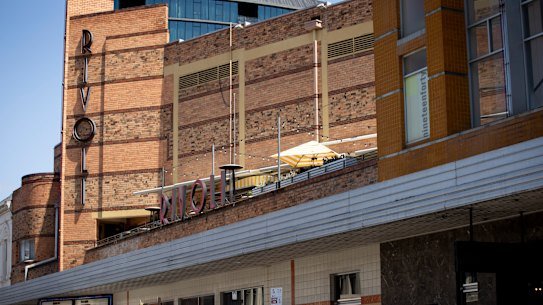
But I didn’t think of Hawthorn as a place. I cheered on that first premiership – my father was a sportswriter – and I remember trips to the Rivoli with him to see films such as The Bridge on the River Kwai. Even then, I thought these eastern stretches a bit bland.
Would it be a good bet to reckon that there are more private schools across Hawthorn than you would find anywhere in the world? Not just Scotch and Bialik but MLC and Xavier and Trinity, which might not share the postcode but are continuous with the Hawthorn matrix: a compact square mile of it.
Hawthorn is an extraordinary stretch of pretty, very well-off suburbia which runs from Camberwell in the east to the river and Richmond in the west – and a suburb I never thought I would end up in. It’s an odd place to end up for someone who lived for the better part of 30 years in Fitzroy and, before that, more briefly, in McCaughey Court at the University of Melbourne’s Ormond College – which looked like nothing so much as a Pizza Hut. It was there that I edited a literary magazine, Scripsi, with Michael Heyward. But one lived in greater Carlton: Carlton proper, Brunswick Street, Fitzroy. So I ate bacon and eggs at Mario’s, I drank at the Standard, and I worked as a journalist and editor out of Brunswick Street bars and cafes. I was an inner-urban highbrow hack.
Hawthorn – and before it, two years in Camberwell, a close cousin – was a strange dislocation. We found ourselves moving into the green belt because of personal disaster and the kindness of friends. It was also, in practice, luxurious and attractive. When I said, “I would never have believed I could stand this,” my young interlocutor – private school bred – said, “Try 25 years of it.” Someone who has grown up in Camberwell and Hawthorn is likely to have copped a lot of repressive tolerance, a lot of civilised parenting which was also maddening and seductive.
My move to Hawthorn proper came at the start of COVID in 2020. Being lame, I dutifully and slowly made my way in search of supplies on that first day to the worst servo in the world – one that didn’t have butter, though it had vast supplies of Maryland cookies and meat pies and KitKats.
Across Riversdale Road, by way of a contrast, is Choi’s, one of the finest Chinese restaurants outside the legendary Flower Drum: exquisite Peking duck, a wine list that will leave you begging (or at any rate calculating). And before we make Hawthorn sound like a place of absurd extremities, there is a very fine, family-run cafe – Saint Helen – offering rich coffee, cold takeaway food and splendidly cooked hot food from dedicated Lebanese hands, and a very congenial place to sit and yap.
Yes, there’s something both comic and attractive about Hawthorn. The judges who would say good morning to you in the COVID sun were cheering, though that elaborate courtesy turned out to be a function of the pandemic. Everyone’s behaviour – the smiles – has receded since.
And where else, in an upper-middle-class area, would you get an arty cinema like the Lido, where you can take young cineastes to a screening of, say, the 1976 French thriller Monsieur Klein, or watch The Odyssey and feel no need for IMAX? The old conception of Hawthorn – and Camberwell – is deserved. It’s monied and civilised, and it could shift, pretty effortlessly and in a blink, from Josh Frydenberg, an intense and experienced treasurer, to a teal like Monique Ryan, who wrenched Kooyong from him in 2022. He was a familiar and friendly figure round here before that loss, frequently observed on a Saturday morning rifling through The Saturday Paper but buying it only if he was mentioned.
It’s hard to deny the style of Hawthorn. On the corner of Glenferrie and Burwood roads stands the handsome bluestone Church of the Immaculate Conception, consecrated in 1869 and staffed by learned Jesuits — Peter L’Estrange, the former rector of Newman, among them — and there are plenty of places of worship from all the major denominations.
There’s also the very reliable Auburn Hotel (East Hawthorn, technically, but only a stone’s throw away). It’s typical of greater Hawthorn, though, that this very sturdy hotel with its decent and reliable steak and fries should have had, as it were, a stage name. For 28 years, from 1987 until it reverted in 2015, it was known – in honour of the madcap Banjo Paterson poem – as the Geebung Polo Club: a pub in the land of the four-wheel-drive naming itself after a burlesque of bush horsemen, and then running Sunday sessions of a ferocity the Geebungs themselves might have recognised.
It was somewhere up the country, in a land of rock and scrub,
That they formed an institution called the Geebung Polo Club.
They were long and wiry natives from the rugged mountain side,
And the horse was never saddled that the Geebungs couldn’t ride…
There’s something irresistible about it, the pure facetiousness, that’s charming. This is the aspect of Hawthorn that’s a bit like the Savage Club. There’s a spirit across the whole of Hawthorn that animates the parties of art historians, the dinner parties of old famous barristers. The place drips with money but is also very open-minded, and it backs the arts. It’s a bit of Melbourne that is paradoxically egalitarian and easy-going – it can afford to be, but there’s also an openness that goes with the privilege.
You can spend your time wondering how long it will last. Some long-time residents who imagined they would stay here forever find themselves selling and moving to apartments in, say, Carlton: the children are long gone, and they want to be near the grandchildren. The paradox of decentralising Melbourne is that many of the children of Glen Waverley headed back to the inner city years ago.
But there’s an energy and a kindness in Hawthorn – a striving for equality – behind the filthy lucre, even as we admire the Biedermeier sofa, that makes Hawthorn, drab-sounding Hawthorn, look a bit like the jewel in some kind of crown.
Peter Craven is a writer and critic.
The Opinion newsletter is a weekly wrap of views that will challenge, champion and inform your own. Sign up here.
From our partners
Read the full article here