




A northern Saskatchewan First Nation says the cancellation of a planned animal spay and neuter clinic could have consequences for both animal welfare and public safety.
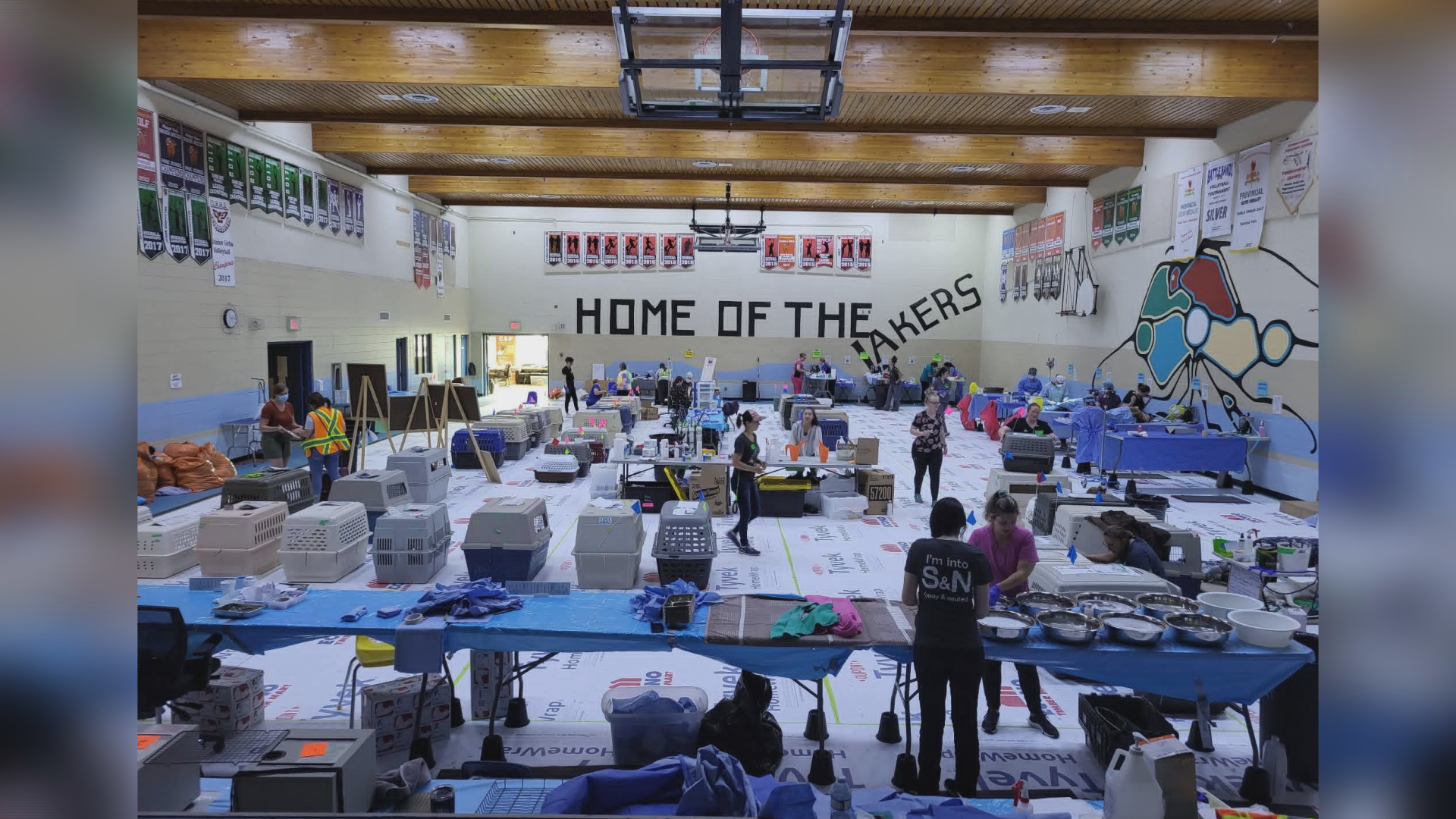
The Canine Action Project (CAP) says it was planning to host a temporary veterinary clinic in Sturgeon Lake First Nation, located about a 40-minute drive northwest of Prince Albert, Sask., in mid-August, where it expected to help up to 150 animals.
But the charity says its application for a temporary clinic licence was denied by the province’s veterinary medical association, forcing it to cancel the clinic.
“We were advised that because they were within 150 km or two hours of existing veterinary practices, our application to do the on-site clinic was denied,” said Meagan Schmitz, co-executive director of CAP.
Schmitz says she was surprised to learn that CAP would not be able to proceed, having conducted over 20 clinics since 2012 and most recently hosting one at Sturgeon Lake First Nation in 2022.
“We just did one in Big River a few weeks ago in June that was approved and was successful,” said Schmitz in an interview with Global News.
Schmitz says CAP appealed the Saskatchewan Veterinary Medical Association’s (SVMA) decision on July 24, but that appeal was also denied.


Get daily National news
Get daily Canada news delivered to your inbox so you’ll never miss the day’s top stories.
Global News has reached out to the SVMA for comment, but has not received a response.
In the appeal, Schmitz says CAP submitted support letters from three nearby veterinary clinics, along with a letter from the chief of Sturgeon Lake First Nation.
For Sturgeon Lake First Nation, the loss of the temporary clinic is a major blow to band members, many of whom are unable to access veterinary services outside of the community.
“A lot of people don’t have access to their own vehicle. They don’t have gas funds to take their animal to these veterinary clinics,” said Anita Parenteau, Sturgeon Lake First Nation councillor, in an interview with Global News.
It’s also raising concerns for community safety, said Parenteau.
“It’s kind of scary; you see it on social media, dog attacks in other communities, and we’re trying to keep our community safe. That’s the biggest impact that’ll happen.”
Animal rescuers also worry the cancellation will add pressure to an already strained rescue system as unplanned litters continue to increase.
“We have an amazing group of foster homes. Don’t get me wrong, they are an amazing group of people, and they keep saying yes,” said Sandra Archibald, executive director of New Hope Dog Rescue in Saskatoon.
“But at what point does every home have as many dogs as they can hold?”
Schmitz shares similar concerns, saying the closest veterinary clinics to Sturgeon Lake First Nation are also at capacity.
“They said they did not have the capacity to absorb the caseload that we would have seen in a three-day weekend at this on-site clinic. So even though clinics are physically there, they don’t necessarily have the availability,” said Schmitz.
Following a statement posted to Facebook on Tuesday about the clinic’s cancellation, Schmitz says the organization received an outpour of support from community members, something the charity was not expecting.
Above all, Schmitz says she wants to make sure services can reach communities that need them most.
“There are so many research studies out there now that have shown the barriers that the underserved in Indigenous communities face when trying to access veterinary care,” said Schmitz.
“That was something that we were trying to bridge the gap in by bringing service directly to the nation.”
Read the full article here