



Today we celebrate Mother’s Day with gifts, cards and family gatherings but some among us face difficulties becoming mothers – and some of them decide to turn to surrogacy.
For some it is a positive experience – for others it is fraught with cost and difficulty.
Our Sunday Life story by Courtney Thompson about two friends from childhood who agreed to walk the path of surrogacy together is both heartwarming and an illustration of the difficulties to be faced.
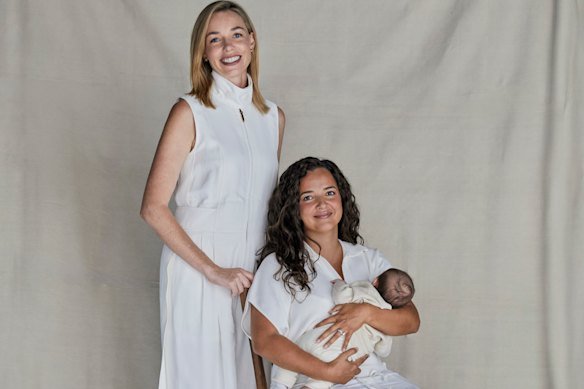
Former business director Lucy Koops had endured more than 10 uterine operations, multiple IVF treatments, seven angel babies (including one stillborn), deep depression, financial hardship and, ultimately, the loss of her uterus before she and her husband accepted the offer from her life-long friend Ashleigh Raper to be a surrogate.
Baby Mia, conceived from Koops’ egg and her husband’s sperm, was carried by Raper, Network Ten’s political editor, with two children of her own, to full term.
In addition to spending $200,000 on trying to conceive, Koops faced immediate hurdles when Mia arrived, ranging from waiting for a parentage order being granted to remove the surrogate as the legal mother, to not being shown how to feed and wrap the newborn, to the logistical nightmare of adding her to her Medicare account. She now advocates for regulated surrogacy reform to protect both the intended parents and the surrogates from legal limbo.
Mia’s story is an example of altruistic surrogacy where women carry a child for others without profit and selflessly provide the opportunity to be parents. Commercial surrogacy is illegal in Australia; international surrogacy comes with significant risks.
The experience of two Canberra women, Melinda and Gail McCann, as reported last week shows what can go wrong. They paid Melbourne lawyer Paul Norris-Ongso’s company Global Surrogacy $100,000 for a baby born in Colombia in 2024. The women alleged the surrogate mother had health problems, was not paid adequately, and it took two months for their new baby to obtain Australian citizenship.
Last financial year, 369 children born through surrogacy arrangements became Australian citizens, up from 218 in 2021. It has been reported that in 2020, about 76 children were born through altruistic surrogacy.
The Australian Law Reform Commission is holding an inquiry reviewing surrogacy laws and among the 438 submissions there are stories joyful and horrific.
Lucy Koops’ experience with newborn Mia highlights a need for improvement: changing the altruistic surrogacy system to allow intended parents to apply for a parentage order during the pregnancy. This would allow them to be recognised as the legal parents before birth and obviate issues with Medicare, passports, hospital admissions, enrolling for childcare and remove some of the stress from what is already a legal arrangement. Further, NSW Health needs guidelines for families going through surrogacy.
Many still believe altruistic surrogacy is illegal. Dispelling this misconception would make it easier for those involved in a practice that has the imprimatur of all states and territories in Australia.
The ALRC report is due to be delivered to the Attorney-General Michelle Rowland by July 29, and it is clear reforms are needed but the rights of surrogates, intended parents and, especially, children must be protected.
Start the day with a summary of the day’s most important and interesting stories, analysis and insights. Sign up for our Morning Edition newsletter.


From our partners
Read the full article here