




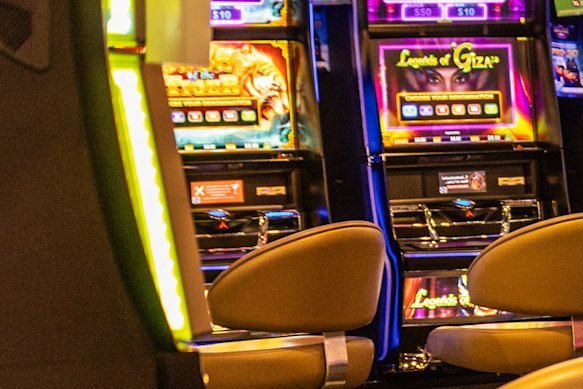
Peter Hartcher (“Gambling laws’ biggest winners”, August 22) has done us a favour by reporting parliament’s genuine belief that banning gambling advertising would be “a threat to the viability of free-to-air networks” and “the sporting codes, especially the AFL and the NRL”. More important, apparently, than approaching “the issue through a public health lens”. This also helps us avoid the lazy assumption that parliamentarians were “selling out for political donations”. However, both the alcohol and tobacco industries have adjusted to advertising bans which have seen the desired public health effect of significant long-term reductions of public consumption. The current gambling advertising and inducements legislation will almost certainly have little public health impact. David Hind, North Sydney
What seems to be forgotten in this debate is that no one is calling for gambling itself to be banned – just the gambling advertisements and their inducements. The Murphy inquiry found that Australians lose more money online gambling than any other people on this planet: something Australians seem very good at, but sadly not a record to be proud of – and a lousy business plan for a punter. More than half a million gambling ads are paid for and screened annually. The funds for that massive spend have to come from somewhere. Just do the maths. Bill Young, Killcare Heights
For those who object to the weak gambling legislation, I have a suggestion. Join your local footy or RSL club and start lobbying the board to cut the number of pokies machines. Find like-minded people and swamp the AGM with demands to cut gambling. Accept that subsidised meals and drinks will rise in price. Accept high-priced stars will not be affordable, so results will be down. Accept membership fees will increase. If they cut back gambling, you will blame them for fewer subsidies at your local club. Neville Turbit, Russell Lea
Not all five Coalition parliamentarians who crossed the floor to vote against the government’s half-baked gambling laws were Liberals. One dissenter was National Party MP Pat Conaghan.
Col Shephard, Yamba
As Peter Hartcher points out, the problem identified by the parliamentary inquiry is not gambling itself, but the torrent of advertising that encourages people to gamble. The freedom to participate should not be confused with a right to promote it. Singapore provides an interesting model. Gambling is legal but tightly controlled, with betting and lotteries confined to licensed operators and approved venues. Why can’t Australia do the same? Adults could still gamble whenever they choose, without subjecting children, vulnerable people, and those with no interest to the relentless bombardment of betting advertisements. John Kempler, Rose Bay
Each morning as I pick up my newspaper, I see countless older people with a wallet of the week’s betting dockets, via the lottery/ lotto system. Hundreds of dollars pass the counters of all the lotto agents every day. The minuscule number of winners hardly compensates for the hard-earned cash being lost each week. What is hard to believe is that governments turn a blind eye as a new generation is sucked into the gambling vortex as though it’s a normal part of life. It’s ludicrous, as Tim Costello showed by comparing it to three smoking advertisements an hour not doing any harm either. The bottom line should be no gambling ads at all. How is it that a win on one’s favourite football team has anything to do with the possibility of losing a week’s hard-earned cash? (Money that should be directed to the worth of life and living.) The words “a harmless weekly flutter” just don’t make any sense when the long-term ramifications for most, sucked into gambling, have proven to be so disastrous. Losses of billions each year in NSW is not pocket money. Sadly, the resultant figures have ended up in the wrong pockets for far too long. The spineless approach from the current Labor governments is not going to change one iota of the statistics we now live with, week after week. With the ban on smoking and alcohol advertising now law, it seems that banning gambling ads should seriously be the next move. It won’t stop gambling, but it will put the brakes on, and endorse the fact that the chances of losing one’s entire hard-earned weekly wages is not OK. Greg Vale, Kiama
I was very disappointed to read that the Albanese government has put the interests of the media and the gambling industry ahead of the families of those addicted to gambling and children exposed to gambling. Shame on you. Andrew Macintosh, Cromer
Swans can still shine
It seems five of the Swans will be known as Ugly Ducklings (“Swans leader apologises for banned stars’ behaviour”, August 22). C’mon, Sydney, support the rest of the squad who now have the chance to shine. Go Swannies. Chris Sinclair, West Pennant Hills
A simple, direct consequence for the stood-down Swans members to consider – I am on holiday in Western Queensland, and if I had packed my Swans member cap it would have stayed in my bag. How many thousand more members would feel the same? Malcolm Cato, Westleigh
Malcolm Knox has nailed it (“Jeer, jeer the red and white: How the Swans’ faithful were sold a lie”, August 22). For years fans have been force-fed the malarkey of “culture”, not only from the Swans but all the major sporting codes across the country. Manning a kitchen for the homeless or a big night on the drink with teammates? We all know which one the players would choose. Across all codes, over time, we’ve witnessed off-field acts of violence, excessive drinking, drug use, taxi driver abuse, property damage, lewd public behaviour, and extramarital affairs. Are players not merely mirroring society? Salary cap breaches in clubland, bad bank behaviour in real life. The incident is not to be downplayed and obviously has upset a cohort of Swans supporters, but as Knox states, it has exposed the sham the culture thing is. The reality is Australians are watching sport in record numbers. They have long accepted the human failings of those who play it. Winning is the one culture they crave. Mike Kenneally, Manly
Howard’s flawed ways
Can we please stop the eulogising of John Winston Howard (Letters, August 22)? As treasurer under Malcolm Fraser he led Australia into its worst recession since the Great Depression. Wollongong had an unemployment rate of 25 per cent and youth unemployment rate of 33 per cent in 1982. He has continually demonstrated himself to be a bigot with nothing to be big about. It is arguable he is something close to a war criminal for sending Australian troops into Iraq. Tony Abbott and Scott Morrison were dreadful, but Howard was worse. Tony Doyle, Fairy Meadow
Tariffs or entry tax?
The US under Donald Trump has become an unreliable trade and military partner (‴At war’: Canada walks away from US trade talks, retaliates against tariffs”, August 23). Retaliating over tariffs may not work but surely we need to increase customs and quarantine inspections on anyone returning to Australia from the US? Indonesia imposes $A50 cash payment on arriving tourists. We should charge, say, $100 on every arrival to fund greater inspection of bags and persons? If only to control illegal drugs and arms David Neilson, Uralla


No faith in extremist teachings
If Claire Harris learnt bigotry, intolerance, homophobia, and that sexual assaults are caused by women themselves (“Religious private schools like mine must be hauled into line”, August 22), then it is not simply a case of schools like the one she attended being merely “hauled into line”; entrance to them should be avoided by self-respecting families. There are excellent private schools which do promote wholesome attitudes, but let them fend for themselves. Why should governments spend taxpayers’ hard-earned on them while too many public schools attempt to cope with overcrowded classes, understaffing, teacher burnout, classroom and playground violence, inadequate resources and more? Ron Sinclair, Windradyne
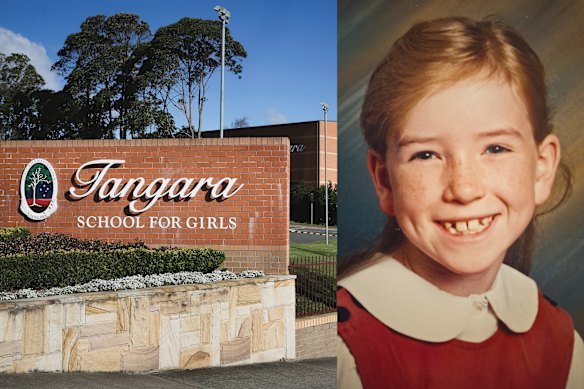
Claire Harris tells a harrowing tale of the metamorphosis that occurs when the teachings of one Jesus Christ are taken by those of His contemporary, medieval and current acolytes, and transformed into their most radical fundamentalist version. Regrettably, it is and has ever been at the heart of Christianity’s core duty to go abroad and “convert the heathen”. Routinely misinterpreted and then taken to its most extreme limits, this has led to the multiple perversions of settler colonialism and rampant exploitation of weaker resource-rich countries by stronger nations. Underlying this process is the assumption that might is right, God-given and, at all costs, authorises crusading Christians to instil not only Christianity but Western “values”, the two perhaps being interchangeable concepts. Frederick Jansohn, Rose Bay
After reading Claire Harris’ article while sitting in the sun, in deference to being in my 80th year and having swum one kilometre in the ocean earlier that morning, I took myself off for a mid-morning nap. And there I did dream such a wondrous dream. I was living in an Australia where there were no private schools, teachers all had master’s degrees and were very well paid, and the profession was highly respected. No religion was taught, but a course in ethics, set by a committee of leading ethicists, was mandatory.
Ah, but alas, I then awoke, and to quote Tom Jones, I realised that I had dreamt the impossible dream. Denis Hannigan, Toowoon Bay
The recent antics of the Presbyterian synod, the Exclusive Brethren and Catholic Schools NSW reinforce my view that Christian religions are just structures designed to empower and enrich middle-aged white men. If they are so intent on being involved in our political processes while also distancing themselves from societal norms, it is time they paid their own way and were taxed. More tax and greater scrutiny will bring these organisations more into line with the needs and desires of our egalitarian, secular society. John Mizon, Collaroy
Walk the talk
Much has been said and written about “culture” and “values” in recent years by politicians, the chattering classes and large organisations including religions and schools (“A frightful moment for women and girls”, August 22). Regardless of how vague and non-specific the culture and values are, they have become the fallback position for those claiming the high moral ground.
Perhaps we could accept that both culture and values are those beliefs and actions only truly demonstrated when we believe no one is watching or what we can self-justify. This would lay bare the true culture and values of at least two high-profile schools, sporting teams and fringe religious groups. Very different to what has been said and written. Bernie de Vries, Bolwarra
Natassia Chrysanthos, reflecting on writing about sexual assault and consent education five years ago, asks “has anything changed?” In view of the recent events portrayed in this paper, the answer is a clear “no”. It would appear that the pen is not mightier than the sword. Alicia Dawson, Balmain
Mums need support
What an indescribably sad story by Julia Baird (“Is this mum a murderer or a victim?”, August 22). I have delivered a few babies in my professional time. But I recognised that those babies confer potential stresses to their parents. I would try to remind patients, always keen to go home from hospital, of this. I would remind them that when they arrive home, with the first baby in particular, and statistically there are more first babies than second or third, that it can be a daunting experience to realise that this small bundle is a responsibility for life. I would urge the new mother in particular to lean on people and not to feel a burden or alone. When homo sapiens lived in a tribal environment, there may have been only a dozen or two members of the tribe. All depended on each other, all supported each other. Such loyalty to each other was the essence of their survival. The 1960s song Little Boxes describes some of the anonymity of present-day society. Women with small infants need somebody to lean on and will need support from family and from society. What will happen to Lindsay Clancy, we cannot know. Hopefully, the result will embrace all the details. David Oliver, Orange
Hidden beauties
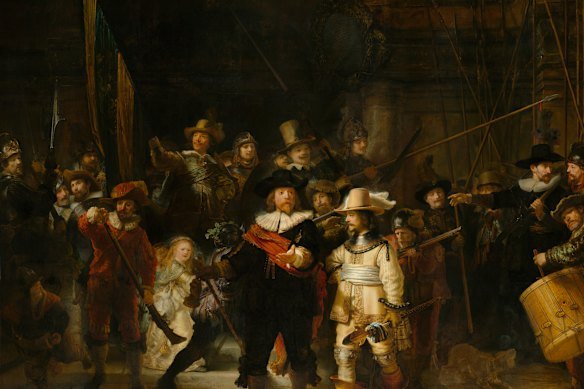
So many paintings that aren’t the Mona Lisa (“Strokes of genius”, August 22). The Botticelli paintings in the Louvre are my favourite. They are in a corridor that leads from the famous sculpture Winged Victory to another gallery.
Because of this placement, most people just walk past them. These Botticellis, typical of him, are exquisite. Fine lines and soft pastel colours. I always go to them first when I visit the Louvre. In The Night Watch in the Amsterdam Rijksmuseum, Rembrandt captures the moment as the men head out to protect the citizens of Amsterdam. The men are serious, but what is that little dog doing there, and the little girl? It’s an interesting version of paintings commissioned by the societies that employed these men and usually paint the men lined up sitting around a table. And The Luncheon of the Boating Party in The Phillips Collection in Washington, DC, not that easy to visit. Renoir’s best painting to my mind, full of life and the gaiety of the Paris of his time. Movement and colour capture that moment. Elaine Hoyle, Avalon Beach
- To submit a letter to the Sydney Morning Herald, email letters@smh.com.au. Click here for tips on how to submit letters.
- The Opinion newsletter is a weekly wrap of views that will challenge, champion and inform. Sign up here.
Read the full article here