




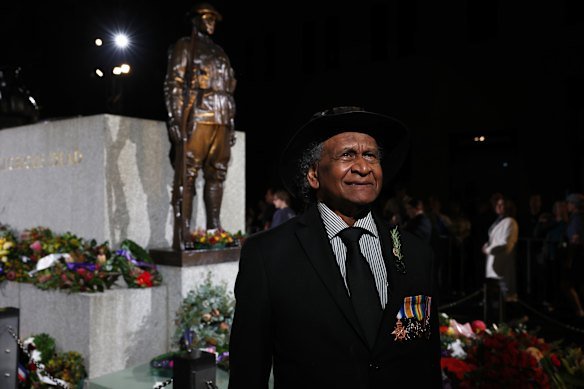
There has been ongoing division across Australia on the point and purpose of Acknowledgements of Country or Welcomes to Country. This was evident from the booing of Elders during the Anzac Day memorial services on Saturday. Shortly afterwards, Opposition Leader Angus Taylor said that Welcome to Country ceremonies are overused and have become devalued.
It’s time to move beyond scripted acknowledgements and toward something more personal, where we share who we are and why we’re here, not just read words on a page.
Acknowledgements, especially when undertaken by non-Indigenous people and in a corporate setting, have become stock and standard, resulting in tension around the expectation to include them across all spaces and places. At times, they can feel forced and tokenistic, missing any real meaning.
As a result, this standardisation can unintentionally create barriers or a sense of pressure, rather than fostering the genuine cultural engagement and respect acknowledgements intend to cultivate. Additionally, people may feel forced to be “woke” or politically correct, further perpetuating an ideological divide. Which, in essence, is built on the lack of understanding of Indigenous cultural traditions.
For tens of thousands of years, Aboriginal nations have used some form of welcome or acknowledgement when interacting and connecting across Country. As a group moved between different nations, they would first meet in a designated neutral territory, where Elders would undertake formal introductions to identify and welcome incoming guests. This allows for kinship connections to take place, which further cements relational and reciprocal responsibilities with each other.
Both parties would share who they are and where they come from, providing an opportunity to create a relationship. Elders would also be recognised as leaders who helped communities to thrive. Through this, identity becomes known and trust is established, enabling different nations to collectively share resources and benefit from the richness of each other’s lands.
Acknowledgements follow a similar style within iTaukei (Indigenous) Fijian communities. When iTaukei meet, people introduce themselves by acknowledging their village and the land they are connected to, and others reciprocate by sharing where they are from. When iTaukei visit other people’s villages, a formal welcoming ceremony is undertaken to pay respects to Elders while building a connection with each other. This again establishes a level of trust by allowing rapport and relationships to form.
The act of reciprocal sharing offers understanding, purpose and a connection beyond an “us and them” mindset. It enables people to acknowledge that they are not just an individual representing themselves. Rather, they are from families and villages that are connected to their lands and waterways.
In Australia, by undertaking these introductions through an Acknowledgement of Country, we are also challenging the ongoing narrative that this Country was “nobody’s land”; that nothing was here before colonisation.
Failing to acknowledge Country perpetuates the doctrine of Terra Nullius, effectively silencing the rich and enduring identities of Aboriginal people. In doing so, we disregard traditional identities, cultures, values, perspectives and practices that have existed for millennia and continue today.
If we seek to work towards a cohesive national identity and strengthen relationships built on respect and understanding, Acknowledgements of Country serve as a vital mechanism for recognition and connection.
A solution moving ahead is to shift towards more relational acknowledgements, by sharing something personal about who we are when doing an acknowledgement, rather than reading from a script.
Including more of our personal and professional histories in the introductions that accompany an Acknowledgement of Country can help us meaningfully introduce ourselves to one another. By doing so, we create space for connection and context, alongside the acknowledgement itself.
For example, you might begin by introducing who you are and where you come from, reflecting on the richness of your heritage and ancestry that has enabled you to be where you are today, as well as the mentors or Elders who have shaped your identity. This can then be followed by an Acknowledgement of the Country you are on, paying respect to their Elders for the significant role they have played in supporting First Nations peoples.
By doing this we are providing scope for people to learn from one another’s stories, and strengthening our ability to connect with and contribute to our communities, whether in the workplace or in our local areas. Acknowledgements of Country offer a meaningful opportunity to forge a path forward together.
This reciprocal practice can be embraced across all communities, encouraging respect, shared responsibility and mutual understanding. Living in reciprocity is central to First Nations values and foundational to what is means to be Australian.
Professor Jioji Ravulo and Aunty Professor Lynette Riley are academics at the University of Sydney.


From our partners
Read the full article here