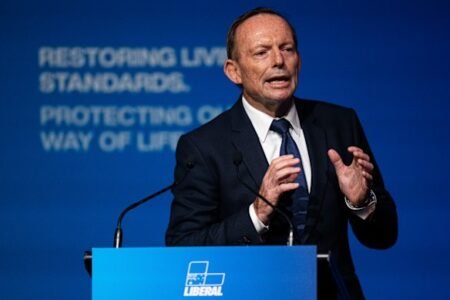





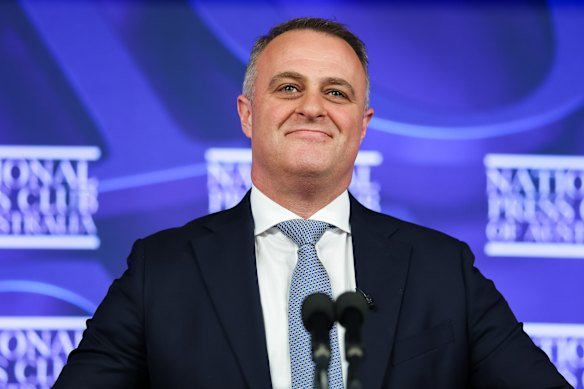
James Massola (‴We can win’: Is Wilson out on a limb?” , May 29) believes that the defining criterion of the 2028 election will be trust. A study by La Trobe university some years ago found that 87 per cent of politicians’ promises were kept, but past evidence of broken promises such as John Howard’s reversal of his “never ever” GST and Julia Gillard’s promise not to introduce a carbon tax show that some may be forgiven and some not. A study of the 2019 election shows that two-thirds of voters deemed policies were more important than leadership. At present, even though energy prices are going down due to increased renewable power, the Coalition still wants to open up new coal mines. The electorate is not oblivious to the facts of what is happening with energy prices so it is likely that policy may well prove more important than trust. Peter Nash, Fairlight
As one who, up until now, has always voted Labor, I’m loath to agree with a Liberal member, but Tim Wilson is correct in saying “trust” should be a major issue at the next election. Sadly, modern Labor is no longer a political party, rather an apparatus whose sole ambition is the attainment and retention of power, one that is willing to discard principles, the truth and transparency to achieve such. The benchmark is the putrid Victorian government and the federal government is seemingly following suit. Unfortunately, there is increasing evidence that Labor in NSW is on the same path. It is emboldened by the fact that its opponents are a complete shambles and so it will gamble that “spin” rather than substance will deliver victory, with truth
a casualty. Mike Kenneally, Manly
Tim Wilson is deluding himself if he thinks the Coalition can win the next election. It is up against Labor, the teals and One Nation now. It’s far more likely it will lose more seats. It just lost the long-held conservative seat of Farrer to One Nation, for heaven’s sake. Its leadership is shaky; members are addicted to coal power; dismissive of climate change; and they underestimate voter readiness for taxation reform. Wilson claims the lack of clarity on what the Coalition was selling at the last election was the problem. Au contraire. We knew exactly what they were selling, a Peter Dutton prime ministership, nuclear energy, indefinite dependence on coal power, negativity, divisiveness and a lack of vision. Wilson makes a big deal of Labor’s broken promises. It seems he’s forgotten his own party’s history of deception, misinformation and disinformation. Your party needs more than wishful thinking, Mr Wilson. Graham Lum, North Rocks
The Liberals need to accept they will never supplant One Nation as a party of protest because One Nation has the credibility of being authentic. Liberals must acknowledge that Labor’s tax changes, such as to the CGT, are simply the latest in decades of attempts to unwind John Howard’s middle-class tax welfare. Even former treasurer Scott Morrison floated similar proposals, and more, before retreating. Unfortunately, bipartisanship evaporated when the ever politicking Morrison became prime minister.
It is time the Coalition accepted responsibility for Howard’s mess. It should back Labor’s repairs and commit to fixing two further distortions. Wind back tax concessions so superannuation returns to its original purpose: a retirement income scheme rather than today’s tax and estate planning behemoth. And phase out indefensible franking cash backs. Then, consistent with its DNA, pledge to use the revenue to cut income tax for wealth-creating workers. Carlo Ursida, Kensington (Vic)
Potty mouth Taylor
Angus Taylor has been working hard to woo voters back to the Liberal Party (“Claims of arrogance can deflect from the bigger story”, May 29). However, his audible interjection during question time is definitely not the way to go. Sorry, Angus, but you’ve just put another nail into your own coffin. Mia David, Wollongong

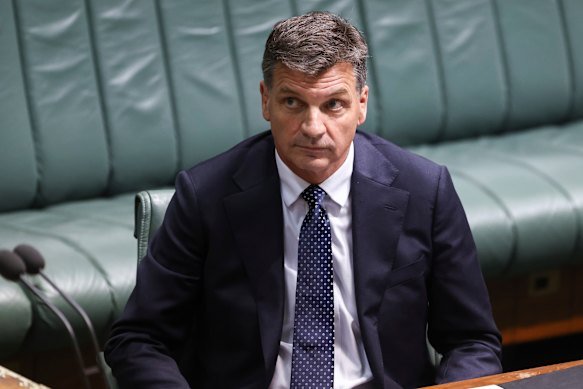
Angus Taylor would do well to look in the mirror. Vicky Marquis, North Sydney
With Tony Abbott as federal Liberal Party president, and an aggressive Liberal leader, the Coalition is determined to get to power with gutter tactics and degrading behaviour. Going by the calling of an elected prime minister an “arrogant prick”, the book of common decency has been thrown out the window. John Cotterill, Kingsford
“Arrogant prick” – Albo? How juvenile, yet tailor-made. What an insult to question time too. Edward Loong, Milsons Point
Tragic embrace
Despite falling emissions and reduced power bills due to renewables, the Coalition and One Nation continue the climate wars that have plagued our nation for the past 20 years (“Climate wars heating up as power bills fall”, May 29). Energy Minister Chris Bowen released official figures on Friday showing electricity emissions down 3.8 per cent as renewables replace coal and gas, and transport emissions down 0.6 per cent due to the uptake of electric vehicles. Power bills are predicted to fall by 5 per cent in NSW and Victoria. That private investment in renewables declined by 50 per cent in 2025 is a warning and a direct result of uncertainty fed by the opposition’s continuing embrace of fossil fuels and its rejection of net zero. It is up to all of us to reject this last century thinking. Robyn Thomas, Wahroonga
The opposition parties seem hell-bent on sinking further into oblivion, as they pander to the climate vandalism of One Nation. Just when a few markers show Australia’s modest progress on renewable energy and greenhouse gas emissions, they want to blow it all away. Their reckless approach now includes ditching their own commitment to net zero emissions; running coal-fired power stations way past their use-by date; extracting and burning more coal, oil and gas; and, bizarrely, trying to re-write trade deals with EU countries that, fortunately, have responsible climate commitments. One has to ask, are they so out of touch that they don’t know, or even care, about the deadly heatwave currently smashing all records across Europe? Or Indonesia, where lethal humidity threatens to displace millions in our region? The antics of the Coalition and One Nation would be laughable if the risks weren’t so serious. Rob Firth, Red Hill (ACT)
Electricity prices are due to fall by 5 per cent in NSW and Victoria because of record-breaking contributions from wind, solar and batteries. Britain produces 127 terawatt hours from 3.1 per cent of Australia’s land mass compared to our 102Twh. Paul Doyle, Glenbrook
Positive PFAS step

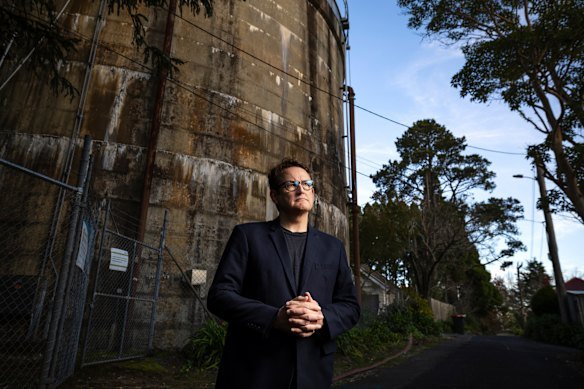
The experiences of the Blue Mountains community in getting attention to our PFAS-contaminated water supply have not been reassuring or edifying (“$2b poison battle”, May 29). It is only because of the research by a few academics and the advocacy by John Dee and the local Stop PFAS group that testing of our community’s water supply showed it was contaminated following a petrol tanker crash in 1992 and the runoff of fire-fighting foam from the crash site. There is now a battle happening to have testing offered to our community as we have been drinking this water for over 30 years until the Cascade Dam was disconnected and filtering was introduced. The federal government’s class action against 3M is a welcome step. Rhyan Andrews, Faulconbridge
School sharing calls for caring
As a retired high school principal, I sympathise with Jen George’s lament about the fencing of school grounds (“Don’t fence our schools in. Where else will we all play?”, May 29). But the crucial statement in her article is the final one: “Institutions should share open spaces whenever it is safe and practical.” My former school was fortunate to have an unfenced oval (only one) for students to do PE lessons, participate in sport and enjoy relaxation at recess and lunchtime. We were pleased that many responsible community members used the oval during out-of-school hours for various informal recreational activities. However, to ensure student and teacher safety, on most school-day mornings and especially on Mondays, school staff had to inspect the oval for broken glass, used syringes, pet droppings and other litter left by less-responsible visitors. Such inspections were not part of their official job descriptions. Several preventative strategies were tried, but proved ineffective. The cost of security for weekends and night hours was well beyond the budget of a government high school. Ultimately, we were forced, sadly and reluctantly, to fence the oval – for reasons of safety and practicality. Rob Phillips, North Epping
How depressing it was to enter school, as a teacher, in the 1980s and 1990s and find windows smashed, doors kicked in and classrooms destroyed. Sporting fields, too, were often damaged by bikes and even cars. The cost to fix the damage, graffiti, etc was prohibitive, but also soul-destroying for the lack of respect offered to schools trying their best. Most of this stopped when fences were constructed. If communities protected their local schools and facilities and kept a watchful eye out, things may be different. Unfortunately, challenging antisocial behaviour on our public resources or even individuals in our communities appears to be a long-lost value. Janice Creenaune, Austinmer
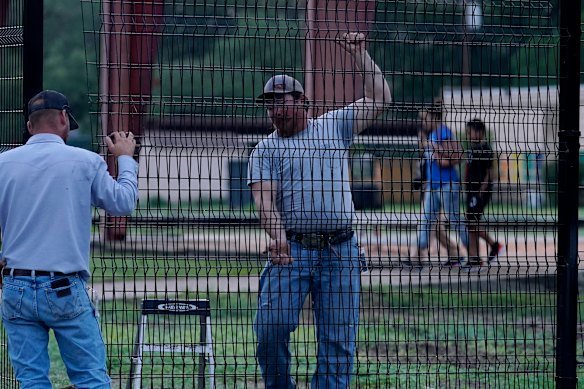
Here at Woolooware High School, one will find the school’s amenities being used by a number of local groups. Our dance studio, sports fields and hall are all used after hours, during the school holidays and on the weekends by a dance groups, local football and cricket competitions, Kidsports groups, the Boomers basketball programs and others. Our staff parking is used by patrons of the Sharks’ home games at the stadium across the road. The public, which has paid for our facilities through taxation, has every right to use them when school is out. Too bad the ironically named “non-government” schools do not have quite the same concept of “the common good”. Ryszard Linkiewicz, Caringbah South
Having many years experience in public schools and sporting organisations, I unfortunately found that a small proportion of the population cannot be trusted to value the public and privately funded school and community facilities. Fencing areas is costly and not always effective. Recent e-bike vandalism of some golf courses is outrageous. Jen George is right to suggest that fencing properties is not the answer but, as suggested, passive security measures and community vigilance need to be encouraged. Denis Suttling, Newport Beach
Reactive voters
Many who support One Nation want to give the major parties a kick up the pants (“The subtlety of One Nation’s rise”, May 29), sick of their slick messages that appear to deliver little to them. Unfortunately, as Waleed Aly has pointed out, One Nation’s candidates are not entirely on the same page in beliefs as those who are willing to vote for them, which will cause an even more fractured and undisciplined parliament than we have ever encountered in this country. Con Vaitsas, Ashbury
Waleed Aly argues that the rise of One Nation is basically because it is “a vehicle for dissent” by which to express anger with the major political parties. So it is critical to reflect on the role that anger plays in politics. What stands out so often in political reporting are images and words of people being angry, whether in news conferences or parliament. So-called parliamentary debate is often more about vitriolic mudslinging than reasoned argument. The politics of anger equates to politics of fragmentation because anger is about arousal, about energising, but, if unresolved, it is directionless. It abandons us in a wasteland of nihilism. We need politics of calm. Anger is news, calmness less so. Calmness can be perceived as boring. Governments and the media must play an educational role in encouraging responses to policy from the public that are based on calm, reasoned argument rather than simply sterile anger. Paul Casey, Callala Bay
Riskier business
I agree with your correspondents (Letters, May 29) that Dr Tom Hird (“Spare me all the whining on taxes”, May 28) makes some good points about the deceptive federal budget criticism. What’s not said is that many wage earners invested capital in education and training for themselves and took on risk in the expectation of future income. Young people and apprentices accept lower earnings when gaining qualifications and developing skills while accruing HECS debts. Wage earners take these chances in an ever-changing labour market. So, business owners don’t have a monopoly on risk-taking. This budget will help make tax treatment fairer for the different forms of investment in capital and labour. Brian Hastings, Drummoyne
Shameful tradition
Unlike your correspondent (Letters, May 29), I am not in the least surprised by the vitriol aimed at Jewish people who have appeared before the royal commission into antisemitism. Australia is a racist country. It was born in racism (Terra nullius, anyone?) and has continued unabated. It might be instructive to ask Nicky Winmar, Adam Goodes, members of the stolen generation, and the families of Aboriginal people who continue to die in custody if they are surprised. As for Muslim Australians, no surprises there either. We even have a federal member of parliament mocking them by wearing a burqa in parliament. Racism, another Australian value. Graham Fazio, Cootamundra
Henskens’ circus
It’s misleading to allow councillors to run as “independent” when most are members of the Liberals and in cahoots with higher levels of the party (“The state MP, a new mayor and the message to ‘get rid of’ council CEO”, May 29). Who knew Alistair Henskens was ringmaster at the circus? Thanks for the big reveal. Council’s decision to sack its GM, John McKee, now makes sense, as does the decision to install plastic turf at West Pymble, which many oppose due to serious environmental concerns. Research shows Middle Harbour’s most prolific microplastic pollution is already synthetic turf, which also becomes too hot to play on in a warming climate anyway. Anne Matheson, Gordon
The communications between state Liberal MP Alister Henskens and “independent” councillor Cedric Spencer demonstrates just how misleading it is for the Liberal Party to run its council election candidates as “independents”. Can the Electoral Commission do something about this? Geoff Davidson, Ourimbah
Vale Myree
Sister Myree Harris a saint (“No-nonsense nun who got things done for the homeless and mentally ill”, May 29)? Yes, a very apt description and one she would have scoffed at. I met her over 10 years ago through her work at the Gethsemane community. She was a force of nature, a living example of the teaching of Christ; she lived the gospel. I was humbled to have met her. May her trailblazing work live on – a worthy cause to dig deep. Geoff Nilon, Mascot
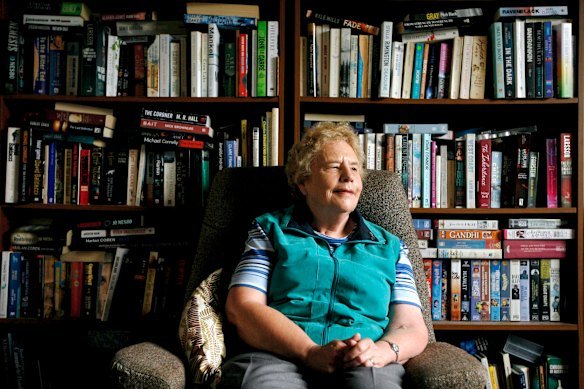
Sister Myree Harris was so right in her understanding about loneliness. I worked for many years in community and mental health nursing, and it becomes blatantly obvious that loneliness impacts mental and physical health, wellbeing and quality of life. Programs such as Compeer, which the sister started in Sydney, are vital services that can have a positive impact on the life of both client and volunteer. More of these types of services can possibly help to prevent relapse and hospitalisations, which can only be a good thing. Lisa Clarke, Watsons Bay
What a truly Christlike life Myree Harris lived. I’ve copied this wonderful woman’s words and if I ever feel hard done by, I’ll revisit them to make sure that I’m humbled and can get a grip enough to count my blessings. Pauline McGinley, Drummoyne
Ferrari drives innovation
As a life long “petrol head”, I salute Ferrari (“Ferrari goes electric but reactions to Luce are mixed”, May 29). Would Enzo be turning in his grave at the launch of the Luce (Italian for light), or would he see it as part of the progression of the brand? The purists may want to find an exhaust pipe to sniff, but lovers of automotive innovation should applaud this bold and decisive direction. Andrew Raymond, Parramatta
- To submit a letter to the Sydney Morning Herald, email letters@smh.com.au. Click here for tips on how to submit letters.
- The Opinion newsletter is a weekly wrap of views that will challenge, champion and inform. Sign up here.
Read the full article here