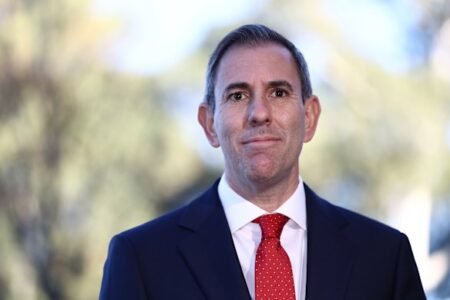






Western Australia’s resources industry says Federal Treasurer Jim Chalmers appears to have recognised the importance of the mining sector in funding the nation’s big spends, after he highlighted the impact the ongoing conflict in Iran and the rising oil price has had on this year’s budget.
The federal budget papers show the majority of transport infrastructure spending in WA is primarily focused on the proposed Westport precinct with $552 million allocated to upgrades to Anketell Road to connect with the proposed future precinct.
The contribution to WA seems small compared to the $3.8 billion for the Suburban Rail Loop East in Victoria and the $812 million allocated to the upgrades to the Bruce Highway in Queensland.
As part of the 2026 National Defence Strategy, an additional $14 billion will be spent over the next four years as well as $53 billion over the next 10 years through direct government investment.
This will include investment in Australia’s long-term naval capability by acquiring nuclear-powered submarines and Mogami class frigates, and developing the Henderson Defence Precinct as a world-class centre of excellence for naval shipbuilding with an initial $12 billion.
However, some of the biggest winners in the state appear to be in the mining sector, who are celebrating Chalmers’ decision to make no changes to tax settings for resources projects.
It follows speculation the federal government may make changes to the gas levy, after a number of organisations campaigned for a 25 per cent levy on exported gas.
They argued it could raise up to $17 billion annually, and could help fund some cost-of-living measures called for by Australia’s service organisations.
However, budget documents have since revealed Chalmers opted not pull the lever.
Chamber of Minerals and Energy WA chief executive Aaron Morey said he welcomed the choice.
“Australian resources companies already face one of the biggest taxation burdens in the world. To return to surplus we need to build a bigger economy, not bigger taxes,” he said.
“Turbocharging investment into the resources sector is Australia’s best chance to get the budget back into the black.
“The Federal government should be commended for prioritising Australia’s reputation as a stable and reliable trading partner above short-sighted calls for short-term revenue hits.
“Mineral and energy exports were the bedrock of the budget surpluses delivered in 2023 and 2024 and our commodities continue to provide the foundations for future success.”
Morey stressed the critical role of exports like iron ore, LNG and gold in the pursuit of liquid fuels and fertiliser amid the unfolding Middle East conflict.
“Our national security increasingly relies on being a stable and trusted commodity exporter,” he said.
“The world is rewarding reliable trading partners and Australia must lean into that advantage.
“As global energy markets tighten, maintaining operations across the resources sector must be treated as a national priority.”
Mineral Council of Australia chief executive Tania Constable echoed the sentiment.
“By leaving mining tax settings unchanged in the … federal budget, the Albanese Government has stood up for Australia’s largest taxpayer which is supporting the nation during uncertain times,” she said.
“In addition to not imposing new taxes, the government has also supported mining through the Australian Fuel Security and Resilience package which will improve fuel security – especially vital diesel supplies – for minerals extraction and processing.
“This approach shows the government understands mining’s immense contribution to Australia’s economy, jobs and regional communities.”
From our partners
Read the full article here