




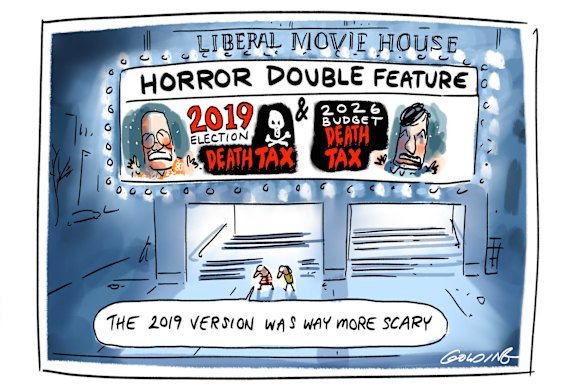
The entitlement and greed spilling across the Herald’s pages since the budget announcement, including on the letters pages, expose the hollowness of our much-vaunted “egalitarian” and “multicultural” Australia (“Albanese open to change on divisive ‘death tax’” , May 22). The government’s budget took a modest first step towards genuine tax reform and a fairer distribution of wealth. The ferocious backlash from the opposition, much of the media and the usual chorus of vested interests reveals the true motive: not fairness or equity, but the demand for ever more while contributing ever less. Almost nowhere in the uproar has anyone seriously addressed the inequities that successive Liberal governments entrenched by shamelessly buying older, wealthier voters with tax concessions and handouts. The Albanese government is now confronting the demographic reality: Australia’s electoral centre of gravity is shifting. Politicians of all stripes must choose – cater to the greed of the ageing asset-rich, or meet the needs of the emerging majority who will inherit this country. Chris Rivers, Port Macquarie
Listening to the arguments over CGT and negative gearing changes gives me a whole new insight into the definition of Australian values. The champions of Australian values, the current federal opposition, complain that the changes will remove tax deductions now enjoyed by 16 per cent of the population – who are funded by the remaining 84 per cent of PAYE taxpayers. As an aside, it costs an investor substantially less than a first home buyer to buy a home, as negative gearing makes repayments tax-deductible. This is made worse when the property is sold and the long-suffering homeless taxpayer is asked to subsidise the investors’ profit through the capital gains tax discount. Does that mean the opposition’s definition of Australian values requires the less well-off to fund the lifestyle of the more well-off? It’s a whole new insight and seriously at odds with the idea of a “fair go for all”. Ed Barry, Balgowlah
There has been a lot said about how unfair it will be for young entrepreneurs who build a business and then sell it if they have to pay tax on the whole of their windfall, rather than on just half of it (“Millennial entrepreneurs unite against Albanese’s tax overhaul”, May 20). Some say they will go to another country to build their business. Like the US? There you will pay tax on the full amount, no discount there. Has this stopped innovation in the US? No. So why should one class of earnings in Australia retain a 50 per cent discount when the person working hard all year gets no discount on their earnings? Pamela Wood, McMahons Point
With unemployment climbing, Labor insiders may well be concerned about the effects of CGT changes on small business confidence (“Economy crunched as unemployment hits highest level since pandemic”, May 22). And while young people may be thinking that Labor has struck a blow for intergenerational fairness, they may take a different stance if their jobs disappear in the process. Doug Walker, Baulkham Hills

Nagging questions
I am rather incredulous that your correspondent Maureen Donlon asks: “why, when I gamble on shares or setting up a business, should I pay tax on my profits?” (Letters, May 22) Assuming this is not a wind-up, the reason is to pay your fair share for the benefits you receive from living in a civil society. Gambling profits are considered to be lucky windfalls where the gambler had no control of the outcome. Most gamblers lose money over time anyway, and the few who don’t are declared by the ATO to be “professional gamblers”, who do pay tax on their winnings. Tax has always been paid on profits in this country. The latest CGT changes merely alter the calculation method to make it fairer for everyone. Brendan Jones, Annandale
Rather than asking why she should pay tax if she “gambles” on shares or business, perhaps Maureen Donlon should ask why she doesn’t pay tax on her winnings from playing the horses. After all, they both involve an outlay with an eye to turning a profit. Peter Butler, Wyongah
Tax and b-rackets
Correspondent Chris Morton is right to highlight the hypocrisy of Premier Chris Minns in criticising the PM over bracket creep (Letters, May 22). An even better example relates to land tax. Minns has frozen the tax-free threshold, an action specifically intended to catch more families in this tax net by way of bracket creep. Mitch Geddes, Palm Beach
Minns is correct in supporting the adjustment of tax brackets to allow for bracket creep as wages rise. He could show fortitude by doing the same with NSW stamp duty brackets on property purchases. The rates have not changed in ages. As property prices have gone up, the duty as a proportion of the price has grown rapidly due to these higher brackets. Ian Morison, Forrest (ACT)
Gen bias
Caroline Zielinski is to be commended for her article, which raises awareness that many older people do not own a home and struggle to pay their rent (“Battlers are the overlooked Boomers”, May 22). Governments, both national and state, should include this group along with first home buyers when addressing the challenging housing issue. The needs of all generations need to be factored in when addressing strategies to ease the housing crisis. Leo Sorbello, Leichhardt
Thank goodness. At last, a feature that divides people economically into haves and have-nots, rather than intergenerational combatants. Anne Ring, Coogee
China plates
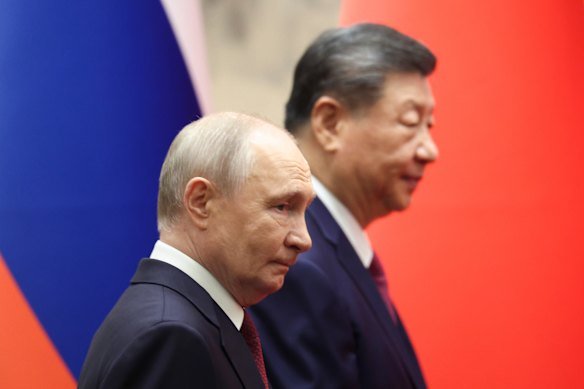
I have travelled to China many times and always enjoy the people, the history, the culture and the cuisine. But it would be hard to justify travelling there now, with President Xi Jinping lavishly hosting one of the greatest murderers in modern history (“Vladimir Putin flies in to meet Xi Jinping”, May 22). The Russian president is an autocrat who has systematically eliminated all domestic opposition and launched an illegal invasion of Ukraine, causing the deaths of many thousands there while sacrificing thousands of his own people. China also supports other despotic regimes such as those in North Korea and Myanmar. It no longer deserves our respect or patronage. Neil Edwards, Caringbah
Healthy profits
Jenna Price is right to scrutinise the state of the private health system (“Private Health insurance is not worth it, let’s start again”, May 21). But the answer is not to heap more pressure on already strained public hospitals. The problem is that insurers have been making enormous profits ($2.7 billion in 2025) while giving less back to patients and hospitals. In the past six years, about 90 private hospital services have closed due to insurers starving them of funding. It’s time for the government to force the insurers to pay out 90 per cent of their premium revenue every year. This would hugely improve the value to patients, keep hospitals like the not-for-profit Catholic ones I represent sustainable, and leave ample room for insurer viability. Dr Katharine Bassett, director of health policy at Catholic Health Australia
Jenna Price is right – our once-lauded health system is stuffed. My recent surgery cost well over $5000 and the Medicare rebate was a little over $1000. My health fund covered the hospital, less an excess, but I’m still waiting to hear if it will cover the Medicare gap. I’m not optimistic. This raises the question: Why privately insure at all? Dennis Fardy, Warriewood
Brumby dilemma
Brumbies are wild, beautiful and stir Banjo Paterson images. They are, however, not iconic nor native and are destroying fragile ecosystems in Kosciuszko National Park. To cull to 3000 is ridiculous and cruel because numbers will just increase until they need culling again, and again. The most humane solution would be to remove all of them permanently (“Aerial shooting of brumbies will resume in Kosciuszko next month”, May 22). Jill Stephenson, Woolwich
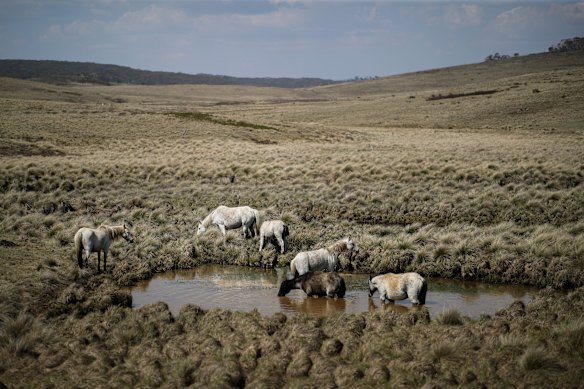
The NSW government’s proposal to resume culling brumbies is political correctness at its worst. These national icons have lived their lives peacefully grazing the highlands, with natural attrition controlling their numbers. This is a prime example of control by stealth, ignoring the concerns of people who live within the brumbies’ home country, together with people from interstate who have fought governmental ignorance for decades over highland grazing of livestock in summer months. In today’s politics, transparency is nothing more than a throwaway word. John Bain, South Bunbury (WA)
It’s disappointing to read that feral horse numbers in Kosciuszko are on the rise again. This shows the folly of the NSW government taking the foot off the culling accelerator in 2025. To get numbers down substantially and to keep them there, culling needs to be continued. And that also means abandoning the sanctioned herd size of 3000 animals. David Bell, Crows Nest
Price of ignorance
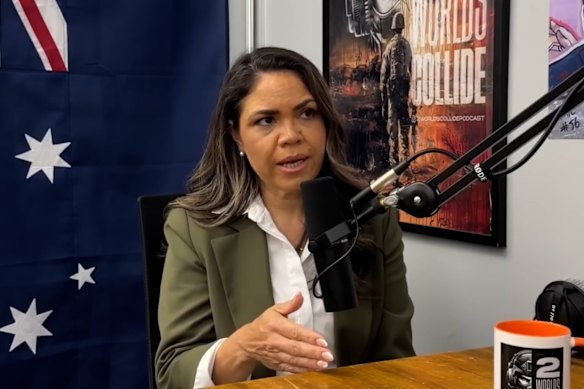
What astounding arrogance that podcaster Sam Bamford doesn’t consider Indian, Chinese, African, Middle Eastern and Gazan migrants to be Australian, and that he also promotes “re-migration” – the deportation of “non-white” migrants (“Price distances herself from podcaster remarks on migrants”, May 22). For her part, Jacinta Price conceded to Bamford that migrants undermined Australia’s sense of community by living in enclaves, which simply echoes Pauline Hanson. In fact, research has found Australia is one of the world’s most culturally diverse countries, with high rates of intermarriage. By the third generation, most people of non-English-speaking background are partnered with people of different ethnic origins, often of Anglo-Celtic ancestry. Integration thus occurs through friendship and marriage. Our sense of community has been fractured not by immigration but by the Thatcherite neoliberal policies. I taught migrants for decades and can strongly defend their excellent values, especially in terms of family, esteem for education, respect for the elderly, integrity and work ethic. Australian politicians such as Price, Hanson and Angus Taylor could learn a great deal from these remarkable people, who we are so fortunate to have in our society. Barbara Chapman, South Yarra (Vic)
Provocative response
Benjamin Netanyahu’s lukewarm condemnation of his nationalistic minister’s actions was quickly followed by a complaint about the protesters’ “provocation”, which brought to mind a violent man standing above his abused partner saying, “Look what you made me do” (“Ambassador slams Israeli minister over flotilla video”, May 22). Colin Stokes, Camperdown
Netanyahu has no right to discuss provocation and rights. He disregards international law and has trampled on the rights of many in the Middle East. The International Criminal Court has issued a warrant for his arrest on charges of war crimes and crimes against humanity, so it’s laughable for him to claim that a few hundred humanitarian activists from around the world who are trying to break the siege on Gaza are being “provocative”. Evelyn Konstantinidis, Albert Park
Brides’ eye view
Coercive control is now a criminal offence in some states. Is it possible that at least some of the “ISIS brides” are actually victims of this crime, rather than being criminals and terrorists (“ISIS brides on way back to Australia”, May 22)? Stephanie Edwards, Leichhardt
Climate tax madness
It is madness that a wealthy country already feeling the effects of climate change cannot properly fund the climate scientists whose modelling we rely on (“CSIRO cuts climate jobs despite budget funding boost”, May 22). Somehow, the Albanese government, which claims to be acting on climate change, won’t properly tax climate-polluting gas companies and instead allows a public institution as fundamental as the CSIRO to lose staff. Once again, fossil fuel companies and their shareholders walk away with the money, while the rest of us are left holding the hose. Larni Dibben, Glen Iris (Vic)
Locked in
Rose Bay Secondary College is not the only public school locking the public out of school grounds (“School fence denies access after 60 years”, May 22). Despite the Department of Education having a policy of allowing community access after hours, they have installed school fencing, making that impossible. A similar lockout has applied at Mosman Public School, where for many years the gates were open. The playing area is not large but it provided a safe space for littlies to learn to ride their bikes, for families to gather and for older children to use the basketball hoops. It was also used on weekends for much-needed parking in a suburb where it is in short supply during events at Allan Border Oval, Mosman Bowling Club, Scots Kirk and the Mosman markets. The community’s attempts to regain access continually fall on deaf ears. It is time the department adopted the South Australian SACH program (Schools as Community Hubs), which connects families and communities with their local schools and resources. Jennifer Hole, Cremorne
Parental guidance
Well may Scott Warnes be wary of parents taking charge of the education agenda (Letters, May 22). I believe it was Sir Humphrey Appleby of Yes Minister who perceptively observed that because of their lack of qualifications and training, “parents are the worst people to raise children” – a view no doubt shared by teachers everywhere. David Grant, Ballina
What it’s (Coles)worth
Now that the major supermarkets are facing large fines for deceptive price discounting (“Coles to face fines ‘in the hundreds of millions’”, May 15), the ACCC should turn its attention to that other major supermarket deception – shrinkflation. What possible motivation, other than a deceptive price increase, can there be for decreasing a convenient 1kg pack size of dried fruit by 25 per cent to 750g but cutting the price by just 10 to 15 per cent? Surely they are not hoping we will buy less of their product. Or a chocolate bar that shrinks by more than 15 per cent from 52g to 44g, with little or no price reduction? Customers will know of many other examples, we’re not stupid. We see what’s happening and resent being played for suckers. We understand that prices may need to increase periodically for a variety of reasons, such as the soaring price of cocoa beans, but if you need to increase prices, do so transparently, not via deceptive pack-size reduction, hoping we won’t notice. Robert Peters, East Maitland
Share responsibility
If I park my car illegally or abandon it, a local authority will impound it and make me pay for its removal and storage. In the case of share bikes, it would follow to make the operators and owners responsible for payment. It is only they who have a commercial interest to protect, so make them police their own operations (“Sydney should make share e-bikes work this time around”, May 21).
Frank Argent, Gordon
Parking plans
So, the government has allowed developers to plan our cities in such a way that we need cars to get around, which in turn has made the government make parking spaces for new units mandatory, which in turn has made housing more expensive and developers richer (“Suburban paradise paved with pricey parking lots”, May 20). Todd Hillsley, Homebush
Here’s a solution for those apartment dwellers who are saddled with a parking space but don’t have a car (Letters, May 22): just rent the space out. Airbnb could offer car accommodation as part of its service. There would surely be a demand and it could be a nice little earner. Glenn Johnson, Leura
This too shall pass
Enough of this nonsense criticising usage of “passed” after a loved one’s funeral (Letters, May 20). When relatives are emotionally fragile, it doesn’t hurt to be extra kind. What’s next? “Laid to rest” changed to “left to rot”? “Ashes to ashes” becoming “incinerated”? Grow a heart, please. Susan Margan, Epping
Richard Harris suggests “passing on” for people who believe in reincarnation (Letters, May 22), but for those of us who don’t, perhaps “passing out” would be more appropriate. Vicky Marquis, North Sydney
- To submit a letter to the Sydney Morning Herald, email letters@smh.com.au. Click here for tips on how to submit letters.
- The Opinion newsletter is a weekly wrap of views that will challenge, champion and inform. Sign up here.
Read the full article here