






 Markets
  Weather
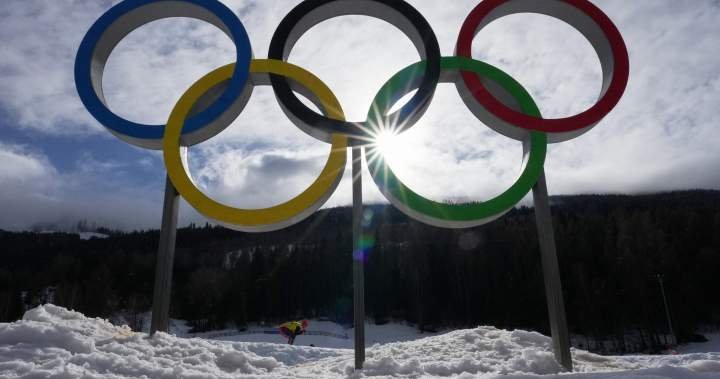
The 2026 Milan-Cortina Olympics come at a time when political tensions are rising across the world and while the Games usually see athletes avoid protests, it’s not clear if that will remain the case this year.
According to the International Olympic Committee (IOC), the mission of the Olympic Games is “to take action to strengthen the unity of the Olympic Movement, to protect its independence, to maintain and promote its political neutrality and to preserve the autonomy of sport.”
But with the world in the midst of what Prime Minister Mark Carney called a global “rupture,” with multiple recent crises across finance, health, energy and geopolitics, could this be the year that norm of neutrality at the Olympics gets tossed aside?
“It is an interesting scenario and one that can go either way,” Julie Stevens, professor in the department of sport management at Brock University, said in a written statement.
“Will the norms of the Olympic institution hold well enough to maintain decorum and respect by all, or will the geopolitical pressures generate a climate where unrestrained self-expression spills over among fans in the venues, those on social media, and the media at large?”
Hundreds of fans have already taken to the streets of Italy this past weekend to protest U.S. Immigration and Customs Enforcement ahead of the Olympic opening ceremony.
At the 2025 4 Nations Face-Off, large sections of the crowd at the U.S. and Finland game booed the American national anthem after the announcer “asked fans to respect both the United States and Finland.”
Fans have also booed the American national anthem at home games for the Toronto Raptors, Canada’s sole NBA franchise.
“The fans, people who love sports by and large will go because they love sports and they accept the culture,” said Bruce Kidd, a professor emeritus in sport and public policy at the University of Toronto.
Get daily National news
Get the day’s top news, political, economic, and current affairs headlines, delivered to your inbox once a day.
“You don’t go to the Olympics to yell about the Russians or Americans or maybe the Canadians, but it’s an unpreceded time.”
Kidd represented Canada at the 1964 Tokyo Olympic Games as a distance runner.
At the Olympic opening ceremony, two athletes, one coach and two judges from each country take the Olympic oath on behalf of the entire team.
Part of the oath requires everyone to state that they “promise to take part in these Olympic Games, respecting and abiding by the rules and in the spirit of fair play, inclusion and equality.”
Rule 50.2 of the Olympic Charter states that “no kind of demonstration or political, religious or racial propaganda is permitted at Olympic sites, venues or other areas.”
The IOC states that this rule is in place since “the focus at the Olympic Games must remain on athletes’ performances, sport and the international unity and harmony that the Olympic Games seek to advance.”
The rule also states that while athletes are allowed to express their views before competitions, they are not allowed to do so during medal ceremonies or on the podium.
Stevens says the Olympic oath “can be seen as more symbolic than actual.”
“The IOC espouses unity and peace, but does the organization carry enough legitimacy, and clout, to enact these values and ensure the various stakeholders adhere to respectful and civil behaviour?” she questioned.
However, there are past incidents where emotions have boiled over.
At the Tokyo 2020 Olympics, U.S. shot putter Raven Saunders was investigated by the IOC after raising her arms in an ‘X’ position above her head on the podium, later quoted as saying the message is “the intersection of where all people who are oppressed meet.”
As Feyisa Lilesa of Ethiopia crossed the finish line during the men’s marathon at the 2016 Rio Olympic Games, he threw his arms over his head, making an “X,” in a show of support for members of his Oromo tribe. He later stated that if he returned to Ethiopia after the Games, “the government will kill me.” He returned to his home country in October 2018 after being encouraged by Prime Minister Abyi Ahmed.
U.S. women’s socccer goalkeeper Hope Solo called the Swedish team “a bunch of cowards” for focusing on defence rather than attacking the three-time defending champion U.S. team at the 2016 Rio Olympic Games. She was later suspended for six months by U.S. Soccer.
Swiss soccer player Michel Morganella was expelled from the 2012 London Olympic Games following a series of threatening tweets directed at the South Korean team following a loss. Morganella was the second athlete to be expelled from those Games following offensive social media posts.
“Athletes and coaches are unlikely to boo other anthems; they are reps of the nation and have been advised of what is appropriate and expected behavior,” Christine Dallaire, professor in the faculty of health sciences at the University of Ottawa, said in a written statement.
Kidd says signs of protest and advocacy differ now from years prior because “it’s not been so much against other competitors, but really declarations of affirmation of who they are.”
Despite this, there is now a stronger feeling of national pride among many competitors and fans.
Read the full article here