

 Markets
  Weather
Labor is facing a mounting push from crossbench MPs, trade unions and energy experts to impose a new tax on gas exporters’ windfall profits and to shield Australian households from the threat of a looming energy price shock sparked by the conflict in Iran.
In the week since the US attacked Iran, gas prices in Europe and Asia have risen about 50 per cent, while analysts are warning that prolonged conflict could drive price spikes that eclipse those seen when Russia invaded Ukraine in 2022.
Australia’s domestic gas prices tripled at the time, helping drive a double-digit increase in electricity bills and contributing to the cost of inflation with the higher cost of refrigeration and food production. Manufacturing plants, many of which need gas to fire their kilns and furnaces, or as a feedstock in plastics, chemicals and fertilisers, were pushed to the brink.
At the same time as prices exploded domestically, gas export earnings doubled from $50 billion in 2021 to $90 billion in 2022, sparking accusations that the industry was reaping war profits.
Resources Minister Madeleine King on Friday said the Australian gas market would be better insulated from the risk of price shocks compared with 2022 due to tougher requirements for exporters to improve supply for the local market.
But she said she would not deny that “there can be ripple effects”.
“We really have to keep a watchful eye on that,” she told ABC radio.
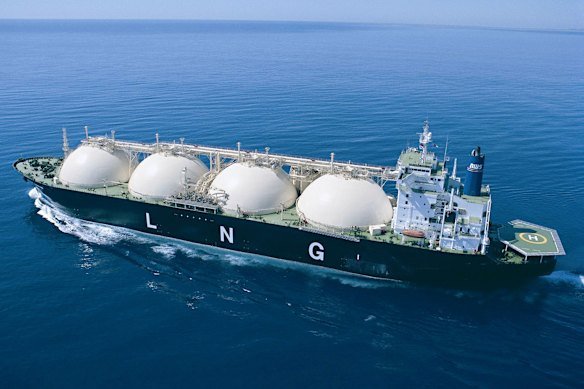
Prices for one-off cargoes of liquefied natural gas (LNG) to Asia skyrocketed this week after an Iranian drone strike forced Qatar to shut down a facility that accounted for one-fifth of the global export market. Analysts say ASX-listed Woodside Energy and Santos, the two largest Australian oil and gas companies, stand to benefit significantly.
Some cargoes in Asia, the key market for Australia’s LNG giants, are said to have sold for more than double the prices they commanded a week ago, now fetching $US25 ($35) per million British thermal units in the past few days.
Price hikes on global markets could also drag costs higher for Australian gas buyers, as LNG price swings influence local supply contracts.
Independent MP Allegra Spender is calling for a tax on windfall profits, and independent senator David Pocock wants to establish a parliamentary inquiry into gas company taxation, backing the ACTU’s call for a 25 per cent tax on exports.
“The supernormal profits made by a few companies during this time is not a reward for effort or ingenuity or a driver of investment, it is the windfall from war,” Spender said. “These are Australian resources, and the Australian public deserve to share in these gains from war-driven price spikes.”
So far, higher LNG prices have not pushed up domestic wholesale gas prices, which remained steady at under $10 a gigajoule.
Grattan Institute senior fellow Tony Wood said windfall profits should not be taxed, as long as the Australian market was shielded from price spikes.
Instead, he argued the government should impose a levy on the domestic market, taxing companies 100 per cent on sales above the long-term wholesale contract price of $14 per gigajoule.
“We could easily see a repeat of what happened in 2022. I’m not forecasting that but I am saying it would be very prudent for the government to put in place a protection [for] electricity consumers.”
“No one’s going to charge more for the gas if they have to pay 100 per cent tax on the extra revenue.
“I reckon that’s a fair deal because the producers would still get the money they would have got anyway, and they will get a windfall profit out of their exports, but Australian consumers should not be penalised.”
Resources Minister Madeleine King said this week that new levies would restrict investment in gas projects and exploration.
“Imposing new costs on the gas industry would freeze gas production in this country, and a tax on gas exports – as has been proposed by those opposite in the last election – would discourage investment in the new supply we need to back up our transition to net zero.”
The gas lobby said Australian gas is critical to regional and global energy security, and new taxes could curb production.
“This is a recipe for gas shortfalls, higher energy prices, and the closure of Australian industries that rely on reliable and affordable gas,” said Australian Energy Producers chief executive Samantha McCulloch.
Cut through the noise of federal politics with news, views and expert analysis. Subscribers can sign up to our weekly Inside Politics newsletter.
 Mike Foley is the climate and energy correspondent for The Age and The Sydney Morning Herald.Connect via email.
 Nick Toscano is a business reporter for The Age and Sydney Morning Herald.Connect via X or email.
From our partners
Read the full article here