


 Markets
  Weather
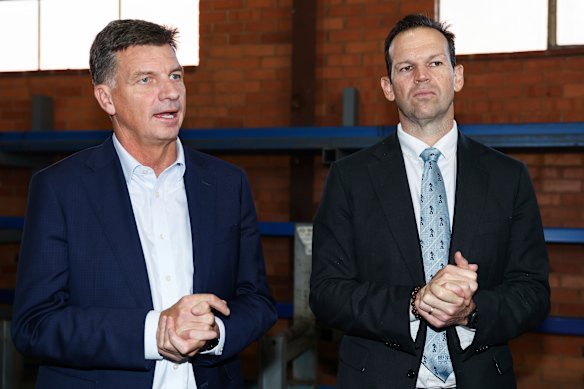
Nationals leader Senator Matt Canavan’s courage and honesty in calling out Pauline Hanson’s racism and xenophobia reflects badly not just on Angus Taylor but also Anthony Albanese (“Wake up, complacent country”, March 14). Both men continue to show their lack of real leadership and their hypocrisy. Their callousness towards the ISIS brides stands in stark contrast to expediting visas for the Iranian soccer players. Hawke, Keating and Rudd would also have acted ethically regarding both matters. Tony Simons, Balmain
I didn’t think I would ever have a good word to say about Matt Canavan but well done, Senator, for immediately tackling what I believe is the most worrying and important issue facing us – attempts by politicians to divide our wonderful community. As the senator says, we are all Australians first and foremost, but the Right of politics has been trying to divide us for some years now, for the most disgusting reason: they don’t care about the community – they just think there may be some votes in it. From the well-remembered words from Peter Dutton, “Melburnians are afraid to go out to dinner because of black gangs” during a Victorian election campaign that the Liberals lost in a landslide, to Angus Taylor refusing to condemn Pauline Hanson’s statement that “there are no good Muslims”. So good on you, Senator Canavan – let’s just get on with being Australians together. Michael McMullan, Avoca Beach
The discomfort of the established conservative parties is palpable as they prepare for the Farrer by-election. If Pauline Hanson is considered a threat, the solution is simple. Liberal and National voters need to preference her candidate last. You can bet your bottom dollar most Labor voters will place One Nation last. Labor has no chance in Farrer so, as in the Queensland Hinchinbrook state by-election, they’re not likely to waste money on a candidate. The favourite and most likely winner will be the independent candidate, Michelle Milthorpe. Frank Carroll, Moorooka (Qld)
Help public schools
The numbers don’t lie. If “more than half of private schools in NSW now receive more combined government funding per student than comparable public schools”, an excursion to Canberra is the least of our worries (“My son’s excursion is in doubt. Every parent should worry”, March 14). Our public education system, built on the premise that public schools, available to everyone and with everything they stand for, surely should mean that the funding system “tilts” at the very least in their direction. As a proud public school teacher, I have seen the decline over the past 30 years in resources, number of students and, most importantly, the respect and importance our country places in our public schools. These failings are unfair and upsetting and must be addressed. Lisa Williams, Dulwich Hill
I believe the excessive cost of school excursions is a direct result of the government privatising bus services. As a “teacher driver” with all relevant documentation, I had some extremely supportive local bus operators who would hire “dry buses and coaches”, without the cost of drivers and the accommodation that would have to be provided. This enabled me to take students and church groups on low-cost camping trips, to create environmental awareness, not without amusing incidents, all over NSW, including Canberra, and even as far as Darwin, where I co-drove with a company driver. Kelvin Ward, Silverwater
Matt Sharpe, a political party called Defence of Government Schools (DOGS) was formed in the 1960s to address the issues that you raised. The aims of DOGS were to promote and protect public education, arguing that state aid for private schools should be challenged. Perhaps it is time to resurrect the DOGS party to ensure that equity in education is once again an election issue – one that is overdue. Patricia Farrar, Concord
My first letter to the Herald, in 1989, was on the injustice in funding for NSW schools. I have continued to write at various intervals since as the situation has widened and deepened. Unfortunately, the dilemma in raising the injustices between funding the different educational sectors can increasingly drive families into the private sector. It’s a case of damned if you do, damned if you don’t. We must provide the best for our public school children. How hard can it be to understand and put into practice? Janice Creenaune, Austinmer
Back to the ’50s
Brava, Virginia Haussegger (“Babies galore? Let’s examine this idea”, March 14) on your article regarding the scary throwback who is the new Nationals leader. As a feminist who marched in the early 1970s for equal rights, access to childcare and abortion on request, among other issues affecting women, I’m aghast that Matt Canavan appears to want women to revert to 1950s roles. I wish I still fitted into my F#%k Housework T-shirt. Suzan Fayle, Collaroy
The negative impact of and bleak future for babies aired in Virginia Haussegger’s article is the same argument revamped by those of my friends who chose careers and a cute doggy or kitty. My babies were a massive burden, but it was a joy to bear it and that joy continues, sans nappies and Saturday morning sport. How happy was Virginia Woolfe, Virginia H? Sorry, don’t answer yet, as I have to take a call from one my grown-up babies right now. Lastly, Virginia H laments that the world is so awful, it forfends well-being for progeny. My kids are here to fix what we’ve messed up – much the same plan as my future grandkids will have for them. Andrew Cohen, Glebe

Whitlam, male bank manager, husband – I could name a few that enabled me, with four “babies galore” in 1975, to attend college for three years, gain a degree, become a teacher, buy a house without husband’s income or as guarantor and have a 32-year career which I loved, all from a few good men among many others.
Margaret Wilkie, Peregian Beach (Qld)
Robo-debt farce
The National Anti-Corruption Commission has found “serious corrupt conduct” within Morrison’s dreadful robo-debt affair, first exposed by the royal commission under Catherine Holmes, and yet no criminal prosecution will follow (Letters, March 14). For ordinary Australians, a mistaken Centrelink claim can trigger relentless debt notices, penalties and sometimes court, massive stress and for some, even death. But when senior officials ensconced in their Canberra cocoon abuse the authority entrusted to them by the long-suffering public, the outcome appears to be little more than an official rebuke. The findings against Serena Wilson and Mark Withnell confirm that serious wrongdoing occurred. What remains unclear is why the consequences seem so modest. If the system punishes the powerless harshly but treats the powerful gently, public trust in government will inevitably be eroded. It certainly makes a complete mockery of “nobody left behind”. Bill Leigh, West Pennant Hills
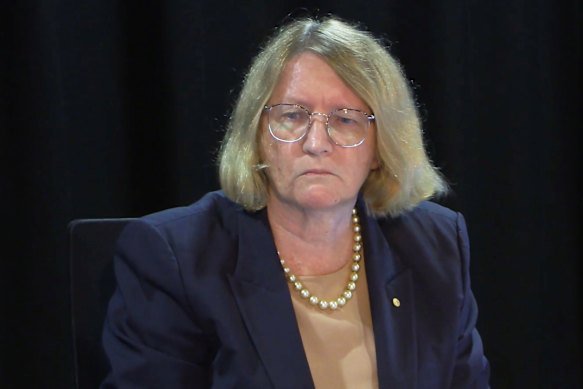
No, we haven’t finished with robo-debt’s implications despite the NACC report on corruption. We must look again to public policy reform. It looks self-evident: public servants did not do their jobs properly and caved into political ideologues’ bullying. The critical questions are therefore why are our public servants so poor and what systemic reform is required. I would think that the priority would be to reform political appointments of the head of government departments and short tenure of senior bureaucrats – both of which allow political bullies free rein. Susan Tregeagle, Yarralumla (ACT)
Temporary bridge may be answer
The key issue in this problem on the Great Western Highway (“Key highway to be closed for at least three months”, March 14) is the fast restoration of connectivity, especially for light traffic. Having once been a bridge engineer, I would think that it will probably take at least two years to either restore the Victoria Pass bridge or to build a new structure and road deviation alongside it to carry contemporary and future traffic levels. That will impose severe, possibly terminal, hardships on local communities. A solution that should be looked at is to use army Bailey-type temporary bridging over the existing damaged structure. This would at least quickly restore a degree of slow speed connectivity for the local community, albeit not necessarily for heavy freight vehicles. Given that mostly they are not local traffic, they do have an alternative via the Darling Causeway. Additionally, it should be possible to make greater use of the railway for freight, even if this is only to shuttle loads between Mount Victoria and Lithgow. However, such double handling would be expensive and no doubt the freight industry would do everything to avoid it, for most forms of freight. Peter Thornton, Killara
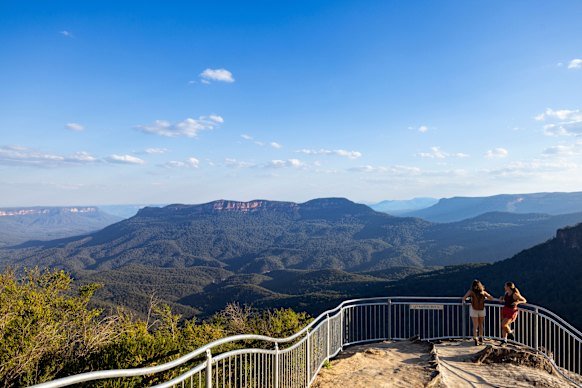
There is a failure that modern governments seem all too often to fall for. When it comes to infrastructure, do it once and do it properly. The Great Western Highway (GWH) from Katoomba to Lithgow is the epitome of such failure. Successive governments have poured hundreds of millions of dollars into road upgrades through all the small villages of the upper Blue Mountains over the past two decades – all patchwork fixes, all wasted money. There are two problems with this section of the road. One is the need for heavy 60-ton trucks to traverse the GWH, every 40 seconds, day and night, to supply Sydney with food and other items. Two, these trucks are ruining the village atmosphere and businesses that lie along this highway. The result, weekly GWH closures, breakdowns, accidents, traffic hold-ups and business failures. Governments know the fix; they have now had two aims at implementing it and both involved tunnels. In both cases, the government decided instead to spend all their money on Sydney’s tunnels, so the populace can get to work 30 seconds faster rather than spending money on the food supply to Sydney. Tony Lewis, Mount Victoria
Growing up in the bush, you’d hear the term “the sandstone curtain” and the cynical joke that NSW really stood for “Newcastle, Sydney and Wollongong”. If Sydneysiders want to understand why the bush can feel that they get the rough end of the stick, then the closure of the Mitchell Causeway for several months should provide all the evidence that you need. Roger Gallagher, Merrylands
One would have to believe in the fairies to believe that the Great Western Highway at the Mt Victoria Pass could possibly be reopened in three months, after the discovery of cracking at the site of the convict bridge there. It is probably impossible for the citizens of Sydney, and possibly the occupants of Macquarie St, to fully comprehend the disaster this is for Lithgow, Orange and Dubbo, plus many other towns west of the Blue Mountains. Most attention has been directed to the road traffic complications, but it actually highlights the need to direct attention to and solve the challenge of increasing the abysmal train service to the west. Central West rail users need an hourly CityRail service to Lithgow, connecting to a diesel shuttle to Bathurst and Orange. Using existing rolling stock, and making minor track improvements, the state government could deliver a fast, frequent and reliable passenger service to the Central West. Kate Miller, Waverton
I remember as a 15-year-old migrant and student at Penrith High School learning about the heroics of Blaxland, Lawson and Wentworth finding a way across the Blue Mountains – not by following the valley but finding the ridges, recognising they were crossing a former plateau. One of my classmates was later Police Commissioner Tony Lauer, an experienced bushwalker, who, with his best friend Norman Griffiths, took me on my first bush walk, Wentworth Falls to Katoomba. I find it remarkable that 76 years later, we still have not found an efficient, economic and safe way to cross those beautiful “mountains”. Ferdo Mathews, Robina (Qld)
Now we all own a castle
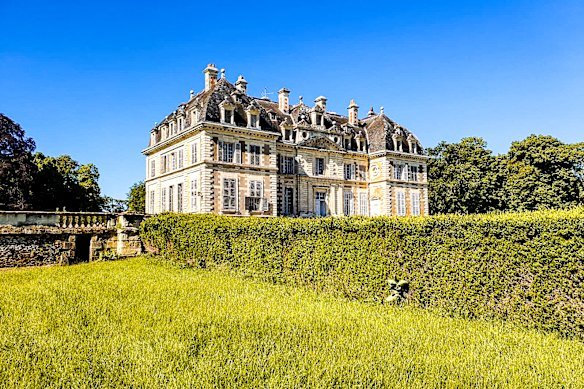
And the rest! Tim Holding, former Victorian state minister, retired back in 2013 on a parliamentary pension – estimated to be around $150,000 (“How social media helped to restore a French castle”, March 14). So a big shout-out to all the Australian taxpayers who, no doubt, helped towards restoring a French castle. Alicia Dawson, Balmain
Garage banned
Reducing garage space in new developments is regularly proposed (practical planning) (Letters, March 13), however, a lack of such space results in parking congestion on local streets, which these days resemble car parks due to insufficient garage space for multiple vehicles or insufficient garage space for the ever-increasing size of vehicles. Carmen Fenech, Frenchs Forest
Words of wisdom
In many ways, the letters page (Letters, March 14) is the modern equivalent of the traditional “soap box” at various “Speakers’ Corners” around the world. Just like those traditional public orators, the letter-writers express views on important and controversial subjects, with varying degrees of personal perception, insightful comment and humour. A major difference is that a published letter reaches a much larger audience than the soap box speakers. But it is a reassuring similarity that for the sake of accountability, the correspondents must have the courage to identify themselves and take responsibility for what they have written, unlike the cowardly anonymous trolls in the cesspool of social media. Rob Phillips, North Epping
To ban participation in writing letters to the editor to any sector of society would be to deny character-building opportunities to those excluded. My regularly futile attempts to gain publication have led to the development of my virtues of diligence, perseverance, patience, acceptance, humility and forgiveness. Barry Wooldridge, Harden
- To submit a letter to the Sydney Morning Herald, email letters@smh.com.au. Click here for tips on how to submit letters.
- The Opinion newsletter is a weekly wrap of views that will challenge, champion and inform. Sign up here.
Read the full article here