




Keir Starmer’s biggest mistake was failing to have a plan for the United Kingdom after years of post-Brexit turmoil, former Conservative British prime minister David Cameron has said.
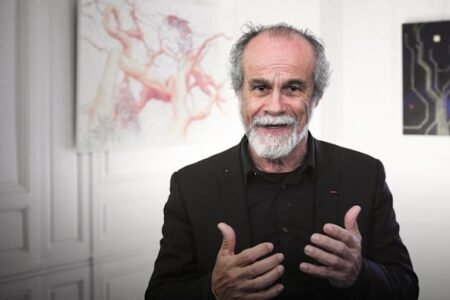
Speaking in conversation with this masthead’s Jacqueline Maley for the McKinnon Prize on Wednesday night, Cameron denied Britain had become ungovernable after losing its sixth prime minister in a decade, while calling on greater bipartisanship between centrist parties to combat the rising tide of populism.
“I think what Keir Starmer showed is if you don’t use your time in opposition to actually think through your plans in quite a lot of detail, then you’re less likely to succeed when you become prime minister,” said Cameron, who beamed into the awards in Canberra from London.
“He’s a well-meaning, hard-working, decent man, but he came into power without a plan and without having warned anybody about what was necessary,” he said.
“Politics and leadership is about how you communicate consistently and take people with you, and I think recently we’ve lost prime ministers from a failure to do just that.”
The Tory peer, speaking on the tenth anniversary of his resignation following the Brexit referendum in which the UK voted to leave the European Union, said traditional parties of government needed to deliver material results to combat the populist surge seen across Europe, the United States and Australia.
“I do think it is a sort of failure of liberal democracy to deal with some of the issues that are causing this populism,” Cameron said.
“There’s a way we need to behave as centre-left or centre-right liberal democratic politicians… because if we keep failing to get these long-term things done, then we leave room for the populists to exploit it.”
He said while Australia was not facing the same challenge of illegal migration as the UK, economic insecurity and the amplification of division on social media were driving anger around the world.
“I think a lot of these populist leaders love being attacked, so that’s not always the right approach,” he said.
“Recognising that this populism hasn’t come from nowhere, it’s come from these insecurities our people feel, and that centre right and centre left parties have got to deal with it, not push it out the way, and try and pretend it’s all the fault of, you know, individual politicians – whether that’s Donald Trump or Nigel Farage, or whoever. We’ve got to say no, these are real things, we have to deal with them.”
Cameron called on centrist parties to find a way to cooperate across the political divide.
“In a liberal democracy it’s harder if you can’t have some cross-party working, some consistency, not always undoing the plans of your predecessors,” he said.
“Finding ways actually to see some good in what your opponents are doing, rather than always attacking them… that will help.”
This article is part of a content partnership between the Herald, The Age and McKinnon, an independent, non-partisan, not-for-profit that focuses on the importance of democracy and good government.
Cut through the noise of federal politics with news, views and expert analysis. Subscribers can sign up to our weekly Inside Politics newsletter.


From our partners
Read the full article here