
A leading electric bus company has blasted the Queensland government’s purchase of 630 diesel buses, saying the decision could be a mistake that would eventually cost the state’s taxpayers a quarter of a billion dollars.
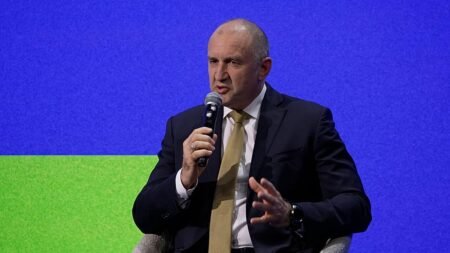
Queensland Transport Minister Brent Mickelberg launched a procurement process for up to 630 new diesel-fuelled buses on Tuesday, at the same time blasting the former Labor government’s electric bus plan as “buying big, expensive paperweights to block local streets” due to a lack of associated charging infrastructure.
Mickelberg defended the move on Thursday, arguing that immediate fleet upgrades were required for local depots that are not yet equipped for electric infrastructure.
But Zenobe Energy’s Australia and New Zealand country director, Gareth Ridge, told this masthead Queensland’s decision to mandate diesel in its procurement program could prove costly.
The UK-based company entered the Australian market in 2023, on the back of a $1.7 billion capital-raise led by private equity giant KKR, building an electric bus depot at Leichhardt, in Sydney’s inner-west.
“I would have thought that a tender like this would be technology-agnostic and would allow the market, whatever the technology that comes out, to decide,” Ridge said.
“Putting aside the carbon [emissions] and whether it’s zero-emission or not, one thing that everyone should care about is the best value-for-money procurement option, and then that pulls away from the debates around climate.
“You would probably see a clear winner on a financial case, and no one needs to debate whether it’s clean or green or not, because I think the winner will be both clean, green, and be cheaper as well.”
Energy Futures Foundation executive director Bruce Hardy said responsible economic management demanded an open tender, where all technologies could bid on an equal footing.
“Not doing so is a betrayal of Queensland taxpayers and ratepayers, who miss out from seeing the best deals the market has to offer,” he said.
Hardy said, at a time of increased fuel costs due to conflict in the Middle East, Queensland taxpayers should be furious that the government was “picking winners without properly comparing bids”.
“If the government is so sure about electric bus technology, why wouldn’t they let electric bus companies bid for the tender?” he said.
“They simply don’t want to have to justify their decision to go with a more expensive diesel option in an open process if electric buses powered by Queensland sunshine come back cheaper and more reliable.”
Mickelberg said the bus industry found the former Labor government’s electric buses plan “overly ambitious”.
“This tender is for buses to be stored at facilities without either recharging or alternative fuelling facilities, but we remain technology-agnostic for future purchases and depot constructions,” he said.
Addressing the minister’s concerns about depot infrastructure, Ridge said that while upfront costs for electric buses exceeded those of diesel, they proved far cheaper over the vehicle’s lifespan.
“Definitely, there’s a premium if you’re looking at it just purely on what you are buying today – the buses are maybe around 15 per cent more expensive and you’ve got all the depot upgrades, which for 600 buses would be in the order of $100 million,” he said.
“There is a significant upfront premium that you pay, but looking at that in isolation is not quite accurate because you’re going to have all the operating costs that go with it.
“You really need to look at this from a whole-of-life or a total-cost-of-ownership perspective to see how it really stacks up.”
Ridge said, based on Zenobe’s dealings with governments across the Western world, Queensland was an outlier in its pursuit of diesel.
“Sure, we’ve seen some small numbers to plug some gaps, but the scale of this procurement is nothing that we’ve seen,” he said.
The electric vehicle industry has lined up to condemn the Crisafulli government’s diesel policy.
Australian Electric Vehicle Association Queensland branch director Nathan Gore-Brown took particular aim at Mickelberg’s “paperweight” comment, which he said was ill-informed.
“This is not a risk his interstate counterparts seem worried about,” he said.
Electric Vehicle Council chief executive Julie Delvecchio said the policy exposed Queenslanders to health risks.
“Queensland communities will be paying for this decision – in asthma treatment, preventable hospitalisations and lung disease – for years to come,” she said.
“These diesel vehicles will still be on the road come the 2032 Olympics, spewing out pollution for decades to come, right when the eyes of the world will fall on the Sunshine State.
“We urge the Queensland government to make the tender for these 630 buses open to all fuel types so that they can consider the best solution which is cheaper to run, cleaner electric buses.”
Start the day with a summary of the day’s most important and interesting stories, analysis and insights. Sign up for our Morning Edition newsletter.
From our partners
Read the full article here