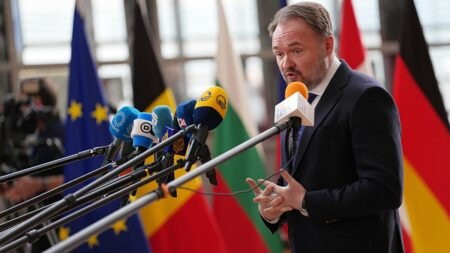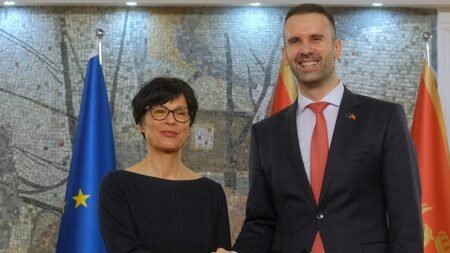




The EU stands in “full solidarity” with Spain following the Ceuta migrant crisis, EU Migration Commissioner Magnus Brunner said on Tuesday, calling the crisis “a test of our European resilience.”
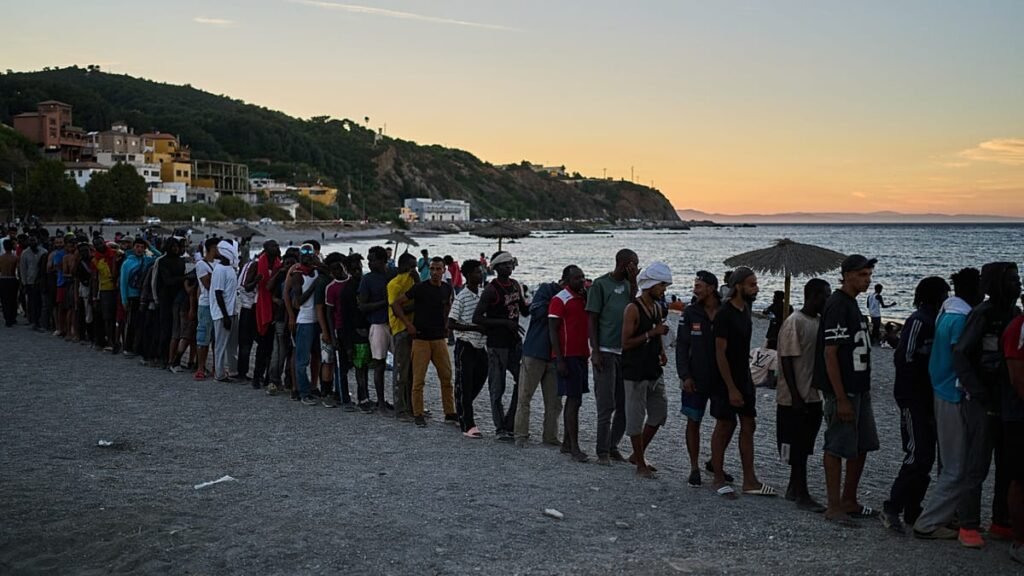
Brunner spoke to reporters after EU interior ministers held an online emergency meeting to discuss the aftermath of a crisis that saw around 70,000 non-EU nationals enter the Spanish enclave of Ceuta from Morocco within 24 hours.
The meeting also sought to ease tensions with Spain in the wake of a Europe-wide backlash against Spanish Prime Minister Pedro Sánchez’s migration policies.
“These past few days were a test of our European resilience, a test of the security of our external borders, and these days clearly showed that there are actors who have no regard for the safety or even for lives of innocent people,” Brunner said.
“Europe, I think, has definitely passed this test. People did not manage to enter the Schengen area, and security at the border was resolved quickly. The key now is for the European Union to act,” he added.
On Tuesday, interior ministers discussed measures to prevent a repeat of the crisis, with a press statement circulated by the Irish EU Council Presidency saying there was a “common understanding” among ministers of the need to target a range of areas.
The statement said these measures should include tackling migrant smuggling networks, strengthening returns, reinforcing EU borders, developing deeper partnerships with third countries, and improving foresight.
Measures should also include developing early-warning systems such as pre-frontier intelligence and social media monitoring.
Spanish Interior Minister Fernando Grande-Marlaska welcomed the talks, stating that the EU had “acknowledged” the work Spain has carried out and that “it is pursuing a significant policy to combat irregular immigration within the EU framework”.
“It was a necessary meeting to align current and future approaches. The outcome was satisfactory and served to recognise Spain’s efforts,” he said.
Lower the political temperature
One EU diplomat told Euronews that a “broad” amount of member states wanted to discuss “political measures” and “incentives” that may have been contributed to the largest irregular border crossing ever recorded in Europe over such a short period.
One of them was Madrid’s January decision to regularise around half a million undocumented migrants by granting them residence and work permits.
But the broader approach taken by other European countries is moving in the opposite direction, with efforts focused on reducing access to asylum, tightening EU border controls and increasing returns.
The backlash against Spain started in response to the mass arrivals, with Italy ordering a temporary suspension of Schengen free movement with Spain. A day later, 22 EU governments sent a letter to EU institutions on Saturday criticizing Spain’s migration policies.
The United States also weighed in, criticising Spain and adding to existing tensions between Spanish Prime Minister Pedro Sánchez and US President Donald Trump.
On Tuesday, officials also acknowledged that, as in many other European countries, Italy is heading towards general elections, which is influencing the tone adopted by prime ministers when commenting on the events in Ceuta.
A European Commission official told Euronews that the thrust of the meeting was to lower the “political temperature” in the room.
Read the full article here