




 Markets
  Weather
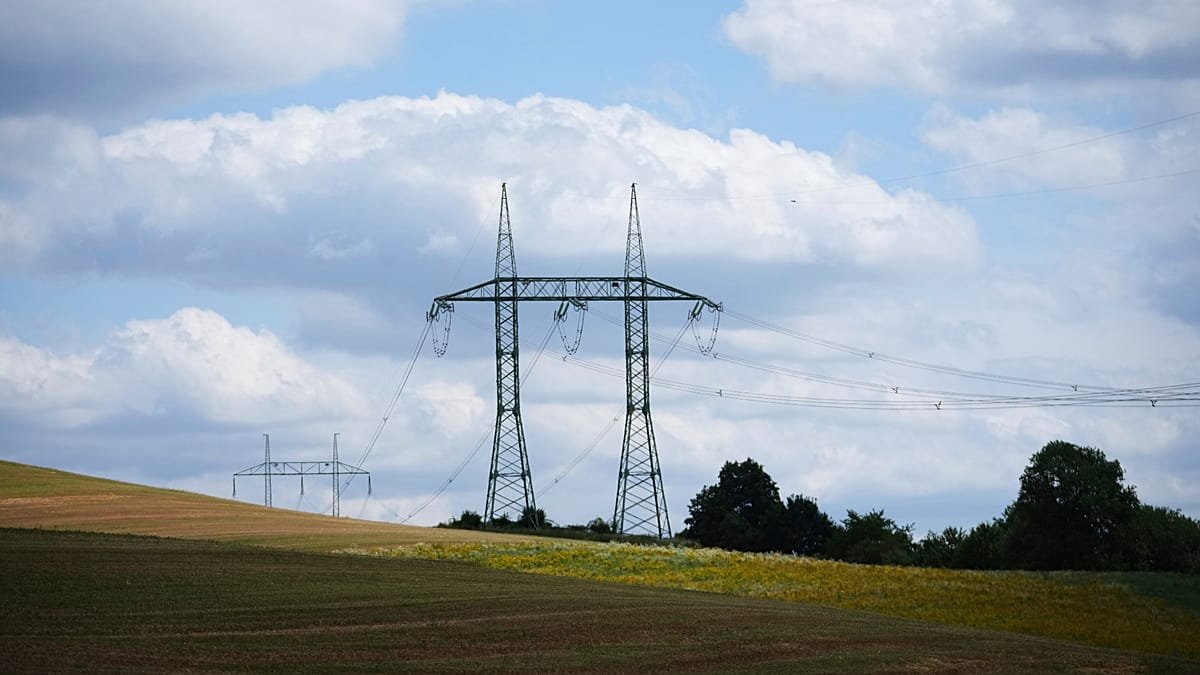
As European Union leaders are mulling new ideas to address demands from energy-intensive industries, new proposals to lower electricity prices will be on the negotiating table at the upcoming European Council.
Industries like steel, cement, and chemicals have long been complaining about the high electricity prices they face, which have forced the closure of hundreds of production sites across the EU.
Chemical industry leaders in Europe say that 101 industrial facilities have shut down since February 2024, leading to the loss of 75,000 jobs and the disappearance of 25 million tonnes of chemical production capacity.
With electricity prices in the EU now double those in the United States, European Commission President Ursula von der Leyen and Council President António Costa have publicly noted the industry’s concerns as the EU27 is brainstorming ways to revive industrial capacity and bolster the bloc’s competitiveness.
To address the urgency of lowering prices and re-industrialise, Brussels will discuss in March whether the current pricing system, in which electricity prices are coupled to gas prices, should be revisited.
Spain and Portugal have been staunch advocates of reforming the electricity market’s design for several years, primarily to increase connectivity between the Iberian Peninsula and the rest of Europe and to address unfair competition.
Austrian Chancellor Christian Stocker and Czech Republic Prime Minister Petr Fiala also recently lambasted high energy prices, calling for “urgent” measures to curb the problem.
Carbon costs spike electricity prices
After an informal gathering in Alden Biesen last week, Von der Leyen said EU leaders had “intense discussions” on the electricity market design law, particularly on the merit order system, which takes the most expensive resource as the price-setting mechanism.
In 2025, renewables cost €24 per megawatt, nuclear €52 per megawatt, and gas – the most used energy source in the EU27 – was at €100 megawatt/h, von der Leyen said.
“We didn’t come to a conclusion, but I’ll bring different options and findings on whether it’s time to move forward in the market design or whether we’re still good,” she told reporters.
Following the energy crisis that hit the EU after Russia’s invasion of Ukraine in 2022, EU leaders decided to review the law governing electricity prices. A revision in 2024 saw market rules updated to loosen the link between consumer prices and fossil fuel costs in an attempt to make prices more stable.
The EU has also introduced modern mechanisms to complement the traditional merit order system such as Contracts for Difference (CfDs) and Power Purchase Agreements (PPAs) – mechanisms with a cap and a floor that may be unrelated to government support, but be backed by a state guarantee.
The merit order price formation, however, emerges as an outcome of the internal market design governed by EU regulation. The system was originally intended to set prices based on supply and demand, therefore ensuring competition.
“The merit order system maximises social welfare and is still providing the most efficient way to clear prices across any country,” Alessandro Armenia, insight analyst at the global trade intelligence Kpler, told Euronews.
“The growth of the daily spread and the price spikes are challenges that are visible to us thanks to the merit order and help investors and policymakers to tackle balancing needs, curtailment measures, and flexibility signals,” he added.
The problem, the energy analyst explained, is largely tied to gas prices and high carbon prices under the bloc’s carbon market, the Emissions Trading System (ETS), where industries must pay for the pollution they emit.
“Carbon prices passed from less than €10/t in 2018 to €90/t nowadays. The Dutch Title Transfer Facility (TTF) is declining from the 2022 rally. Nevertheless, in the last 3 years, prices have hovered mostly around 40 €/MWh, which is almost double vs 2018 levels,” Armenian said, in reference to Europe’s leading benchmark.
The EU executive is due to revise the ETS this summer, with several industries lobbying for an end to carbon costs.
If EU leaders agree to revise the market design law, “prices will drop in the very end”, von der Leyen said, but she also noted that infrastructure is also key and that without upgrades and new interconnectors, cheaper energy can’t flow to where it is needed.
The European steel industry, Eurofer, welcomed von der Leyen’s call for a renewed debate on Europe’s electricity affordability and market design, dubbing it “an important step” that “must lead to decisive action”.
“Even if nine out of ten power plants rely on low-cost renewables, the single fossil-fuel plant needed to meet demand can determine the price for all electricity,” Eurofer stated.
“This inflates industrial power bills and, for steelmakers, is creating a competitiveness emergency. Industrial electricity prices remain up to 2.5 times higher than those of international competitors, delaying electrification and putting investment at risk.”
With uncompetitive electricity prices, the industry said, Europe cannot drive the green transition forward.
Abundant clean power, negative energy prices
But the problem surrounding energy prices is “more complex” than it appears, Council President Costa said at a briefing last week.
Europe’s wholesale electricity markets have seen the advent of negative energy prices, an increasingly common phenomenon in which supply exceeds demand, meaning generators to effectively have to pay the grid to take their surplus electricity.
“We identified that interconnections are essential to create a single market, to increase our common security. But, at least in some cases, the export of lower-priced energy has the reverse effect, the increase in prices in the exporter market,” Costa said.
The Council leader said EU governments will discuss the matter in March, with the aim of moving from an “ideological debate” to “a more technical and pragmatic discussion”.
The Portuguese head of the Council hailed the “interesting idea” shared by the Lithuanian President Gitanas Nausedas, who suggested frontloading the future benefits of lower-price renewables and paying out this investment later, when clean power is more abundant and prices are lower.
For the clean power industry, investment in storage solutions is crucial.
In an exclusive interview with Euronews, the CEO of industry group WindEurope, Tinne Van der Straeten, said one way to address negative prices is to “build-out of the energy systems, more storage solutions, but also demand side management to increase energy-intensive companies’ willingness to produce and work at a time that energy prices are low”.
However, van der Straeten said investments in the power grid are also crucial for optimising the use of available clean power.
Catarina Augusto, head of system integration at the industry body SolarPower Europe, told Euronews that negative electricity prices are a “clear signal” that Europe needs to accelerate energy system flexibility.
That means scaling up battery storage tenfold by 2030, she said, addressing demand response and electrification to ensure renewable electricity can be used at all hours of the day rather than being wasted.
“SolarPower Europe consistently calls for a flexibility-first approach when planning the grid, faster deployment of storage and fair market access for all flexibility providers,” Augusto said.
“Implementing existing electricity market rules and introducing clear flexibility indicators at the national level would help reduce price volatility, limit negative pricing and strengthen the business case for solar while lowering costs for consumers and industry.”
Read the full article here