


Despite public declarations that economic ties with Russia will be severed, Europe has paid an estimated €7.28 billion for liquefied natural gas (LNG) from Moscow’s Arctic Yamal project in just over eight months this year, already surpassing the €7.3 billion spent in all of 2025.
The figures were revealed by an investigation by Urgewald, an NGO that exposes the financial institutions and companies backing climate-damaging projects.
During the first eight months of 2026, European ports received 156 Yamal LNG cargoes carrying 11.39 million tonnes, compared with 142 cargoes and 10.34 million tonnes between January and August 2025 – an increase of 10.1% year on year, according to the German NGO Urgewald.
Real-time data from the market intelligence firm Kpler reveals that between 1 January and 5 September this year, European ports swallowed 88.9% of Yamal’s total global exports, up from 78.2% in 2025.
“This is a sign that EU buyers are maximising imports ahead of the January 2027 ban. Most of these volumes are from existing long-term contracts, as LNG from short-term contracts was banned in April this year,” Charles Costerrouse, Kpler’s energy analyst, told Euronews.
Energy analysts said the EU has outspent its previous full-year total in only eight months and five days driven by a perfect storm of higher European gas prices and increased cargo volumes as the war in the Middle East disrupted a key energy trade route through the Strait of Hormuz.
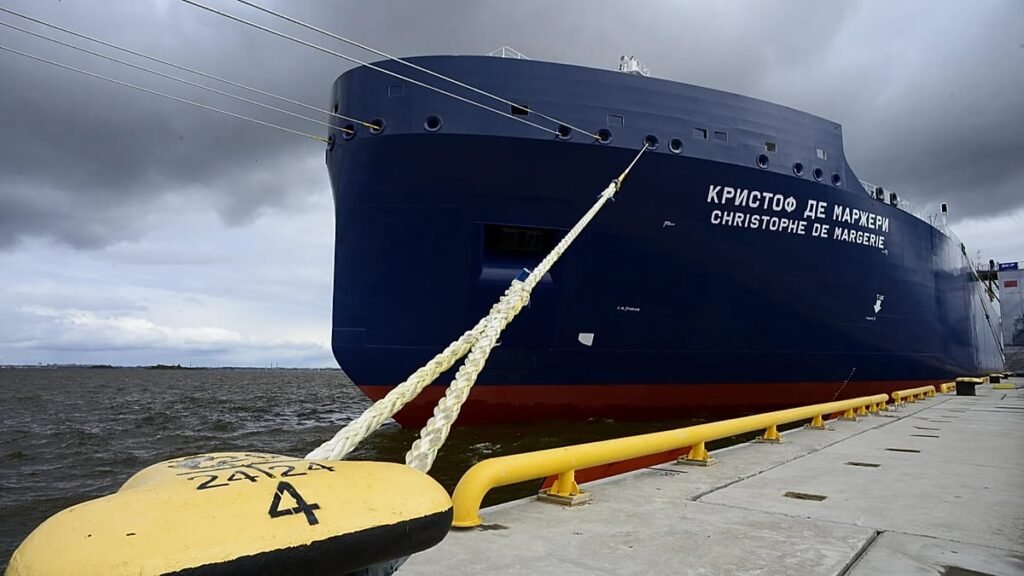
Two European companies dominate this shipping network: the Glasgow-based Seapeak and the Greek-linked shipping firm Dynagas. Together, vessels tied to these two European companies managed 72% of all Yamal LNG exports.
Six Arc7 tankers linked to Seapeak’s Glasgow-based operations carried 65 cargoes and 4.73 million tonnes from Yamal between January and August. Greek-linked Dynagas vessels carried another 62 cargoes and approximately 4.5 million tonnes.
“Europe says it is moving away from Russian energy. These figures show the opposite,” said Alexander Kirk, senior campaign manager at the environmental NGO Urgewald. “The EU took 10% more Yamal LNG and almost 9 out of every 10 tonnes the project exported during the first eight months of the year.”
Costerrouse added that among the top importers of Yamal LNG to Europe are France (4.4 million tonnes), Belgium (3 million tonnes), Spain (2.7 million tonnes) and the Netherlands (1.1 million tonnes).
EU leaders meet in the Arctic
Meanwhile, this trade boom comes at a highly sensitive time, as European leaders arrive in Finland on 13 September for the European Arctic Summit and diplomats in Brussels draft the EU’s 22nd sanctions package – with Greece having secured an exemption from a full ban on Russian LNG.
According to the investigation, Europe is not only Russia’s primary customer but also the logistical backbone of Arctic trade, which exposes a major vulnerability for Moscow.
Because the Arctic waters freeze over for most of the year, Russia relies on 15 specialised Arc7 ice-class tankers to cut through the ice. Short journeys to European ports let these vessels quickly drop off fuel and return to Siberia. If Russia had to send these same ships all the way to Asia during the winter, the trip would take weeks longer and Russia’s total gas exports would collapse.
In August 2026, Yamal split its exports almost exactly equally. Seven cargoes carrying 497,945 tonnes were delivered to European ports, while seven cargoes carrying 493,855 tonnes arrived at Asian destinations.
However, while the summer opening of the Northern Sea Route allowed Russia to temporarily split its exports evenly between Europe and Asia in August, that window is closing. By December, the frozen eastern route to Asia becomes impassable for direct shipments, forcing Russia back toward European waters.
Looming ban on Russian LNG imports
But the ultimate trial will arrive on 1 January 2027, when the EU’s official ban on Russian LNG imports and maritime services is scheduled to take full effect. Experts warn that without access to EU ports, Russia’s ability to sustain its Arctic operations will face unprecedented pressure.
As European leaders gather in Rovaniemi, Finland, to coordinate Arctic security against Russian expansion, campaigners argue that the Kremlin’s war chest is being directly funded by European utilities.
“They cannot ignore that EU money, ports, and maritime services are helping one of Putin’s flagship Arctic energy projects enjoy a bumper year,” warned Sebastian Rötters, sanctions campaigner at Urgewald.
With the 22nd sanctions package currently under negotiation in Brussels, activists are demanding that European governments close existing loopholes. They are calling for an immediate ban on servicing the Arc7 fleet and a strict embargo on selling specialised LNG tankers to Russian entities.
Whether EU countries, still wary of winter energy price shocks, have the political will to sever this multibillion-euro cord remains to be seen.
Read the full article here