





 Markets
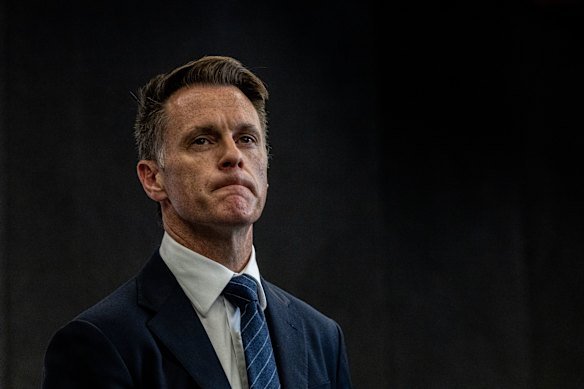
As an eastern suburbs EV “snob”, I would like to balance the impression given by Premier Chris Minns (“State disunity on GST hits drivers at bowsers”, April 1). As an EV owner of some 10 years now, I would like to remind the premier that early adopters of new technology pay considerably more for it. That allows for evolving economies of scale to bring prices down, so “regular mums and dads” can follow. The same applies to TVs, phones, solar panels and batteries. Likewise, range anxiety is more a construct pushed by petrol companies than reality. I certainly had no fears driving to Wollongong and back this week using only half a battery, and I’ll be heading to Canberra for Easter. Maybe the premier should talk to his Canberra colleagues and get some of the $66,000 of luxury car tax and GST that my two Teslas provided and spend that on more charging stations, instead of undermining progress. Hugh Wolfenden, Bellevue Hill
I agree with the sentiment of Premier Minns about the importance of EV adoption, but not his words that EVs should be available for everyone, not just “for snobs that live in the eastern suburbs”. Why do politicians keep fuelling division in society? His comment is also inaccurate. Reportedly, the silvertails of Blacktown and Penrith have a greater EV uptake than people in Paddington. A bit more us and less of us and them, please. Paul Doyle, Glenbrook
Drop in the ocean
Shane Wright’s Thatcherite assertion that the Labor government’s temporary fuel excise reduction is darkly inflationary could have been made by the rapacious supply-sider herself (“The PM is on a collision course with the RBA, and he’s dragging you with him”, March 31). Just do the maths: Total annual government spend in Australia is over $1 trillion. The three-month fuel excise reduction cost is a paltry $2.5 billion, which is a quarterly injection of 1 per cent of total national spend. Wright’s characterisation of the decision as Albanese’s “drongo sequel” to the equally “drongo” Angus Taylor’s demands is a whistle to the power elites, who pathologically undermine any easing of economic conditions for everybody except themselves. $2.5 billion is an infinitesimal fraction of the quarterly spend in Australia and its inflationary effects will cause barely a ripple. Ken Manley, Malua Bay
Your correspondents who support the cut in fuel excise (Letters, April 1) entirely miss the point that Shane Wright did his best to explain. If you have an extra $2.5 billion over the next three months in the pockets of fuel consumers at a time of already high inflation, then this money will add to demand, making it more likely that inflation will rise and interest rates will rise further than would have otherwise been the case. You might feel better about a few dollars saved when you next fill up, but ultimately, your heavily indebted children will be the ones paying. Paul Jones, Glebe
Where is the logic in saying a 26¢ reduction in excise will increase demand? Families are already $1 a litre over budget. This is now being reduced to 74¢. How do you splash out with 26¢ you didn’t have in the first place? Ian Nicholls, Baulkham Hills
Pinched at the pump
I heard an expert explaining that retail petrol prices rose quickly to provide the necessary cash flow for service stations and wholesalers to buy their next shipment. I found that credible, but if that’s the case, with excise rates now lowered, the retail prices should drop quickly because the next shipment will be cheaper. Excuses that price reductions will take weeks do not hold water. We are being gouged. Mike Salon, Darlinghurst
Amazing how quickly many fuel stations raised the price of fuel even though they were using the cheaper fuel they still had in their tanks, and how slowly they are now to lower the prices, stating that they still have the “more expensive” fuel in those tanks. Dorothy Gliksman, Cedar Brush Creek
Out of gas
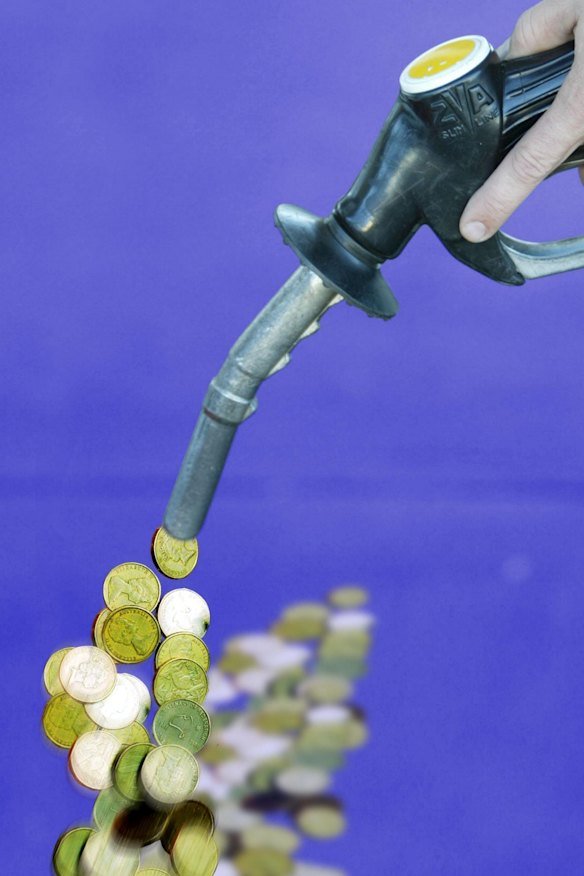
Shell warns us that a tax of gas export profits would likely limit future gas exploration in Australia (“Oil giant Shell says tax hike could hurt Australia’s hunt for fuel”, April 1). So we’d miss out on what exactly? We get nothing but extra climate catastrophe when we put that Shell to our ear. Dick Clarke, Elanora Heights
Make way for bikes
Motorcycles are an efficient means of transport and a practical alternative to cars, particularly when fuel is so expensive. Unfortunately in Sydney, getting on your bike is increasing your risk of injury. When I was learning to ride wearing a high-vis vest with big Ls on the bike, I had cars tailgating, flashing their lights, hooting at me and passing dangerously close because, as a learner, I was riding cautiously and slowly. Motorcycles are widely used in many countries. Wouldn’t it be good, particularly during the Middle East crisis, if we could follow suit without the fear of ending up in hospital or in a ditch? Clare Raffan, Campsie
Change on the cards
The removal of credit card surcharges from EFTPOS terminals is most welcome (“Businesses warn of price rises from RBA’s surcharge ban”, April 1). Credit card surcharges have been one of the biggest rorts, most notably in hospitality. Merchants cynically charged a fee for a mode of payment that, according to Westpac, saved merchants around six times as much as the fee charged. Lower cash-handling costs, reduced transaction times and no cash losses are among the benefits merchants enjoy when taking payment via card instead of cash. Woe betide any merchant who puts up their prices to cover revenue lost from the removal of this ill-gotten gain. Jonathan Bolton, Annandale
The ban on credit and debit card surcharges proposed by the Reserve Bank of Australia is not before time. Just as prices in Australia must be inclusive of GST, prices should also include all taxes and charges levied on them. Price transparency is essential for a functioning economy, and is in the interests of consumers. Ian Bowie, Bowral

Coalition calls the shots
So Labor has canned the proposal to increase the size of the parliament, which would have made Australia’s growing electorate easier to represent (“Albanese rules out plan for more politicians after Taylor comes out swinging”, April 1)? On top of this, they have reduced the fuel excise. Both of these decisions appear to have been made to avoid an opposition scare campaign. So my question is, why did we bother voting for Labor when the Coalition is clearly running the country? Bruce McKinnon, Mosman
Learning for life
The recent correspondence about Lindfield Learning Village reminded me that very little is truly new in education (Letters, April 1). In the 1980s, Muirfield High School was already trialling ideas considered radical at the time. Its no-uniform policy drew criticism from passersby who saw students dressed freely and called for conformity. What they couldn’t see was what was happening inside the school. Students were given unstructured time and trusted to manage it. Some chose the library, others the basketball courts. It challenged the assumption that young people must be tightly controlled to learn. A research program comparing students from several schools, including James Ruse High School, produced surprising results. Those given early responsibility appeared to adapt well to university life, though the findings were not widely shared. We say we want young people to be independent and thoughtful, yet our systems still favour conformity over initiative. The question remains whether we are ready to trust them. Rod Noble, Port Macquarie
Jennifer Parker may make a good case for a nuclear-powered submarine capability for Australia in her defence of AUKUS, but she deftly ignores the implications of dealing with a chaotic and dangerous ally in the US. (“Australia depends on seaborne trade. AUKUS is our best plan to protect that”, March 31). The dishonesty personified by Trump did not emerge in a vacuum, it was fostered by the Republican Party back through George W Bush, Ronald Reagan and Richard Nixon. That is why for all Donald Trump’s overt lies and grifting, he maintains a rock solid 35-40 per cent general endorsement. With the electoral college system and gerrymandering, that “base” will be there to affect American policy well into the future. If we need nuclear submarines we shouldn’t be sourcing them from an unreliable dealer. I wonder if the French would accept our humble pie? Ian Hoskins, Chippendale
Jennifer Parker’s defence of AUKUS inadvertently provides a good reason for why we should pull out of the deal. If the USA with all its might and actual nuclear-powered submarines can’t keep the Strait of Hormuz open, how could Australia hope to keep our supply route open with a few aspirational submarines? Neil Reckord, Gordon (ACT)
Jennifer Parker overlooks a vital point – there is no guarantee that the USA will provide any of our nuclear submarines if they decide that they need them for themselves. By the time the submarines are built Donald Trump will not be president. He will probably have died of old age or be in an institution. Our friendly old ally is looking like a thing of the past, and we cannot take anything for granted. On top of that, big, expensive submarines are likely to go the way of World War II battleships – replaced by smaller, more effective craft. Just look at weapons now being used in the Ukraine war. Mike Titus, Keiraville
If ever there was a good reason we should go our own way on defence, it’s Trump’s statement: “You’ll have to start learning how to fight for yourself – the USA won’t be there to help you any more, just like you weren’t there for us” (“US puts world on notice that it could exit Iran with Strait of Hormuz still closed”, April 01). Clearly it’s time to get out of AUKUS. The money saved would pay for our own defence forces and there would be enough left over for health, education and social housing, which are badly in need of funding. Joe Collins, Mosman
I may be missing something, or perhaps Jennifer Parker hasn’t explained her point very well. When shipping is being disrupted by drones launched from land, how do submarines help? Janet Cook, Waverton
Age of kleptocracy
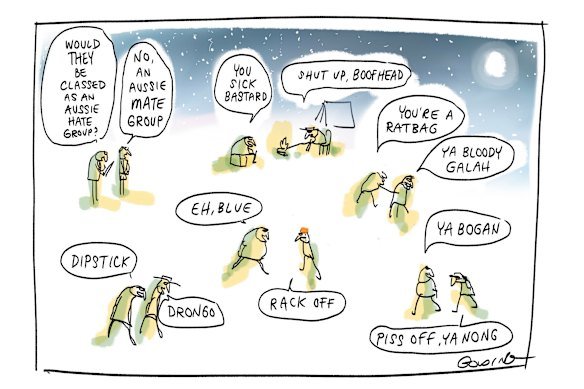
Clinton Fernandes has a good point when he classifies the Trump administration as a kleptocracy (“The Trump administration is a kleptocracy. That alone offers hope for an end to the Iran war”, April1). It reminds me of American commentator Sarah Kendzior’s observation that the administration is not a government, it’s a transnational crime syndicate masquerading as a government. Jim Catt, Meridan Plains (Qld)
Trump declares his war is almost over and he’ll soon be leaving the scene (“Trump wants other countries to do the work on reopening the Strait of Hormuz”, April 1). He seems to think it’s acceptable to leave those who didn’t take part in the war to pick up the pieces and mend the fences. Talk about picking up the ball and going home. Hugo Zweep, Thirroul
Hey Mr Trump, things don’t look like they’re going that well in the Middle East, with the narrow Strait of Hormuz blocked by those irritating Iranians. Here’s a thought: why don’t you get the mighty US military to blow the tip off the peninsula on the southern side and widen the strait? It’s only a little bit of Oman and there’s plenty more. I’m sure they’d hardly miss it. Dale Bailey, St Leonards
Deadly weapons
This is not something Australians should be proud of (“Australia in fierce battle with US for German war drone market”, April 1). For one, the Ghost Bat is a deadly weapon. We don’t want to be a country manufacturing goods that kill people. Secondly, it is made by Boeing Australia, an American company located here and subsidised by us, the taxpayers. Profits will be channelled back to ultra-rich Americans. To make it worse, when the project fails we will have to foot the bill to rescue the retrenched employees. Paul Lau, Dolls Point
Triple trio
The US is sending the USS George H. W. Bush aircraft carrier to the Middle East, which will create an unprecedented deployment of three American aircraft carriers in the region simultaneously. Norman Broomhall, Port Macquarie
The young bull said to the old bull: “Look, an aircraft carrier, we could sink that.” The old bull replied: “Wait until there are three of them and we can sink them all.” Keith Russell, Mayfield West
VAD assessment
The Herald‘s article about a shortage of voluntary assisted dying doctors is helpful in raising awareness of VAD, and the problems some patients have in accessing it (“‘I’m running out of time’: Steve begged his doctors for a single piece of paper”, March 31). It could, however, perpetuate a misconception that a patient needs a letter from their treating team stating their prognosis. A VAD assessing doctor needs to have evidence of a terminal condition and then makes an assessment. This can be, but does not need to be, a letter from the treating doctor. If a patient is not getting help from the treating team to facilitate a VAD assessment, they can contact the care navigator service directly to organise this. Dr Bill Munro, Gosford
Bin the nickname
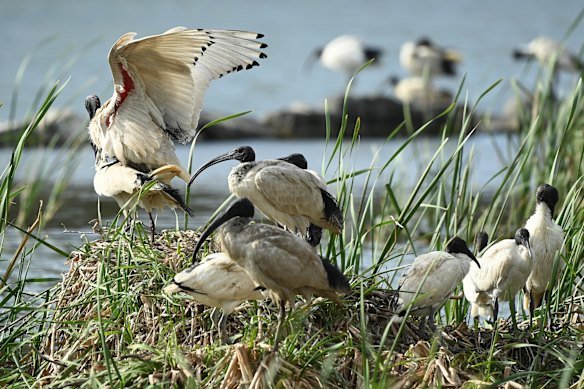
The ibis is a beautiful bird whose skill set is best appreciated not when picking through rubbish, but on a mudflat at the change of tide, when it uses its long beak to skilfully probe for food. The derogatory use of “bin chickens” to describe them needs a long-overdue rest (“How bin chickens, kittens and possums test Sydney’s delayed metro line”, April 1). Rod Leonarder, Roseville
Comedian in chief
Edward Loong references Will Roger’s quote, “People are taking their comedians seriously and the politicians as a joke” (Letters, April 1). Where does this leave Volodymyr Zelensky? Bob Doepel, Greenway (ACT)
- To submit a letter to the Sydney Morning Herald, email letters@smh.com.au. Click here for tips on how to submit letters.
- The Opinion newsletter is a weekly wrap of views that will challenge, champion and inform. Sign up here.
Read the full article here