




 Markets
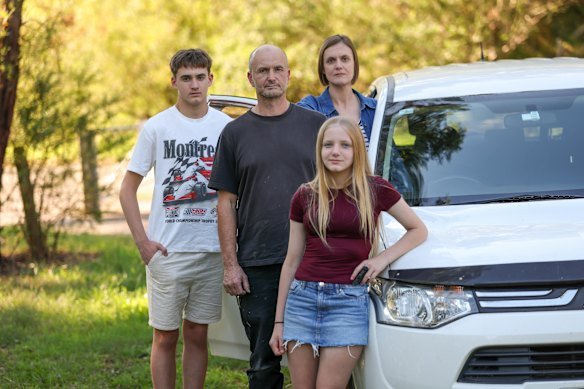
From cutting back on driving practice for their 16-year-old son to putting off a flight to Canada to visit her terminally ill father, Andrea Cosentino and her family have made sacrifices – large and small – to navigate the current fuel crisis.
The family has stopped making discretionary trips, such as driving the kids to the bus stop or taking a country drive on the weekend, so they can still afford to pay for trips for which there is no alternative, such as her partner Malcolm Smith’s cross-city commute from Hurstbridge to Laverton.
The family is one of many hoping for some relief at the bowser after the federal government halved the excise on fuel for three months, lowering the price of petrol by 26.3¢ a litre.
The Albanese government will also cancel the heavy vehicle road user charge of 32¢ a litre for three months to help ease pressure on the transportation industry.
The cuts will commence on April 1, and cost taxpayers $2.55 billion.
The move comes as the latest weekly fuel monitoring report from the Australian Competition and Consumer Commission shows average diesel prices in Melbourne had risen by 124.7¢ a litre to 303.6¢ between February 20 and March 25.
Cosentino said the temporary cut to the fuel excise tax was “not a bad thing” and would provide some relief for a family budget that is being squeezed harder than it has in several years.
“We know it’s a great thing for right now, but what does it mean for later on?” Cosentino said of the cut. “Could it mean that in three months [fuel] goes up by 50¢?”
The three-month suspension of the heavy vehicle road user charge would provide desperately needed relief to trucking companies, some of which are on the verge of parking their trucks rather than carrying on at a loss, Victorian Transport Association chief executive Peter Anderson said.
“We’re pleased the road transport industry is being acknowledged for the value it contributes to the standard of living that we all enjoy in our communities,” Anderson said.
“Keeping in mind, if the road transport industry stopped, the economy stops and, of course, with the sudden increase in the cost of fuel we’ve been placed in a position commercially as to whether we park the trucks or go broke.”
Anderson said that ultimately, trucking operators must pass their rising fuel costs onto consumers to stay in business.
In regional Victoria, soaring diesel prices are threatening to inflict a heavy blow on winemakers who are in the middle of grape harvesting.
In a typical season, diesel consumption represents up to 7 per cent of operating costs for Handpicked Wines on the Mornington Peninsula. But that has risen to about 9 or 10 per cent since the war in the Middle East began.
Chief winemaker Peter Dillon said other businesses in the winemaking chain were also starting to pass on the added fuel costs, which included services like cartage and bottling lines.
“Everybody’s seeing that pressure on their underlying business.”
Dillon said that while the changes announced on Monday were appreciated and provided a level of optimism, “the big question is where the total ceiling for prices ends up landing”.
Winemaker Cameron Wilson said Handpicked had cut diesel use significantly as part of its environmental focus.
Whereas other wineries might use chemical sprays to control weeds, they use machinery which required more tractor movements.
“Because we are organic, realistically we still need to rely on tractors for a significant amount of work, which ultimately means depending on diesel as well at this stage,” he said.
However, even before war in the Middle East, Handpicked Wines – which operates eight vineyards across Australia, including three in Victoria – was already moving towards electrification to reduce carbon emissions and lower exposure to fluctuating fossil fuels prices.
Australian Grape and Wine chief executive Lee McLean supplies of diesel and fertiliser were stable, but prices were rising, and this impact would vary by region. He said there was limited capacity to pass on increased costs to consumers.
“This means many businesses will be forced to absorb at least some of the increases, further tightening already stretched profitability.”
Victorian Farmers Federation president Brett Hosking said the temporary fuel excise cut might help consumers, but did little to tackle the unique challenges facing farmers.
He said the announcement provided no clarity on how fuel would be prioritised if the crisis deepened.
“Farmers are telling me they are facing a real make-or-break moment,” Hosking said. “They can’t keep absorbing skyrocketing input costs without a plan to at least break even in months ahead.”
Start the day with a summary of the day’s most important and interesting stories, analysis and insights. Sign up for our Morning Edition newsletter.
 Benjamin Preiss is The Age’s regional editor. He was previously state rounds reporter and has also covered education for The Age.Connect via X or email.
 Adam Carey is senior city reporter (suburban). He has held previous roles including education editor, state political correspondent and transport reporter. He joined The Age in 2007.Connect via X or email.
From our partners
Read the full article here