




 Markets

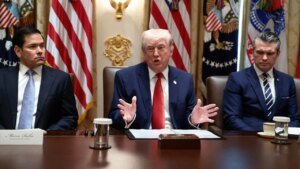
Donald Trump started a reckless war against Iran with no plan for victory. Now, a month into a conflict ravaging the global economy, he has no strategy to get out of it. That was the grim and refreshingly honest message from Germany’s defence minister during a visit to Canberra on Thursday. And there was plenty more where that came from.
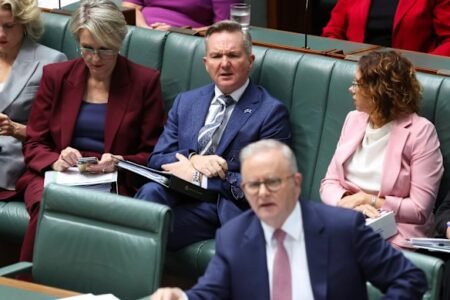
Boris Pistorius’ candour stood in stark relief to the Albanese government’s timid, often tongue-tied response to the war since it offered speedy and enthusiastic support for the initial strikes on Iran by the US and Israel. The government clearly believes it has little scope to express even mild reservations about Trump’s handling of the war, let alone criticisms. Germany does not feel so constrained.
“What concerns me most about that war is there was no consultation, there is no strategy, there is no clear objective,” Pistorius told the National Press Club in a scathing verdict of Trump’s handling of the Iran conflict. “And the worst thing, from my perspective, is there is no exit strategy.”
Trump’s decision to go to war with Iran, Pistorius argued, is “dangerous for the rules-based international order”. It is impossible to imagine any Australian minister frankly acknowledging this confronting but undeniable reality: Trump, as well as China’s Xi Jinping and Russia’s Vladimir Putin, is a threat to the post-Cold War global system that has benefited democracies such as Germany and Australia.
Pistorius was the only minister to survive the transition from the previous German government led by Social Democrat Olaf Scholz to the current one led by conservative Friedrich Merz. It’s easy to see why. He’s an impressive operator who, even in a second language, speaks about complex topics with a clarity rarely heard in Canberra.
The force of Pistorius’ message was even more striking when he stood next to Defence Minister Richard Marles at a press conference in Parliament House. The war in Iran, Pistorius said, had been “a catastrophe for the world’s economies”.
And he delivered a blunt memo from Berlin: having declined the courtesy of consulting his allies before attacking Iran, Trump should not expect them to offer any military support until there is a ceasefire.
“It’s not our war, and therefore we don’t want to get sucked into that war – to make it crystal clear,” Pistorius said.
In other words: You broke it, Donald, and you own it.
Marles’ message – “We support efforts to pursue a peace and to de-escalate this conflict” – was far more sanitised.
Back at the Press Club, Pistorius spelt out the hypocritical approach that Trump has taken in dealing with America’s European allies.
First, he demanded they increase defence spending and insisted they “take care of your own backyard”.
Now Trump is complaining about a lack of allied support for his war on Iran. “Now they are saying, ‘Where are you? You are cowards. You don’t help us.’ I mean, we haven’t even been consulted, and I’m sure we wouldn’t have started that war,” Pistorius said.
Earlier this week, German President Frank-Walter Steinmeier declared that the war in Iran violated international law and that “the justification of an imminent attack on the US does not hold water”.
Pistorius obviously agrees. “Our president highlighted an assessment which we all have [had] in mind since the war started,” he said. “And many, many people – experts and non experts – questioned the legality of that war.”
Again, the contrast to Australia’s tepid stance was unmissable. In the days after the US and Israel attacked Iran, Foreign Minister Penny Wong repeatedly refused to give a clear answer when asked the obvious question of whether the strikes were legal.
“I’ll leave it for the United States and Israel to speak of the basis, the legal basis for the attacks,” was all she would say.
Australia, of course, had no problem quickly and correctly labelling Vladimir Putin’s invasion of Ukraine as illegal.
Pistorius also expressed his concern that Trump has “lost a little bit of interest in dealing with negotiations about a ceasefire or peace in Ukraine” now he is fixated on the Middle East. And he slammed the US decision to relax sanctions on Russia in a bid to bring down global oil prices as a “huge and dangerous mistake” that will boost Putin’s war chest.
To the Albanese government’s credit, it made clear it would not send an Australian warship to the Strait of Hormuz while the war is raging. And it is not in Australia’s interest to pick unnecessary fights with Trump given the US remains our most important security partner. In particular, Australia’s reliance on the US to meet its future submarine needs under AUKUS makes any criticism of Trump risky. Indeed, AUKUS puts Australia in the kind of vulnerable, subordinate position Canadian Prime Minister Mark Carney has been warning about in his message to fellow middle powers.
Germany is a more powerful global player than Australia, offering Pistorius more leeway to criticise the US.
But it’s worth considering whether the straitjacket Australia dons when responding to Trump needs to be quite so tight. Look at the way other countries have politely but firmly declined Trump’s offer to join his Board of Peace. More than two months after invitations were issued, Albanese has still not provided an answer.
Pistorius’ remarks offered a reminder that it is possible to loathe the regime in Tehran while questioning the wisdom of Trump’s decision to go to war. That directness has a role in diplomacy, as well as caution.
Cut through the noise of federal politics with news, views and expert analysis. Subscribers can sign up to our weekly Inside Politics newsletter.
 Matthew Knott is the foreign affairs and national security correspondent for The Sydney Morning Herald and The Age.Connect via X, Facebook or email.
From our partners
Read the full article here