


Talk about a home-cooked meal.
From breakfast burritos in bungalows to tea parties on the lawn at hilltop estates, trendy home-based restaurants are popping up all over LA — unlocking a slew of new dining experiences as diverse as the City of Angels itself.
And unlike the scores of street stalls taking over local sidewalks at a time when brick-and-mortar businesses are suffering and shuttering, this time it’s completely legal.
The change comes in the wake of a change in permitting rules in Los Angeles County — authorizing microenterprise home kitchen operations, or MEHKOs, back in May 2024.
The program allows people to operate small-scale food businesses from their homes, paying well under $1,000 for their papers, according to County of Los Angeles Public Health — with some strict guidelines.
Since permits started being issued in late 2024, the department has given out more than 400 licenses.
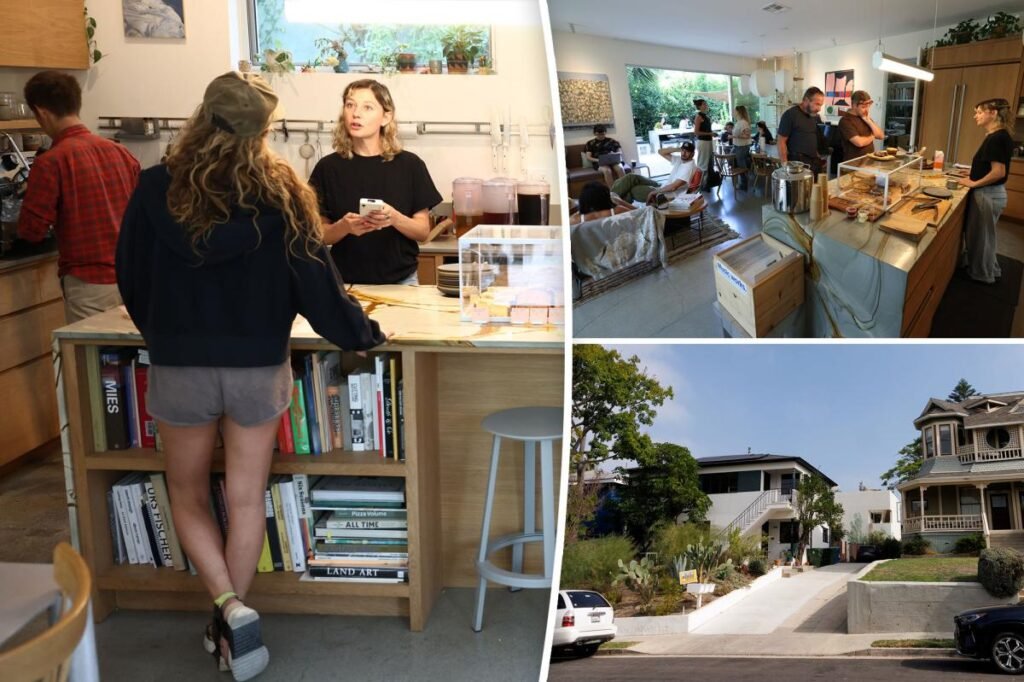
Now, the city is exploding with buzzy home businesses like Granada, a stunning, all-day cafe at the end of a driveway in the Angelino Heights historic district, better known for its collection of Victorian-era homes.
The chic haunt at the home of Sydney Wayser and Isaac Watters has drawn lines down the block — and even amassed an international following since opening in January of this year.
“We just thought it would be a fun way to open up our house and meet some of the neighbors, but then it kind of became this place that people really wanted to come to from all over,” said Watters. “We’ve had people come from Sweden, a lot of people from France, all over Europe.”
Only open from 9 a.m. to 2 p.m. on Mondays through Thursdays, Granada sells coffee, tea, and locally-baked pastries to avid fans — the business has over 16,000 followers on Instagram, and even sells Granada-branded merch.
Frequent customer Adele Jacques, who has lived in the surrounding Echo Park neighborhood for 20 years, says she likes coming to Granada because it “bridges European and American culture.”
“It’s not just a business. It’s like you come in someone’s space and it feels comfortable,” said Jacques. “It feels like home.”
Customer Azniv, who didn’t give her last name, lives just an 8-minute walk away — she told the California Post she comes to Granada at least once a week.
“There’s a lot of cafes I really love around LA, but this one’s just a little bit different in that it’s a very homey and very inviting to sit down and the combination of the kids fun and adult friendly. It’s a good combination,” she said.
Another chic home cafe, Loto, located in a quiet residential section of Echo Park, has earned major looks since opening in August — even garnering raves in local blogs.
“Somehow, a home cafe where neighbors and guests can pop in and sit a while in the backyard chatting, sipping from homemade ceramics, and feels like it carries forward the community sprit I remember,” a reviewer for Eater Los Angeles gushed.
Though many Angelenos seem thrilled with MEHKOs, others worry the spots could affect the quality of life in residential neighborhoods if the businesses get too popular.
“I don’t want to see my neighbor cooking all day at night with a bunch of people coming and leaving,” one social media user wrote at the time the new rules came into effect.
“It’s not fair to other neighbors. certain neighborhoods we’re already having a parking crisis and over crowding because single-family homes have turned into quadruple-family homes,” said another commenter.
“As a former health inspector and food safety consultant over 10 years, HELL NO! There’s commercial refrigeration and equipment for a reason,” a third stated.
The DPH says the kitchens are not meant to compete with traditional restaurants — though they are in many cases wrestling the limelight away from those businesses, who have to undergo much more rigorous and expensive permitting processes to operate. Not to mention spending tens of thousands of dollars on equipment.
“A home kitchen is not designed or required to have the same commercial infrastructure, such as ventilation systems, grease interceptors, specialized wastewater systems,” James Dragan, who manages LA’s MEHKO program, admitted to the LA Times in a recent story.
But a MEHKO permit isn’t a license to do whatever you like — there are strict limits to how much business a permit holder can do.
The home kitchen must be operated by a resident inside their home, and the food must be stored inside the home that has been approved.
All food must be cooked on the same day its sold, and home businesses can only sell up to 90 meals per week, and 30 meals per day.
The businesses are also limited to one full-time employee, or multiple employees who worked a combined total of 40 hours per week, excluding family or household members.
There are even restrictions on how much MEHKOs can earn. The businesses can only earn up to $100,000 per year in gross annual sales.
Customers can place orders at the home, through the internet, or a mobile app approved by the state.
“The limits are important because of the food safety perspective,” Dragan said.
The change comes as Los Angeles has struggled to find the right response to the surge of informal businesses that have taken over city streets — from everyday street vendors to eyebrow-raising entrepreneurs mixing cocktails at streetside bars outside the Hollywood Bowl on concert nights.
MEHKO may feel like a drop in the bucket — but the idea is spreading rapidly all over the state.
Riverside County was the first county in California to offer MEHKOs in 2019.
Since then, the program has been picked up in a total of 19 jurisdictions, including San Diego, Santa Barbara, Monterrey, and Imperial Counties. The city of Berkeley independently runs their own MEHKO program, separate from Alameda County’s MEHKO program.
One MEHKO permittee told the California Post she loves the new rule change — and that her own business has become a great side-hustle, at a time when California families are struggling to make ends meet.
“My kitchen isn’t open seven days a week. It’s the weekends only, and during the week I cater and teach cooking classes, so I’m able to make it work for me,” says Chef Bobbie Cherri, who operates Don’t You Dairy, a milk-free soul food cafe, from her home in Hawthorne.
Cherri found out about the MEHKO program through an ad while scrolling through the internet. She enrolled in an eight-week course from Cook Alliance, a nonprofit which promotes home cooking legislation, to prepare her to apply for the MEHKO program.
After receiving her permit in April of last year, she began selling food immediately.
“I just roll out of bed and take a shower, dress, go downstairs, and begin my day. I actually prefer that than to ever have a restaurant or to vend,”” said Cherri.
Cherri says that although her business sees a steady stream of customers, it isn’t something she wants to do longterm.
She says she’ll probably stop business within six months to a year to focus on her other, potentially more lucrative ventures.
Download The California Post App, follow us on social, and subscribe to our newsletters
California Post News: Facebook, Instagram, TikTok, X, YouTube, WhatsApp, LinkedIn
California Post Sports Facebook, Instagram, TikTok, YouTube, X
California Post Opinion
California Post Newsletters: Sign up here!
California Post App: Download here!
Home delivery: Sign up here!
Page Six Hollywood: Sign up here!
Read the full article here