





 Markets
  Weather
From time to time in Australia, immigration anxiety flares and political fuses are lit. That fuse is being lit again, helped along by Donald Trump’s aggressive crackdown by ICE in the United States but increasingly with hard-edged rhetoric from Liberal Party leadership aspirants.
These debates are loud, emotive and all too familiar. But amid the noise, we risk losing sight of the bigger picture – the long-term strategic and economic relationships that will shape Australia’s future. One of those that matters a lot is our relationship with Indonesia. And on that front, we are simply not doing enough.
Australia often talks up the importance of its relationship with Indonesia, but on the practical foundations of that relationship, we are going backwards. Support for Indonesian language education has been eroded, and our visa settings can make even routine family visits slow and uncertain. With Indonesia widely projected to become one of the world’s largest economies by mid-century, rhetoric must be accompanied by the patient work of building people to people links that match Indonesia’s strategic and economic weight. Prime Minister Anthony Albanese’s decision to make Indonesia his first bilateral visit in 2022 and again in 2025 was a strong symbol. But the relationship now needs to be strengthened at a far more foundational level.
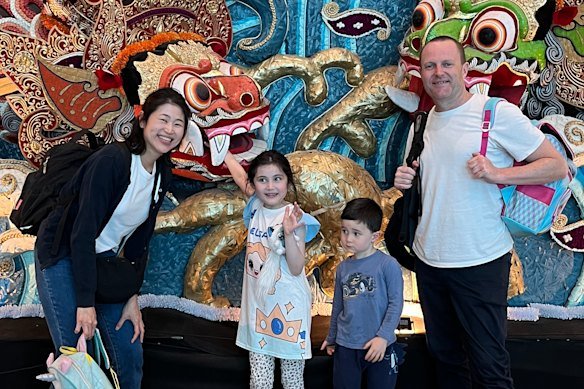
On my way back to Australia recently after my annual visit to Indonesia, a conversation with my wife’s sister was a sobering reminder of how far we still have to go in our relationship with our closest neighbour. She reminded me of their desire to send their daughter to Australia to study a bachelor’s degree, but the costs made it impossible. Then, on the drive to the airport, she mentioned something else – it can take several months to get a basic tourist visa approved for family members who want to visit Australia.
For my wife’s niece, after months of research, the numbers simply did not stack up. Indonesian students who want to study an undergraduate degree are typically offered grants of up to $10,000. In the context of undergraduate degrees costing more than $50,000 for foreigners, plus living costs, that barely makes a dent – particularly in a country where the average annual wage is roughly $6000. For an average middle-class Indonesian family, it would take decades to overcome the financial and structural hurdles required to study in Australia.
Then there is language. I have two children who were raised speaking Indonesian in their early years. I loved hearing my wife speak Indonesian to them and watching their first words emerge in her language. Now I want them to continue that journey. Yet in Sydney, where we live, that has proved remarkably difficult. In Australia’s largest city, there is no readily accessible Indonesian language and cultural school where our children can maintain Indonesian as a second language .
My personal frustration reflects a much bigger national weakness. Fewer Australians are learning Indonesian now than in the 1970s, even as Indonesia’s importance grows. Some argue this does not matter because English is widely spoken in Indonesia. But that misses the point. Speaking someone’s language is a mark of respect, and respect is the foundation of trust. On my recent trip, I walked into a restaurant and said “Selamat sore!” And asked in Indonesian whether there was a table for two. The waitress beamed and replied, “You speak Bahasa Indonesia? Thank you.” It was a small moment, but it captured something policymakers can forget. Language is not just a tool; it is one of the highest expressions of respect and human connection.
At a time when immigration is becoming politically fraught, we cannot afford to confuse toughness with respect. It should not be easier for Australians to enter Indonesia – which they can do with a simple visa on arrival – than it is for Indonesians to visit Australia for a family catch-up. The experience of many of my Indonesian family and friends is that it now takes longer for Indonesians to secure a basic tourist visa to visit their loved ones in Australia than it does for me to spend two months visiting my wife’s family in Indonesia.
If we fail to confront these issues – by injecting greater mutual respect into our tourist visa system and getting serious about rebuilding education pathways for those who want to learn the language and culture of our closest neighbour – we will not only forfeit significant economic gains in the decades ahead. We will also miss the opportunity to build deeper ties grounded in respect and friendship. That would be a failure of both policy and imagination.
Hugh Hartigan is a former Treasury official and principal at Hartigan & Associates.
Get a weekly wrap of views that will challenge, champion and inform your own. Sign up for our Opinion newsletter.
From our partners
Read the full article here