




 Markets
  Weather

A second federal MP has been caught out by Canada’s changes to its citizenship laws, in a potential breach of section 44 of the Constitution.
Section 44 forbids a federal MP from holding the citizenship of another country and, during the so-called constitutional crisis of 2017, 15 MPs and senators were disqualified for either holding a second nationality or being eligible to hold one.
This masthead revealed on Tuesday that Industry and Science Minister Tim Ayres had become eligible for Canadian citizenship on December 15 last year, after a law change in that country that made it easier for the grandchildren of Canadians to claim dual citizenship.
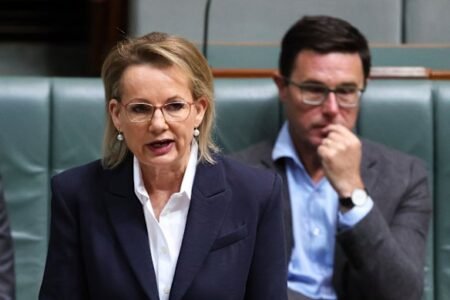
Queensland Liberal National Party MP Llew O’Brien has now been caught out by the same legal change as Ayres.
O’Brien’s paternal grandfather was Canadian and so is his father. But in July 2018, O’Brien was formally advised by the Canadian government that he was not eligible for citizenship “because you were born outside Canada on June 26, 1972, and your father was also born outside Canada, the first generation limitation found under subsection 3(3)(b)-CA is applicable to you”.
“As a result, you do not meet the statutory requirements for citizenship outlined in Section 3 of the current Citizenship Act,” according to a letter attached to the Register of Members’ qualifications checklist O’Brien provided to the AEC.
O’Brien said he had been advised three days ago that because of the law change in Canada, he was now a citizen by descent of Canada.
“I immediately commenced action to renounce the citizenship, much like Senator Ayres,” he said.
“Due to the stringent citizenship process I followed prior to the election, I believe I have satisfied the constitutional requirements and my immediate action to renounce the citizenship of Canada means I remain eligible to be a member of the Australian parliament,” he said.
“This obviously needs to be dealt with fairly and reasonably, otherwise we would have a situation where foreign countries could change their legislation and disqualify people from sitting in the Australian parliament.”
Ayres notified the parliament earlier this week that he had unknowingly acquired Canadian citizenship, which he had renounced immediately, as O’Brien is doing now.
In advice to Ayres, a senior counsel told him that he was still eligible to be a senator and minister because “the implied qualification to s 44(i) of the Australian Constitution recognised by the High Court would prevent a newly enacted foreign law from disqualifying a sitting member of the Australian parliament”. This advice is likely to apply to O’Brien as well.
Professor Anne Twomey, a constitutional law expert at the University of Sydney, said it was not surprising that another member of parliament had been caught by the retrospective change to Canadian citizenship laws.
“This provides a good example of why it was unwise for the High Court to rely on foreign law when determining the disqualification of parliamentarians on citizenship grounds,” she said.
“As Llew O’Brien was not a Canadian citizen at the time of his election, he was validly elected. If his current status was referred to the Court of Disputed Returns, he would have a good argument that his circumstances fall within an exception to the disqualification requirements in section 44 of the Constitution.
“But one cannot be absolutely sure about how the court would approach the issue, as it has previously been very strict in disqualifying members.
“The only way the matter can now get to the court is if the member’s House votes to refer it to the court. It seems unlikely that the House would do so in these circumstances.”
Canada changed its laws to reclaim so-called “lost Canadians” in June last year after a 2023 court decision found that the country’s laws, which limited citizenship by descent, were unconstitutional.
 James Massola is chief political commentator. He was previously national affairs editor and South-East Asia correspondent. He has won Quill and Kennedy awards and been a Walkley finalist. Connect securely on Signal @jamesmassola.01Connect via X or email.
From our partners
Read the full article here