

The Reserve Bank is making a lot of noise that it could lift interest rates.
But the RBA’s own forecasts and analysis suggest that barring another unexpected inflation spike – the world’s looking at you, Donald Trump – it is going to struggle to follow through with that threat.
While governor Michele Bullock often says the Reserve only has one lever to deal with inflation, she actually has another. And she deploys it every time she stands up to do a press conference or make public statements.
Her voice is a powerful one. If she were to warn of economic disaster or bright days ahead, consumers, investors and markets would listen and act. In central bank jargon, it’s called jawboning.
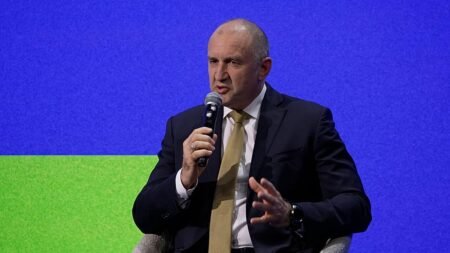
And threatening to inflict more interest pain on the economy is a good example of jawboning. Again and again on Tuesday, she said there were upside risks to inflation and that the bank may have to tighten monetary policy further.
But compare her words with the bank’s forecasts released with the decision to leave the cash rate steady at 4.35 per cent.
The bank thinks inflation is going to be lower than it had expected. Unemployment is going to be a tad higher than it had forecast. Wages growth is a little softer.
That’s all before the RBA gets a firm grip on what its previous rate rises and the federal government’s changes to property taxes – and the fallout from higher oil prices on consumer sentiment – are doing to house prices.
As the bank knows, house prices are a key swing factor in the strength of consumer spending.
“Lower housing prices weigh on household consumption by reducing household net wealth and spending related to housing turnover. Weaker housing prices also reduce the incentive to build new homes,” it said.
Where do the bank’s biggest inflationary threats lie? In household spending and in housing construction costs.
The bank sliced its household spending forecasts, and it really cut its expectations for housing investment. In May, it thought spending on new homes would have grown by 2 per cent by year’s end. Now it thinks it’s going to contract by 0.7 per cent.
Good luck to builders trying to pass on higher costs to prospective home owners when the RBA thinks there will be fewer of them.
The rates decision was announced as ANZ went the full bear on the Australian property market, predicting a peak to trough in housing prices of more than 10 per cent. In Sydney, the nation’s capital when it comes to property fascination and prices, the drop is tipped to be closer to 15 per cent.
Bullock finished her press conference by saying if the bank believed it would be wrong on its inflation forecasts, then it would act. As the great central banker of Springfield, Homer Simpson, would say: D’oh!
Analysts assumed she was talking about its inflation forecasts being too dovish.
But the bank got its last inflation forecast wrong. Instead of it being 4.8 per cent to June, it was 3.8 per cent.
Missed it by the side of a barn, really. There were good reasons for the miss – petrol prices have not soared nearly as high as feared – but it was still a long way out.
And it missed its underlying inflation forecast. And it missed its unemployment forecast. And it downgraded its wage growth forecast.
There’s nothing wrong with Bullock using her central bank pulpit to talk up the threat of a rate rise. It’s an important part of her armoury and one that has been tried and tested. In some ways, it can work better than a rate rise, without some of the collateral economic damage.
But with previous rate rises still yet to fully work their way through the economy, and the federal government’s property tax changes taking the wind out of the national housing Ponzi scheme, something from left field will have to emerge to force Bullock to follow through with her threat.
Cut through the noise of federal politics with news, views and expert analysis. Subscribers can sign up to our weekly Inside Politics newsletter.
From our partners
Read the full article here