



Almost one year ago, Ursula von der Leyen made one of her boldest moves as president of the European Commission: she proposed using the immobilised assets of the Russian Central Bank to support Ukraine’s budgetary and financial needs.
By tapping the assets, she said, the bloc could raise up to €210 billion in fresh assistance for Kyiv without encumbering public coffers. European taxpayers would be spared. And the void left by the United States, under President Donald Trump, would be filled.
It was an idea, quite simply, without precedent in modern history: the aggressor’s money would pay for the victim’s resistance.
It was also extremely controversial. So much so that four months later, in a dramatic political showdown before the winter break, it fell apart. Standing on the brink of the unknown, the 27 leaders pulled back and resorted to a familiar yet expensive option: common borrowing to back a €90 billion loan.
The loan was hailed as a major milestone in the bloc’s yearslong effort to stand by Ukraine “as long as it takes”. The €90 billion was to cover two-thirds of Kyiv’s needs until the end of 2027, with other allies contributing the remaining third.
But now, in a blast from the past, just two months after the first payment under the loan, the Russian assets are back on the table.
Sweden, the Netherlands, Spain and Poland have signed a letter asking the Commission to explore “new options” to tap into the funds, effectively reviving a debate that the delicate deal on the loan was supposed to have settled. (Though not signatories, the Baltic states, Denmark, Finland and Germany are considered supportive.)
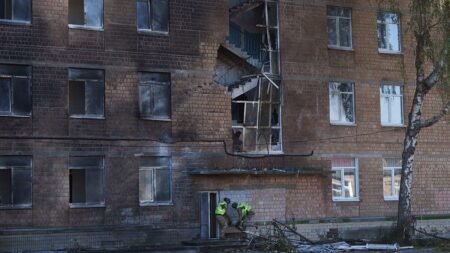
The letter openly says the €90 billion “will not be enough” to sustain Ukraine as Russia ramps up its campaign of ballistic missile strikes, sowing death and destruction.
It is a remarkable admission, which other capitals privately share, considering the enormous political capital spent to establish the credit line. It is also a stinging rebuke to other Western allies for not stepping up as expected.
“While we should be proud of our achievements, we cannot afford to rest on our laurels,” the document reads. “As each day passes, the cost of the war is rising as Russia’s relentless attacks continue unabated.”
The timing is not accidental. Earlier this week, Ukrainian President Volodymyr Zelenskyy raised the alarm about Ukraine’s growing financing needs, warning the Ministry of Defence is facing a $27 billion (€23 billion) shortfall. He said his country needs “more money, much more” to remain “competitive” in deep strikes against Russia.
Zelenskyy then pitched two possible options to plug the gap: either the EU frontloads a share of the €90 billion loan, disrupting the schedule, or taps into the Russian assets. Despite last year’s fiasco, Ukrainian officials never gave up on the untested avenue, which they see as the ultimate manifestation of the “Make Russia Pay” principle.
“Wherever these assets are, we need to find a fair way to use them for protection against Russia’s war,” Zelenskyy said.
The letter’s timing has an additional explanation.
Next year is exceptionally crowded with high-stakes elections, including for four of the bloc’s biggest members: France, Italy, Spain and Poland. A potential far-right victory in France, as polls predict, could plunge the EU into uncharted territory.
The Sweden-led coalition believes the moment should be seized now before the electoral calendar makes it impossible for the EU to have any consequential debate.
Between the lines, there is an implicit reminder that there is only so much governments can do before facing recriminations from taxpayers.
But if the plan failed resoundingly in 2025, how could it succeed one year later?
‘Difficult to fathom’
Several factors bode ill for the renewed push.
For starters, the political constellation that rejected the complex proposal in December has essentially stayed intact since then. Hungary, after Viktor Orbán’s defeat, maintained its opt-out clause from the €90 billion loan.
The Commission, which says it is ready to “provide any assistance”, will likely think twice before making another bold move that could go up in flames. Any attempt would overlap with fraught talks over the next long-term EU budget.
“Looking back at last year, I don’t see at the moment any appetite to reopen that issue. The obstacles and reservations from some member states haven’t changed,” a senior EU official said. “We will have to cross the bridge when we get there.”
Belgium, the chief host of the assets, says it is willing to consider fresh ideas as long as member states agree to provide unconditional, uncapped guarantees to protect the country against Russia’s retaliation.
During last year’s heated negotiations, Belgian Prime Minister Bart De Wever warned that using Russian funds could be perceived as confiscation of sovereign assets, which is illegal under international law, and might derail efforts to strike a peace deal.
Italy, Bulgaria and Malta backed Belgium. France, which holds a limited share of the assets in private banks, also raised questions behind the scenes.
All these objections and fears coalesced in the December summit, when, according to De Wever’s own account, a silent majority emerged against the risk-laden proposal.
“There is no free money in the world. It just does not exist,” De Wever said.
The Belgian position carefully mirrored that of Euroclear, the depository in central Brussels that holds €185 billion of the €210 billion in assets.
Euroclear said the scheme was “very fragile” and could trigger an exodus of foreign investors from the eurozone. The company remains wary of anything that would meddle with the assets as it battles a legal challenge from the Russian Central Bank.
Another key actor is the European Central Bank, which last year pointedly refused to provide emergency liquidity in the event of a financial setback. Detractors seized on the bank’s words to advance their opposition campaign.
It is “difficult to fathom” whether it would work this second time, a senior diplomat said. “From a legal perspective, not much has changed.”
In the joint letter, the four countries acknowledge “this question is complex” and stress financial, economic and legal risks must be duly considered. No single country should carry a “disproportionate burden”, they say, in a clear reference to Belgium.
It is notable that the letter does not lay out a specific blueprint to tap into the assets nor does it suggest last year’s planshould be copy-pasted as such.
An initiative called “The Russian Transfer”, launched by a journalist, a professor and an economist, recommends a possible way out of the deadlock: moving the assets held by Euroclear and private banks into an EU-owned custodian. This would remove the risks that Euroclear faced and the objections that Belgium raised.
The custodian, they say, would not represent a corporate entity and therefore would not need to be domiciled in an individual member state that Moscow could target.
They argue history already offers a precedent: in March 2003, right after the US invaded Iraq, the White House ordered the move of $1.7 billion in Iraqi sovereign assets to a special account at the Federal Reserve Bank of New York.
Though they insist the transfer would not amount to confiscation, serious doubts remain about whether other financial institutions and investors would share that view, particularly if the assets in the custodian are eventually channelled into Ukraine.
“The biggest risk to the euro will be if Ukraine loses the war,” they say.
Beyond the multiple legal, financial and reputational pitfalls, EU leaders would have to weigh the diplomatic ramifications carefully. For some, the Russian assets are the bloc’s mightiest leverage and should be kept untouched until the parties sit at the negotiating table. For others, what only matters is ensuring Ukraine gets to that table.
“The aggressor must pay for the consequences of its aggression,” Polish Foreign Minister Radosław Sikorski, a proponent of reopening the thorny debate, said.
“In any case, Russia will not get this money back until it pays reparations to Ukraine, so it is better to use it to stop the aggression – that is, to defend Ukraine – rather than wait until the end of Russia’s aggression to spend it on reconstruction.”
Read the full article here